Red Eye Emergency: 7 Signs You Must Never Ignore
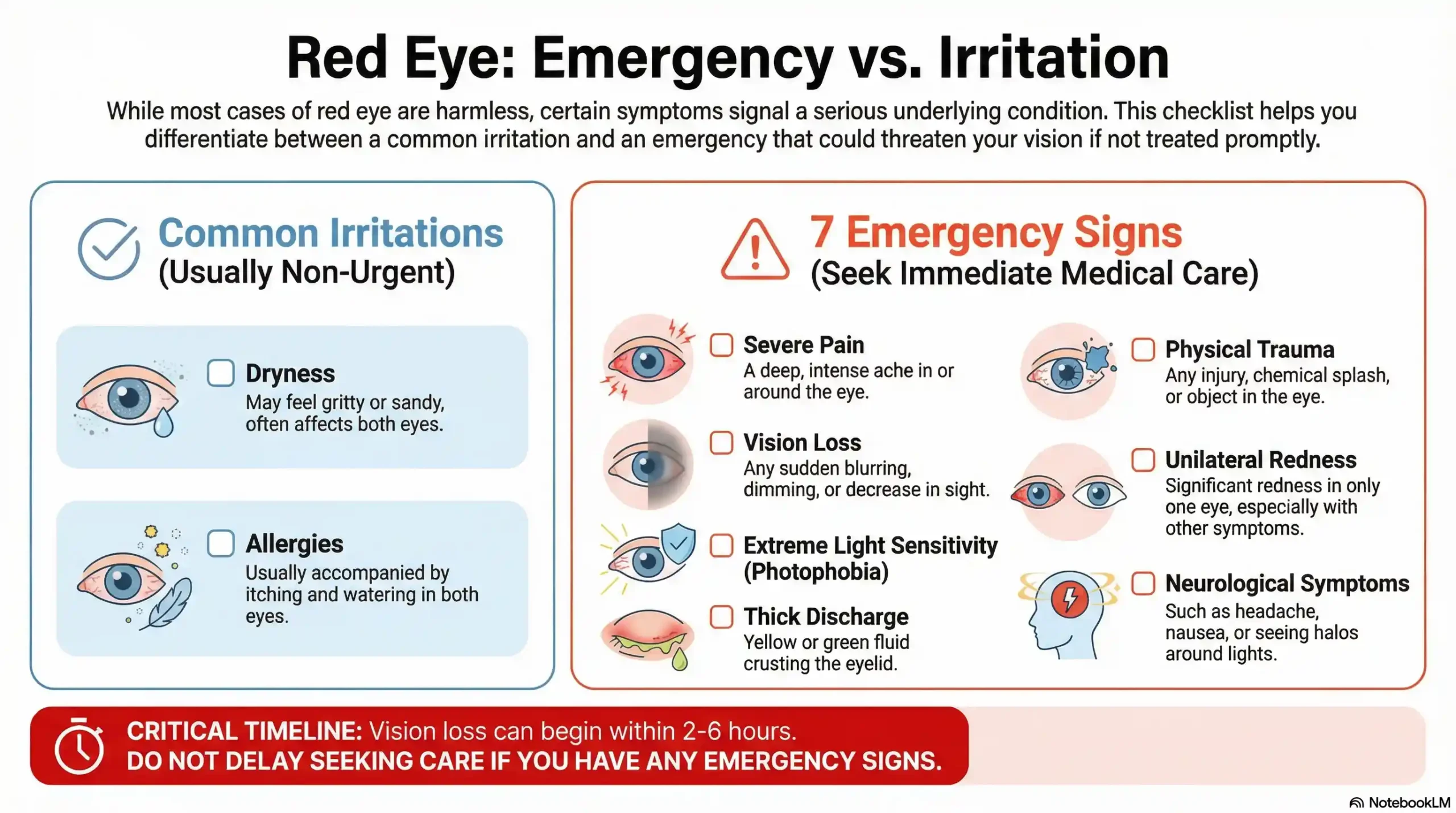
A red eye emergency occurs when redness is accompanied by sudden vision loss, severe eye pain, or extreme light sensitivity, requiring medical intervention within 2–6 hours to prevent permanent vision loss. If you are experiencing these symptoms alongside thick discharge or neurological signs like confusion, you must seek immediate care from an eye doctor or emergency room.
🚨 Urgent: Call (832) 930-7797 for Same-Day Emergency Eye Care
What Causes Red Eyes? Understanding the Basics
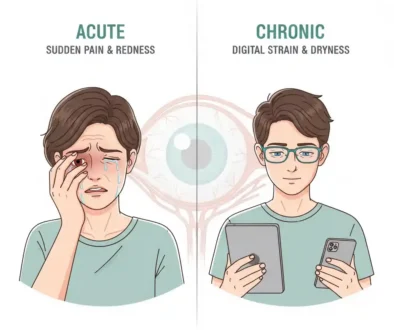
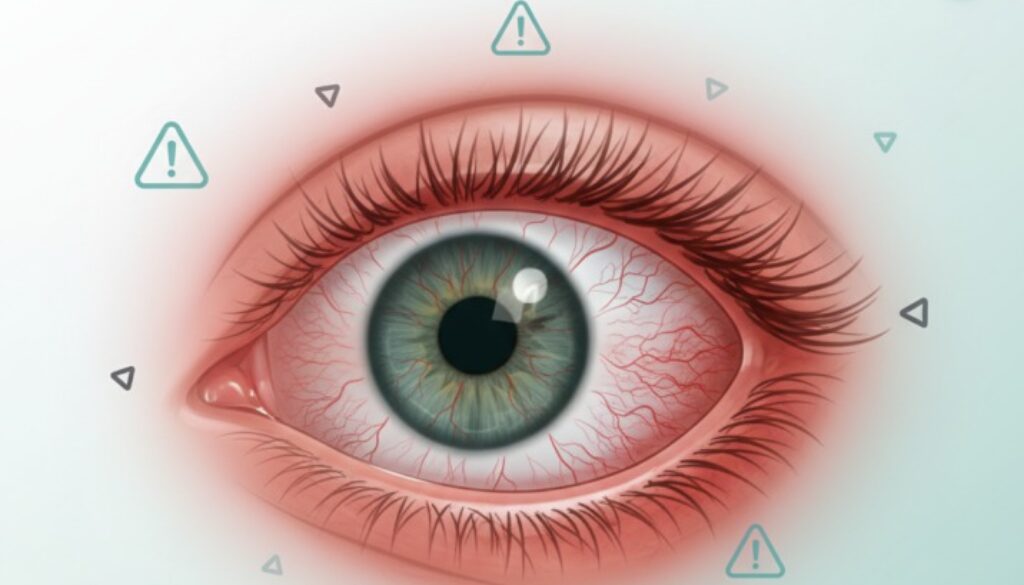
Red eyes occur when the tiny blood vessels on the eye’s surface become enlarged, irritated, or inflamed. This creates the characteristic bloodshot appearance we recognize. While the redness itself might seem alarming, it’s often your eye’s way of responding to irritation, infection, or injury.
Common benign causes include:
- Dry eyes from prolonged screen time
- Environmental allergens like pollen or dust
- Minor eye strain or fatigue
- Contact lens overwear
- Subconjunctival hemorrhage (broken blood vessel)
However, when red eyes are accompanied by specific warning signs, they can indicate serious conditions requiring immediate intervention.
7 Red Eye Emergency Signs You Must Never Ignore
1. Sudden, Severe Eye Pain with Red Eyes
Why it’s dangerous: Sharp, intense eye pain combined with redness often signals acute angle-closure glaucoma—a sight-threatening emergency where eye pressure spikes dangerously high within hours.
Critical warning signs:
- Severe, boring pain that worsens at night
- Pain radiating to the head and face
- Nausea and vomiting
- Seeing rainbow halos around lights
- Rapidly blurred vision
⚠️ Emergency timeline: Vision loss can begin within 2-6 hours without treatment. Call 911 or head to the emergency room immediately.
2. Sudden Vision Loss in Red Eyes
Why it’s critical: Any rapid decrease in vision accompanying red eyes suggests serious conditions affecting the eye’s internal structures.
Potential life-changing causes:
- Retinal detachment
- Stroke affecting the optic nerve
- Endophthalmitis (severe internal eye infection)
- Central retinal artery occlusion
💡 What to do: Never wait to “see if it improves.” Contact emergency services immediately—time is of the essence.
3. Extreme Light Sensitivity (Photophobia) with Pain
The hidden danger: Severe light sensitivity combined with red eyes and pain often indicates inflammation inside the eye or neurological complications.
Associated emergency conditions:
- Uveitis (inflammation of the eye’s middle layer)
- Keratitis (corneal infection)
- Meningitis (in severe cases)
- Corneal ulcer
Red flag symptoms:
- Inability to tolerate normal lighting
- Consensual photophobia (light hurts even the unaffected eye)
- Excessive tearing and eye spasm
4. Thick, Colored Discharge from Red Eyes
When to worry: While mild, clear discharge is common with irritation, thick yellow, green, or blood-tinged discharge suggests serious infection.
Dangerous discharge types:
- Yellow-green and thick: Bacterial infection requiring antibiotic treatment
- Blood-tinged: Possible corneal ulcer or severe trauma
- White and stringy: Potential fungal infection
Additional concerns: If discharge is accompanied by fever, worsening pain, or vision changes, seek immediate care.
5. Red Eyes After Eye Injury or Chemical Exposure
Why it’s always an emergency: Eye trauma can cause hidden damage that worsens over time, while chemical exposure can rapidly destroy eye tissues.
Types of serious injuries:
- Foreign objects embedded in the eye
- Chemical splashes (especially alkaline substances)
- Blunt trauma from sports or accidents
- Sharp object penetration
🚨 Immediate first aid:
- For chemicals: Flush with clean water for 15-20 minutes
- For objects: Don’t remove them—cover loosely and seek help
- For blunt trauma: Apply a gentle cold compress, avoid pressure
6. One Red Eye vs. Both Eyes
Clinical significance: Redness affecting only one eye is often more concerning than bilateral redness, as it frequently indicates localized serious conditions.
Unilateral red eye emergency concerns:
- Acute glaucoma attacks
- Corneal ulcers
- Uveitis
- Scleritis (inflammation of the eye’s white part)
- Orbital cellulitis
When both eyes are affected, it usually suggests systemic causes like allergies or viral conjunctivitis, though bilateral symptoms don’t rule out serious conditions.
7. Red Eyes with Neurological Symptoms
The emergency connection: Red eyes combined with neurological symptoms can indicate life-threatening conditions.
Critical emergency combinations:
- Red eyes + severe headache + confusion
- Red eyes + double vision + facial drooping
- Red eyes + neck stiffness + fever
- Red eyes + nausea + altered mental status
These combinations may suggest stroke, meningitis, or other medical emergencies requiring immediate hospital care.
When Red Eyes Signal Life-Threatening Conditions
Acute Angle-Closure Glaucoma: A Vision-Threatening Emergency
Acute angle-closure glaucoma has a global prevalence of approximately 0.6% but represents one of the most serious causes of red, painful eyes. This condition occurs when the eye’s drainage system suddenly becomes blocked, causing pressure to build rapidly.
Key characteristics:
- More common in women over 40
- Higher risk in Asian populations
- Often triggered by dim lighting or stress
- It can cause blindness within hours
Immediate emergency signs:
- Severe eye and head pain
- Rainbow halos around lights
- Rock-hard feeling in the affected eye
- Rapid vision deterioration
Endophthalmitis: The Most Serious Eye Infection
Endophthalmitis represents a true medical emergency involving infection of the eye’s interior spaces. This condition can destroy vision within days or hours without aggressive treatment.
High-risk scenarios:
- Recent eye surgery or injection
- Severe eye injury
- Systemic bloodstream infection
- Immune system compromise
Warning signs requiring immediate care:
- Severe pain and red eye
- Rapid vision loss
- Thick discharge
- Loss of red reflex (pupil appears white instead of red)
Orbital Cellulitis: When Eye Infection Threatens Life
Orbital cellulitis is a serious infection of the tissues around the eye that can spread to the brain if untreated.
Critical symptoms:
- Protruding eye (proptosis)
- Inability to move the eye normally
- Double vision
- Fever and feeling unwell
- Swollen, red eyelids
This condition requires immediate IV antibiotic treatment and sometimes emergency surgery.

How to Respond to a Red Eye Emergency
Emergency Action Protocol
For sudden severe pain and red eyes:
- Don’t drive yourself—call 911 or have someone drive you
- Avoid any eye drops except artificial tears
- Don’t apply pressure to the eye
- Remove contact lenses if possible
For chemical exposure:
- Immediately flush the eye with clean water for 15-20 minutes
- Hold the eye open during flushing
- Remove contact lenses while flushing if possible
- Bring the chemical container to the hospital
For eye injury with a foreign object:
- Don’t attempt to remove the object
- Cover the eye loosely with a cup or shield
- Keep both eyes closed to minimize movement
- Seek emergency care immediately
When to Call Your Eye Doctor vs. Emergency Room
Call Frame & Focus Eye Care first for:
- Red eyes with mild pain during office hours
- Gradual onset of symptoms
- Recurrent red eye episodes
- Questions about ongoing symptoms
Go straight to the emergency room for:
- Sudden severe pain and vision loss
- Red eyes after a significant injury
- Neurological symptoms with red eyes
- Chemical exposure to the eyes
The Science Behind Red Eye Emergencies: Recent Research
Recent studies have enhanced our understanding of red eye emergencies and improved treatment outcomes:
Timing is Critical for Glaucoma Emergency Outcomes
Multiple 2023-2024 studies published in StatPearls and peer-reviewed journals confirm that patients with acute angle-closure glaucoma have favorable outcomes when timely treatment is provided. Research consistently shows that any delay in treatment can result in serious consequences, including potential optic nerve damage and vision loss. Studies involving hundreds of cases found that timing of presentation and duration of the acute episode are crucial factors in determining patient outcomes.
Advances in Emergency Eye Care Technology
Recent research published in medical technology journals demonstrates significant advances in automated diagnostic tools for eye emergencies. Studies from 2023-2024 show that modern diagnostic technologies, including advanced imaging systems and AI-assisted tools, are improving the speed and accuracy of emergency eye care diagnosis in clinical settings, helping healthcare providers make faster treatment decisions for sight-threatening conditions.
Chemical Injury Management and Irrigation Evidence
A comprehensive 2024 retrospective study in Scientific Reports analyzed over 1,500 chemical eye injury cases in New Zealand. The research confirmed that lack of irrigation at the scene was significantly associated with increased risk of severe injury and longstanding visual impairment (p = 0.0001). Multiple studies from 2021-2024 demonstrate that immediate and prolonged irrigation with proper technique results in significantly better visual outcomes, with every minute of delay potentially increasing permanent damage risk.
Prevention: Protecting Your Eyes from Emergencies
Daily Eye Safety Measures
Workplace protection:
- Always wear safety glasses when working with chemicals
- Use proper eye protection during sports
- Follow contact lens hygiene protocols strictly
- Take regular breaks from screen work
- Store cleaning products safely away from children
- Be cautious when using spray products
- Maintain proper lighting to reduce eye strain
- Keep emergency eyewash readily available
Your First Line of Defense: Regular Eye Exams
Routine comprehensive eye examinations can detect conditions that predispose you to eye emergencies:
- Narrow angles: Early detection allows preventive treatment before acute glaucoma occurs
- High eye pressure: Early glaucoma management prevents emergencies
- Corneal problems: Addressing dry eyes and surface issues reduces infection risk
- Overall eye health: Maintaining optimal eye health reduces emergency risk
Dr. Zaver recommends comprehensive eye exams annually for adults over 40, and every two years for younger adults with no risk factors.
Special Considerations for Different Populations
Children and Red Eye Emergencies
Children may not be able to articulate their symptoms clearly, making recognition more challenging:
Watch for in children:
- Excessive rubbing or holding the eye closed
- Complaints of severe headache or nausea
- Sensitivity to light causes them to hide
- Behavioral changes with eye symptoms
- Any eye injury, no matter how minor it seems
Seniors and Age-Related Risks
Older adults face increased risks for certain red eye emergencies:
- Higher likelihood of acute angle-closure glaucoma
- Increased risk of retinal problems
- More frequent medication-related eye issues
- Greater susceptibility to serious infections
Contact Lens Wearers: Special Precautions
Contact lens users face unique risks requiring extra vigilance:
High-risk scenarios:
- Sleeping in contacts (even for short naps)
- Swimming or showering with lenses
- Using expired or damaged lenses
- Poor hygiene practices
Emergency signs for contact users:
- Severe pain that doesn’t improve after lens removal
- Vision changes while wearing lenses
- Unusual discharge or redness
- Light sensitivity with lens wear
Advanced Diagnostic Technology in Red Eye Emergency Care
Modern eye care utilizes sophisticated technology to quickly diagnose red eye emergencies:
Optical Coherence Tomography (OCT): Provides detailed images of eye structures to identify retinal problems, glaucoma, and inflammation patterns.
Digital tonometry: Allows rapid, accurate measurement of eye pressure to diagnose glaucoma emergencies.
Slit-lamp microscopy: Enables detailed examination of eye structures to identify infections, inflammation, and injuries.
Fluorescein angiography: Helps identify blood vessel problems in the eye that can cause red eye emergencies.
Recovery and Long-Term Vision Protection
What to Expect During Emergency Treatment
Emergency treatment varies dramatically depending on the underlying cause:
Glaucoma treatment:
- Immediate pressure-lowering medications
- Possible emergency laser or surgical procedures
- Intensive monitoring during the first 24-48 hours
- Long-term pressure management
Infection treatment:
- Aggressive antibiotic or antifungal therapy
- Possible hospitalization for severe cases
- Frequent follow-up examinations
- Vision rehabilitation, if needed
Building Your Emergency Action Plan
Create your emergency contact list:
- Frame & Focus Eye Care emergency line: (832) 930-7797
- Nearest emergency room with ophthalmology coverage
- Transportation plan if you can’t drive
- Insurance information and medication list
Emergency supply kit essentials:
- Sterile saline solution for eye washing
- Clean cloths for covering injured eyes
- Your current prescription glasses
- List of current medications
- Emergency contact information
Additional Resources and Medical References
For readers seeking additional information about red eye emergencies and related conditions, these authoritative medical sources provide comprehensive, evidence-based guidance:
1. StatPearls Medical Education – Acute Angle-Closure Glaucoma
Source: National Center for Biotechnology Information (NCBI)
This comprehensive medical education resource, updated in 2023, provides detailed information about acute angle-closure glaucoma diagnosis, treatment, and outcomes. Published by medical professionals and regularly updated, it serves as a primary reference for healthcare providers treating eye emergencies. The resource confirms that patients with acute angle-closure glaucoma have favorable outcomes when timely treatment is provided, but emphasizes that any delay can result in serious consequences, including optic nerve damage.
2. Scientific Reports – Chemical Eye Injuries Research
Source: Nature Scientific Reports
This 2024 peer-reviewed study analyzed 1,522 chemical eye injury cases over 10 years in New Zealand, providing crucial evidence about emergency treatment outcomes. The research definitively demonstrated that lack of immediate irrigation at the scene was significantly associated with increased risk of severe injury and long-term visual impairment (p = 0.0001). This study supports the critical importance of immediate chemical irrigation protocols discussed in our emergency response section.
3. Frontiers in Medicine – Global Glaucoma Prevalence Meta-Analysis
Source: Frontiers in Medicine
This systematic review and meta-analysis examined 37 population-based studies involving 144,354 subjects to determine the global prevalence of primary angle-closure glaucoma. Published in 2020 and representing the most comprehensive analysis available, the study confirmed the 0.6% global prevalence figure cited in our article. The research also identified key risk factors, including age, gender, and ethnicity, that inform our emergency risk assessment guidelines.
Conclusion: Your Vision Is Worth Emergency Action
Red eye emergencies represent some of the most time-sensitive conditions in medicine. While most red eyes are benign and resolve without intervention, the ability to recognize dangerous warning signs can mean the difference between preserved vision and permanent blindness.
Remember the critical red flags: sudden severe pain, vision loss, extreme light sensitivity, thick colored discharge, injury-related redness, unilateral symptoms, and neurological signs. When in doubt, seek immediate professional evaluation—your vision is too precious to risk with a “wait and see” approach.
Dr. Zaver and the team at Frame & Focus Eye Care are committed to providing emergency eye care when you need it most. Our same-day emergency appointments ensure that serious conditions receive prompt attention, utilizing state-of-the-art diagnostic technology and a patient-centered approach that has earned us a 4.9-star rating from our community.
Don’t let a red eye emergency cost you your sight. Trust your instincts, know the warning signs, and seek immediate care when symptoms suggest something serious. Your future vision—and quality of life—depends on the actions you take today.
FAQs
-
Seek emergency care immediately if redness is combined with:
– Severe, persistent eye pain.
– Sudden or significant vision loss.
– Nausea or vomiting.
Please note: None of the above should be considered medical advice. If you have any concerns about your vision, please contact us immediately or consult your primary care provider.