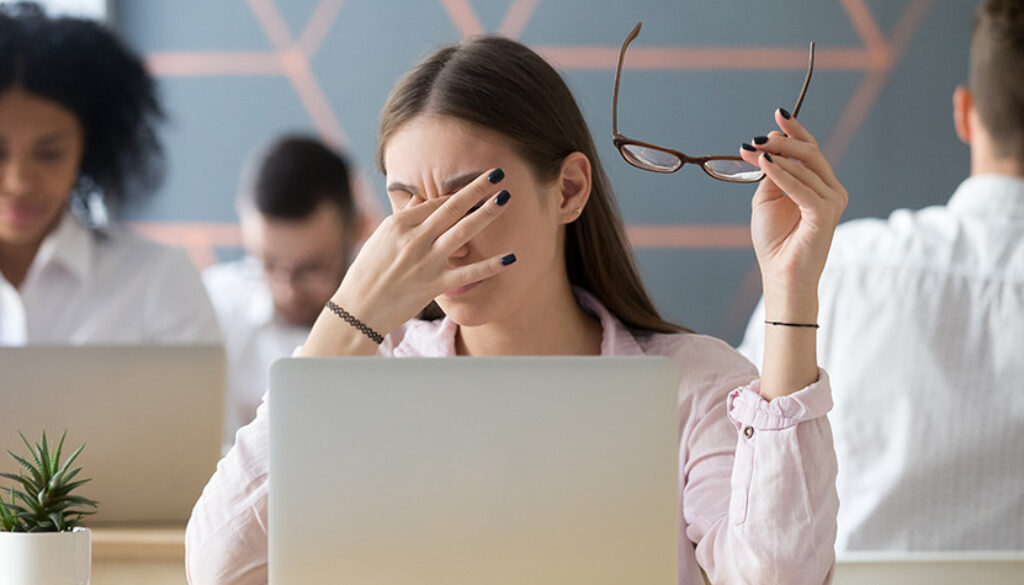
Seasonal Allergies And The Eyes
Are seasonal allergies ruining your spring in Richmond? You don’t have to suffer through red, itchy, watery eyes.
While clinically known as allergic conjunctivitis, the real problem for most patients isn’t the name—it’s the constant discomfort. The key to relief isn’t just buying more drops; it’s distinguishing whether you are fighting actual allergies or dry eye disease, and using the right defense strategy. This guide covers expert tips to stop the itch and protect your vision this season.
Key Takeaways for Eye Allergy Relief
-
Understand the Reaction: Red, itchy, and watery eyes (allergic conjunctivitis) are your body’s immune defense releasing chemicals to fight environmental allergens like pollen, dust, and smoke.
-
Preventive Positioning: Reduce exposure by staying indoors on high-wind days and always wearing sunglasses outdoors for a physical barrier against airborne allergens.
-
Don’t Touch: Avoid rubbing or scratching your eyes at all costs, as the resulting friction and irritation can quickly lead to swelling and additional complications.
-
Contact Lens Protocol: If symptoms flare up, immediately switch from contact lenses to glasses until the irritation subsides to prevent further eye discomfort.
-
Hydration & Professional Care: Stay consistently hydrated and use only doctor-recommended eye drops to manage symptoms and soothe irritation effectively.
Seasonal allergies are a medical condition similar to other forms of allergies that occur when the body’s immune system reacts to an external material in the environment during seasonal periods when plants and trees are pollinating. Seasonal allergies have a tremendous effect on millions of individuals annually, causing a negative effect on eyesight. Seasonal eye allergies cause the eyes to become itchy, watery, and red, which in medical terms is referred to as allergic conjunctivitis. Many allergens can make our eyes go itchy and very red, including dust, pollen, and smoke. These allergens, however, vary from one person to another. For example, while dust can cause itchy eyes for me, it might not be the same for you, as it all depends on our immune system and the way it reacts against such substances.
When something is regarded as a dangerous substance by the eye, a chemical response is elicited to fight against the allergen, which is what leads to the itchiness, redness, and soreness in the eyes. These reactions are usually a result of a change in seasons, mostly occurring in the spring when plants and trees are pollinating, and during the fall when the ragweed plants are pollinating.
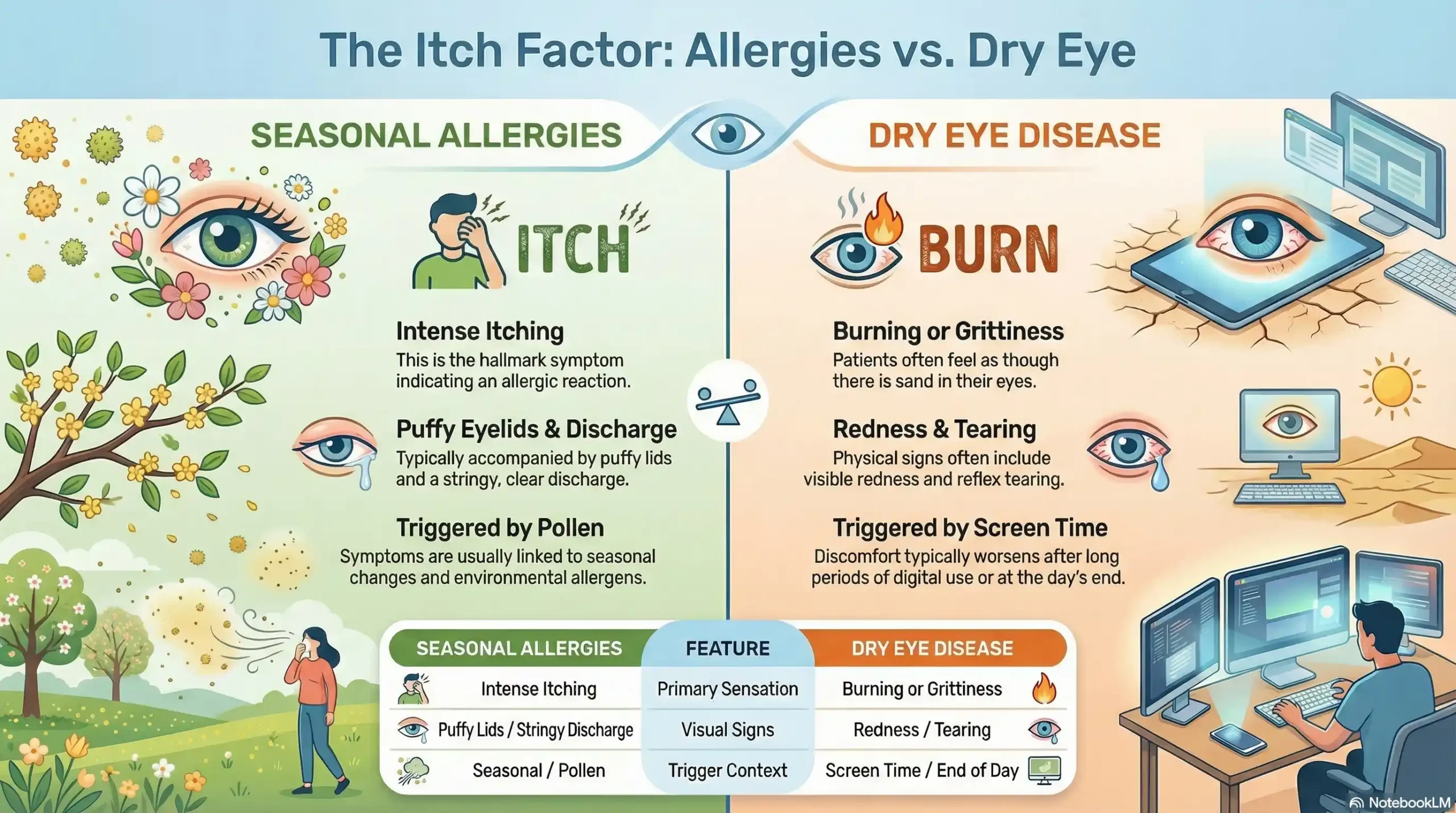
The “Itch Factor” – Is it Allergies or Dry Eye?
In our Richmond clinic, I often see patients treating “itchy” eyes with standard lubricants. If it itches, it’s almost certainly an allergic reaction. Treating allergies as simple dryness is like trying to put out a fire with a fan—it won’t address the root histamine release.
-
The Difference at a Glance:
-
Seasonal Allergies: The hallmark is intense itching. You’ll likely also notice puffy eyelids and a stringy, clear discharge.
-
Dry Eye Disease: This feels more like burning or grittiness, as if there is sand in your eye. It often gets worse after a long day of screen time.
-
-
Why Diagnosis Matters: Using antihistamine drops when you actually have dry eyes can decrease your tear production, making you feel even worse.
Expert Advice: If you aren’t sure which one you’re battling, a quick Dry Eye Consultation can save you weeks of discomfort and unnecessary pharmacy runs.
Not sure if it’s Allergies or Dry Eye? Schedule a Richmond Eye Exam.
Seasonal Allergies’ Effect on the Eyes
As we mentioned earlier, allergens affect people differently, but there are general ways in which everyone reacts. You would know an individual is suffering from allergies through the following symptoms.
Teary eyes
Since the eyes perceive substances like dust, smoke, and pollen as harmful to the normal conditioning of the eyes, there is an automatic release of water in order to clean the eyes, which is more of a defense mechanism against these foreign items.
Swollen eyes
After the entry of these foreign items, it is very natural to feel itchy and want to scratch the affected eyes. During the scratching, the skin covering the eyes would become swollen due to continuous friction.
Dry eyes
Dry eyes occur most times during winter seasons, not because of allergens like dust or pollen, but whenever there is extreme cold or snow. This causes the eyes to become dry, which leads to soreness and redness.
Itchy Eyes
Allergens are carried by air and could end up in your eyes at any time. A reaction to these allergens would cause your eyes to feel irritated from the inside and would create the urge to then scratch your eyes in an attempt to provide some relief.
Red Eyes
Redness of the eyes is usually accompanied by other symptoms, such as an itchy eye, which causes the eyes to become swollen and very red. There are also capillaries inside the eyes that can become red whenever one is faced with an allergy.
The Contact Lens Survival Guide
Many of my patients worry they have to give up their contacts when pollen counts spike. While it’s true that soft lenses act like “pollen magnets,” you don’t necessarily have to switch to glasses full-time.
-
Switch to Daily Disposables: This is my #1 recommendation. Starting with a fresh, sterile lens every morning eliminates 100% of the previous day’s pollen buildup.
-
The “Non-Ionic” Advantage: Some lens materials are naturally resistant to attracting pollen. If your current lenses feel like sandpaper, it might be time for a Specialty Contact Lens Fitting.
-
The 15-Minute Rule: If you use allergy drops, apply them 15 minutes before putting your lenses in. This prevents the medication from “coating” your lens and causing blurriness.
Prevention
It is nearly impossible to prevent allergens due to the fact that they are carried around by air. There are, however, some things that you can be done by you to help reduce your chances of being exposed to allergens. One of the first precautions is to remain indoors on windy days since more allergens are carried around at a faster pace. If it is necessary to go out, be sure to wear a pair of sunglasses that provide adequate coverage for the eyes. Furthermore, wearing pollen masks and/or sunglasses when working in the yard could help prevent anything from blowing into your eyes.
Creating an “Indoor Fortress” for Your Eyes
Prevention in Richmond isn’t just about staying indoors on windy days; it’s about making sure your home is a haven.
-
The Nightly Reset: Pollen hitches a ride on your hair and eyebrows. Showering before bed prevents you from rubbing that pollen into your pillow—and your eyes—all night long.
-
HEPA Filtration: A high-quality air purifier in your bedroom can capture 99% of airborne irritants while you sleep.
-
Don’t Forget the Kids: Children often rub their eyes when they itch, which can lead to vision issues or infections. If your child is struggling, schedule a Pediatric Eye Exam to ensure their vision stays on track.
Decoding the Pharmacy Aisle: Which Drops Actually Work?
I always warn my patients: Be careful with “Redness Relief” drops. Many OTC decongestants cause rebound redness. This means your eyes look white for an hour, but once the medicine wears off, the blood vessels dilate even more, making your eyes redder than before.
-
Look for Mast Cell Stabilizers: Ingredients like Olopatadine (Pataday) provide long-lasting relief by stopping the allergy reaction before it starts.
-
Wash Away the Day: Use preservative-free artificial tears to physically flush pollen out of your eyes after being outdoors.
-
When to Call Us: If over-the-counter options don’t bring relief within 48 hours, you may need a prescription-strength solution. We offer Same-Day Emergency Appointments for severe allergic flare-ups.
Treatment
Whenever you are suffering from allergies, be sure to stay hydrated, use any doctor-recommended eye drops you may have to help reduce irritation, and if you use contact lenses, switch to a pair of glasses to add some extra protection as well as prevent further eye discomfort. Lastly, try to avoid scratching your eyes as much as possible to prevent any additional complications.
Resources and Citations
The medical and preventative information provided in this article is supported by current standards in optometric and ocular health practice.
-
Allergic Conjunctivitis (Eye Allergies): Causes, Symptoms, and Treatment
-
Source: American Academy of Ophthalmology (AAO)
-
Relevance: Supports the clinical definitions of allergic conjunctivitis, symptoms (itchy, watery, red eyes), and the importance of professional diagnosis and doctor-recommended drops.
-
-
Seasonal Allergies: How to Reduce Exposure to Pollen and Other Allergens
-
Source: National Institute of Environmental Health Sciences (NIEHS)
-
Relevance: Reinforces the preventative measures suggested in the article, such as limiting outdoor exposure on high-pollen days and using protective barriers like sunglasses.
-
Ready for relief? Don’t suffer through another season. Schedule your comprehensive eye exam at Frame & Focus Eye Care today, and let’s get you seeing (and feeling) clearly.
FAQs
-
Your eyes get itchy and red due to allergic conjunctivitis. This occurs when the immune system releases histamine to fight airborne allergens like pollen, leading to inflammation and irritation in the eyes.