Tonometer
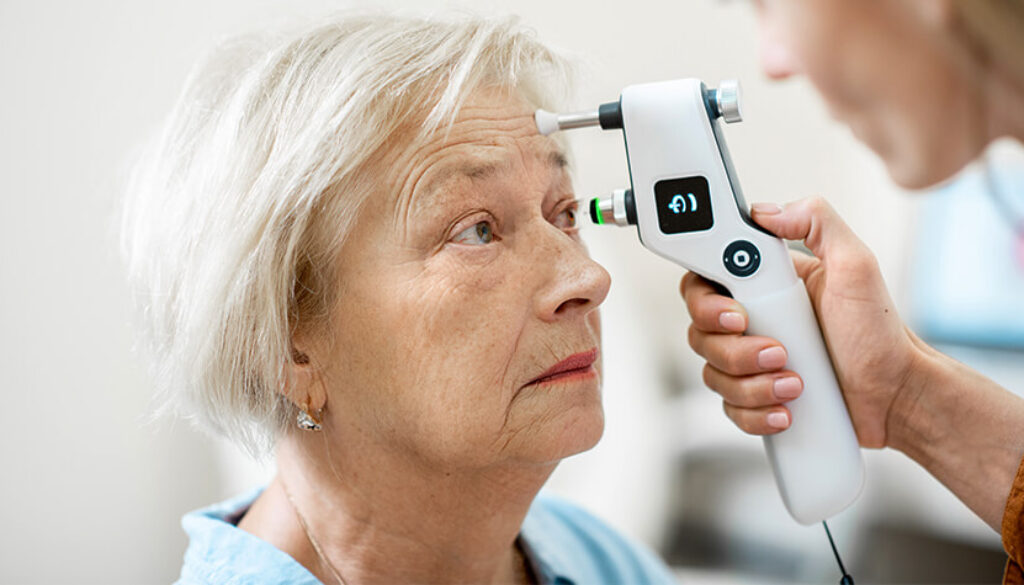
Tonometry is a specialized diagnostic test used to measure intraocular pressure (IOP) and detect early signs of glaucoma. At Frame & Focus Eye Care in Richmond, Texas, Dr. Sarah Zaver uses advanced, “no-puff” rebound tonometry to provide highly accurate, comfortable eye pressure readings without the anxiety of traditional air puffs. Whether you have a family history of glaucoma or need a baseline reading, checking your eye pressure is a critical step in protecting your long-term vision.
Schedule Your No-Puff Glaucoma Screening in Richmond
What Do Your Eye Pressure Numbers Mean? A Simple Guide to IOP
In our Richmond clinic, we often see patients breathe a sigh of relief when they hear their “number.” But what does that number actually represent? Intraocular pressure (IOP) is measured in millimeters of mercury (mmHg). Think of it like the air pressure in a tire; too much can stress the internal structure and damage the optic nerve.
-
The “Normal” Range: For most adults, a healthy reading falls between 10 and 21 mmHg.
-
The “Grey Area”: If your reading is above 21, it is classified as Ocular Hypertension. While not glaucoma itself, it’s a vital signal for us to monitor your health more closely.
-
The Exception: It is possible to have glaucoma even with “normal” pressure. This is why Dr. Zaver performs a comprehensive eye exam to look at the physical health of your optic nerve, rather than relying on the tonometer reading alone.

About Glaucoma
Glaucoma is a common eye condition that occurs when the optic nerve, which connects the eye to the brain, becomes damaged. It’s normally caused by fluid building up in the front part of the eye, which causes the pressure inside the eyes to build. As the pressure increases, the optic nerve becomes increasingly damaged, and this prevents messages from being transmitted between your eyes and brain effectively. As a result, the patient’s vision becomes compromised. Without treatment, the level of vision loss will continue to increase. Unfortunately, any vision that has been lost as a result of glaucoma cannot be restored.
Most of the time, glaucoma develops very slowly, which means that many people don’t realize that they are affected until some damage to their vision has already occurred. However, occasionally, glaucoma can develop quickly, and symptoms do occur.
These can include:
- Red eyes
- Intense headaches
- Tenderness around the eyes
- Eye pain
- Seeing rings/halos around lights
- Blurred vision
- Nausea and vomiting
If you notice any of these symptoms, you must make an appointment with your eye doctor right away so that you can be assessed. You are likely to have a tonometry test as part of this assessment.
Tonometer Technology: Why You Can Skip the “Air Puff” at Frame & Focus
Many patients visit us with “puff anxiety”—the involuntary flinch we all feel when expecting a burst of air. While the Non-Contact Tonometer (NCT) is a common tool, our commitment to state-of-the-art technology means we offer gentler, more accurate alternatives:
-
Rebound Tonometry (iCare): This is a game-changer for pediatric eye exams and sensitive adults. It uses a tiny, lightweight probe that makes contact so quickly you won’t even feel it. No numbing drops or air puffs are required.
-
Goldmann Applanation Tonometry (GAT): Still considered the “Gold Standard” for clinical accuracy. After a quick numbing drop, a soft blue light gently measures the pressure. It is painless and provides the precise data Dr. Zaver needs for a definitive diagnosis.
The Secret Variable: Why We Measure Your Corneal Thickness
Did you know your cornea’s physical thickness can “trick” a tonometer? It’s similar to how it’s harder to measure the internal pressure of a thick-walled basketball than a thin-walled balloon.
-
Thick Corneas: Often produce artificially high pressure readings.
-
Thin Corneas: Can hide dangerously high pressure by producing low readings.
To ensure your results are 100% accurate, we often pair tonometry with Pachymetry—a quick measurement of your corneal thickness. This is especially important for patients seeking a LASIK consultation or those at high risk for glaucoma. By “correcting” your IOP reading based on your cornea, we ensure we are providing the most precise care possible
Patient Checklist: How to Prepare for Your Tonometer Exam
To get the most accurate “snapshot” of your eye health, follow these simple steps before your appointment at Frame & Focus Eye Care:
-
Bring Your Contacts Case: If you wear contact lenses, you will need to remove them for certain types of tonometry.
-
Stay Relaxed: Holding your breath or “squeezing” your eyelids can artificially spike your eye pressure.
-
Note Your Medications: Some medications can impact eye pressure. If you are visiting us for emergency eye care, please have a list of your current prescriptions ready.
What to expect from tonometry testing
There are various methods of tonometry testing, but many eye doctors use either Goldmann tonometry, which is the conventional technique to measure eye pressure, or electronic tonometry.
Goldmann tonometry testing is carried out using the Goldmann applanation tonometer, which is attached to a slit lamp microscope. This requires anesthetic eye drops to be used, which numb your eyes, before a small probe is pressed gently against the eye, indenting the cornea. The pressure that the cornea pushes back onto the tonometer is what is measured to give your IOP reading. Electronic tonometry is where a handheld, mobile device is gently and quickly applied to the cornea to check the pressure, providing an accurate reading. Some eye doctors also offer a non-contact tonometer, which is where a puff of air is used to flatten the cornea, although this is reported to be less accurate than the Goldmann technique.
Resources and Citations
The following authoritative sources were referenced in the development of this article and provide comprehensive, evidence-based information about tonometry and glaucoma diagnosis:
1. StatPearls – NCBI Bookshelf: Tonometry
Published: December 12, 2023
This comprehensive medical reference confirms that tonometry is essential for diagnosing, screening, and managing ocular hypertension and glaucoma, with normal intraocular pressure ranging from 10 to 21 millimeters of mercury. The source emphasizes that intraocular pressure is currently the only modifiable risk factor for glaucoma progression, making regular tonometry testing crucial for monitoring treatment effectiveness and preventing vision loss.
2. Glaucoma Research Foundation: Facts and Statistics
Updated: May 16, 2025
Recent data from the Glaucoma Research Foundation reveals that only 43% of survey respondents reported having dilated eye exams, which are the most effective method for detecting glaucoma. This research highlights that many individuals incorrectly believe glaucoma has noticeable symptoms, when in fact it’s often called the “silent thief of sight” because open-angle glaucoma typically has no warning signs before vision is affected.
Stop Dreading the “Air Puff” Test. Experience a more comfortable way to protect your vision. At Frame & Focus Eye Care, we use gentle, “no-puff” rebound technology to make your exam stress-free. Your comfort is our priority.
[Schedule Your Eye Exam in Richmond Today] Or call us at: (832) 930-7797
FAQs
-
A tonometer is a calibrated instrument used by eye doctors to measure the intraocular pressure (IOP) inside your eye. This measurement is vital for screening, diagnosing, and managing glaucoma.