Common Eye Conditions Every Adult Should Know
Understanding common eye conditions like dry eye, glaucoma, and cataracts is the first step in preventing permanent vision loss. While symptoms like blurry vision or “gritty” eyes are common, many serious adult eye diseases develop silently without early pain. This guide breaks down the six most frequent conditions affecting adults in Richmond, TX, and how to identify red flags before they impact your daily life.
Schedule Your Comprehensive Eye Exam in Richmond
1. Refractive Errors: It’s More Than Just “Bad Eyes.”
Before we dive into diseases, let’s talk about the most common reason people walk through our doors: blurry vision. These are called “refractive errors,” and they happen when the shape of your eye doesn’t bend light correctly.
-
Myopia (Nearsightedness): You can see your phone clearly, but the road signs while driving on Grand Parkway look blurry.
-
Hyperopia (Farsightedness): Distance vision is usually okay, but reading a menu or text message requires squinting and effort.
-
Astigmatism: This is when the eye is shaped more like a football than a basketball. It causes distorted or blurry vision at all distances.
-
Presbyopia: The “over-40” shift. If you’ve started holding your phone further away to read text messages, this is presbyopia. It’s a natural loss of flexibility in the eye’s lens.
The Fix: These aren’t diseases; they are optical puzzles we solve every day. Whether it’s through our “quality eyeglasses… properly fitted” or specialty contact lenses, we ensure you leave seeing clearly.
2. Dry Eye Syndrome: The “Sahara Desert” Effect
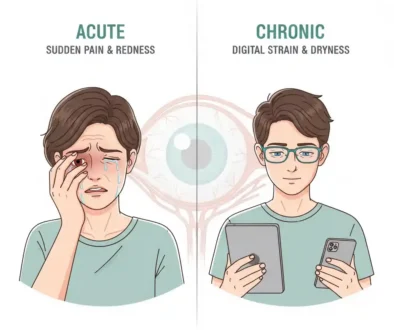
Does it feel like you have sand in your eyes at the end of a workday? You aren’t alone. Dry Eye Syndrome is exploding in prevalence, largely due to our screen-heavy lifestyles.
What it feels like:
-
Stinging, burning, or scratchy sensations.
-
Sensitivity to light.
-
Paradoxically, watery eyes (your body trying to overcompensate for dryness).
-
Blurred vision that clears up when you blink.
Why it matters: As our practice recognizes, “Vision issues aren’t just an inconvenience… they are out here trying to ruin our lives!” Chronic dry eye can damage the surface of your eye and make daily tasks miserable.
Our Approach: We don’t just tell you to buy generic drops. We look for the root cause with targeted dry eye treatment. For one recent patient, a personalized switch to daily lenses was an “absolute game changer for dry eyes and headaches!” —a perfect example of our commitment to finding the right solution.
3. Digital Eye Strain: The Modern Epidemic
With many of us working hybrid schedules or glued to smartphones, our eyes are under constant stress.
Symptoms include:
-
Headaches (especially behind the eyes).
-
Neck and shoulder pain.
-
Difficulty shifting focus from the screen to the distance.
Straight Talk Tip: Follow the 20-20-20 Rule. Every 20 minutes, look at something 20 feet away for 20 seconds. It resets your focusing system.
4. Cataracts: The Cloudy Window
Cataracts are not a disease you “catch”; they are a natural part of aging. A cataract is simply the clouding of the eye’s natural lens.
What to watch for:
-
Fading Colors: Bright colors may look dull or yellowed.
-
Glare: Oncoming headlights while driving at night become blinding “starbursts.”
-
Foggy Vision: It feels like looking through a dirty window that you can’t wipe clean.
5. Glaucoma: The “Silent Thief of Sight.”
This is the condition that keeps eye doctors up at night. Glaucoma damages the optic nerve, usually due to high pressure inside the eye.
The scary part: In the early stages, there are usually no symptoms. No pain. No blurriness. You can lose significant vision before you even notice a problem.
How we catch it: This is why we are so passionate about our proactive approach. We don’t just ask you to` read a chart. Our comprehensive exams are designed to be exhaustive, “even snapping photos of the backs of your eyes” to catch this thief before it steals your vision.
6. Diabetic Retinopathy: The Sugar Spike
If you or a family member has diabetes, your eyes are at risk. High blood sugar can damage the tiny blood vessels in the retina. Diabetic retinopathy is a leading cause of blindness in working-age adults.
Why comprehensive exams are non-negotiable: We can often detect signs of diabetes in your eyes before you’ve been diagnosed by a primary care physician. Our advanced retinal imaging allows us to spot these tiny vascular changes early.
When to Call Us Immediately (The “Red Flags”)
While most eye conditions develop slowly, some require urgent attention. If you experience any of the following, do not wait—call us. We offer same-day appointments for urgent needs because we know “eye emergencies can be frightening”.
-
Sudden onset of “floaters” (black spots or squiggles in your vision).
-
Flashes of light (like a camera flash in your peripheral vision).
-
A “curtain” falling over part of your vision.
-
Sudden eye pain or redness.
Resources & Citations
For more information on the conditions discussed, please refer to these authoritative external resources:
-
Glaucoma – The Silent Thief: Learn more about the symptoms, diagnosis, and treatment of glaucoma from the American Academy of Ophthalmology.
-
Diabetic Retinopathy – Leading Cause of Blindness: Information on how diabetes affects your eyes and steps for prevention from the CDC.
-
Dry Eye Disease – Rising Prevalence in Young Adults: Research on the increasing number of dry eye cases, particularly among younger people, due to screen use.
The Frame & Focus Difference: Why Your Exam Matters
You might think, “I see fine, so I don’t need an exam.” But as we’ve seen, many “silent” conditions hide behind clear vision.
At Frame & Focus Eye Care, we refuse to treat you like a number. We are a family-focused practice that uses state-of-the-art technology to see the full picture of your health.
-
We listen: We prioritize care customized to your “unique visual demands”.
-
We explain: We promise “straight talk” by avoiding confusing “optometry jargon”.
-
We care: From Dr. Sarah Zaver (with over a decade of experience in the Houston area) to our welcoming staff, we treat you “like family”.
Ready to protect your vision?
Don’t wait for symptoms to appear. Whether you need a routine check-up, relief from dry eyes, or affordable eyewear with our $99 Frame Special, we are here to help the Richmond community see clearly.
[Schedule Your Comprehensive Eye Exam Today]
Or call us at (832) 930-7797
FAQs
-
Generally, healthy adults should schedule a comprehensive eye examination every one to two years. Annual exams are essential if you have risk factors like diabetes or a strong family history.
Please note: None of the above should be considered medical advice. If you have any concerns about your vision, please contact us immediately or consult your primary care provider.