Eye Safety Tips
Protecting your vision requires more than just avoiding accidents; it requires a proactive daily strategy covering diet, digital habits, and injury response. While many eye conditions are hereditary, simple lifestyle changes—like the 20-20-20 rule and UV protection—can significantly reduce your risk of long-term damage. This guide outlines the essential, actionable steps you need to take today to preserve your sight for the future.
Key Takeaways for Optimal Eye Health
Protecting your vision is a proactive, daily commitment. Here are the most essential, actionable insights from this guide:
-
Your Diet is Your Defense: Prioritize nutrients like Lutein, Zinc, and Omega-3s (found in leafy greens, eggs, and oily fish) to build your internal defense against conditions like cataracts.
-
Preventative Screenings Save Sight: Many serious eye conditions, like glaucoma, show no early symptoms. Annual eye exams are non-negotiable for early detection and treatment.
-
Family History is Crucial: Eye conditions are often hereditary. Know your family’s medical history and share it with your eye doctor to create a personalized preventative action plan.
-
Protect Against the Sun and Smoke: Always wear sunglasses that block 99-100% of UV rays, and immediately stop smoking, as it is a major factor in macular degeneration and vision loss.
-
Practice the 20-20-20 Rule: To combat digital eye strain, look away from your screen every 20 minutes for 20 seconds at an object 20 feet away.
-
Know Basic First Aid: If you experience an eye injury, never rub or attempt to remove a foreign object. Use a shield (like a styrofoam cup) and seek professional medical attention immediately.
Due for a check-up? Schedule your Comprehensive Eye Exam today.
While a lot of people are aware that the eyes are an integral part of the body system, most of them do not pay very close attention to taking care of their eyes and are, in essence, taking them for granted. As the saying goes, “You don’t know what you have until it’s gone,” and therefore, we have decided to take the necessary steps to provide you with information on how to best take care of your eyesight.
Below are ways to keep your eyes safe:
1. Eat Healthy
Eating a healthy diet is a very integral part of keeping the eyes healthy. Nutrients like lutein, vitamins E and C, omega-3 fatty acids, and zinc may help in preventing eye-related problems like cataracts and macular degeneration. These nutrients can be found in vegetables like collards, kale, spinach, fish like tuna, salmon, and halibut, as well as in beans, nuts, eggs, oranges, pork, and oysters.
Besides eating meals rich in nutrients, it is equally important to eat a well-balanced diet. Obesity can cause diabetes and other medical conditions, leading to blindness or glaucoma. Obesity is also regarded as the chief cause of blindness across the globe, which should raise a red flag to watch your weight. You can always visit your doctor to get help with drafting a healthy eating plan.
2. Know your family’s medical history
Eye issues are usually hereditary, which is why it is important to collect a family history of any diseases that may affect eye health and then report them to your eye doctor. This will help to determine your chances of any future eye conditions, as well as come up with an action plan for future eye exams.
3. Avoid Smoking
Smoking, in general, is harmful to your overall health. In regard to your eyes, it can cause macular degeneration, destroy the optic nerve, and cause cataracts. It can even lead to vision loss. Quitting smoking if you already smoke, or better yet, not even starting, will be extremely beneficial to your overall health and wellness.
4. Wear Sunglasses
Sunglasses are more than just fashion accessories; they are vital in protecting the eyes from ultraviolet rays emitted from the sun. UV rays can cause macular degeneration and even cataracts, which is why it is important to wear sunglasses that protect against 99% -100% of UV rays.
5. Obey workplace safety precautions
It is important that we wear protective eye gear when engaging in sporting activities or jobs that could be harmful to the eyes. Such eyewear includes safety goggles, glasses, and helmets. Most of these protectors are from polycarbonates, which is a much stronger material than plastic.
6. Rest your eyes
Just like our bodies, the eyes also need rest to perform optimally. Depriving yourself of adequate sleep and rest can have an adverse effect on the eyes. During the use of the computer, remember to rest the eyes for at least 20 seconds every 20 minutes by looking away from the screen. Doing this will reduce eye strain.
7. Visit your eye doctor regularly
Getting regular eye exams is one of the most important things you can do for your eye health. Conditions like glaucoma are much easier to treat if they are discovered early, so don’t stay far from your doctor.
The “Digital Eye Strain” Toolkit: Beyond the 20-20-20 Rule
We’ve all heard of the 20-20-20 rule, but in our Richmond clinic, we often see patients who follow the breaks yet still suffer from “Computer Vision Syndrome.” The secret to true relief lies in the physical setup of your workspace.
-
The “Arm’s Length” Rule: Your monitor should be exactly 20 to 28 inches from your eyes. If you find yourself leaning in, don’t move the screen closer—increase your font size instead.
-
The “Downward Gaze” Strategy: Position the top of your screen at or slightly below eye level. This encourages a natural downward gaze, allowing your eyelids to cover more of the eye’s surface, which keeps your tears from evaporating too quickly.
-
Conscious Blinking: We blink 66% less when staring at screens. This is a primary trigger for dry eye syndrome. Try placing a small “Blink!” sticky note on your monitor as a gentle reminder to refresh your ocular surface.
Beauty Without the Risk: Cosmetics and Your Eyes
Makeup is a daily ritual for many, but it can be a hidden source of chronic irritation if not handled with “eye-safe” habits.
-
The 3-Month Rule: Bacteria flourish in dark, moist environments. Toss your mascara and liquid liners every 90 days. If you experience any redness or discharge, replace all your eye products immediately to avoid re-infection.
-
Mind the “Waterline”: Avoid applying eyeliner to the inner rim (the waterline) of your eyelids. This area contains the openings of your Meibomian glands, which produce the essential oils for your tears. Blocking these can lead to painful styes or long-term dryness.
-
Remove Before Sleep: Sleeping in eye makeup increases the risk of corneal abrasions and follicular conjunctivitis.
Contact Lens Safety: The “No-Water” Rule
If you wear contacts, your daily routine is the front line of your eye safety. A common misconception is that tap water is “clean” enough for lenses. However, organisms like Acanthamoeba—found in even the cleanest tap water—can cause devastating corneal infections.
-
Water is the Enemy: Never shower, swim, or rinse your lenses in water.
-
The Case for Daily Disposables: For the ultimate in eye safety, we often recommend daily disposable lenses. Starting with a sterile lens every morning removes the risk of bacterial buildup.
-
Case Hygiene: Your lens case should be replaced monthly. Every morning, empty the old solution, rinse the case with fresh multi-purpose solution (never water), and let it air dry upside down.
First Aid
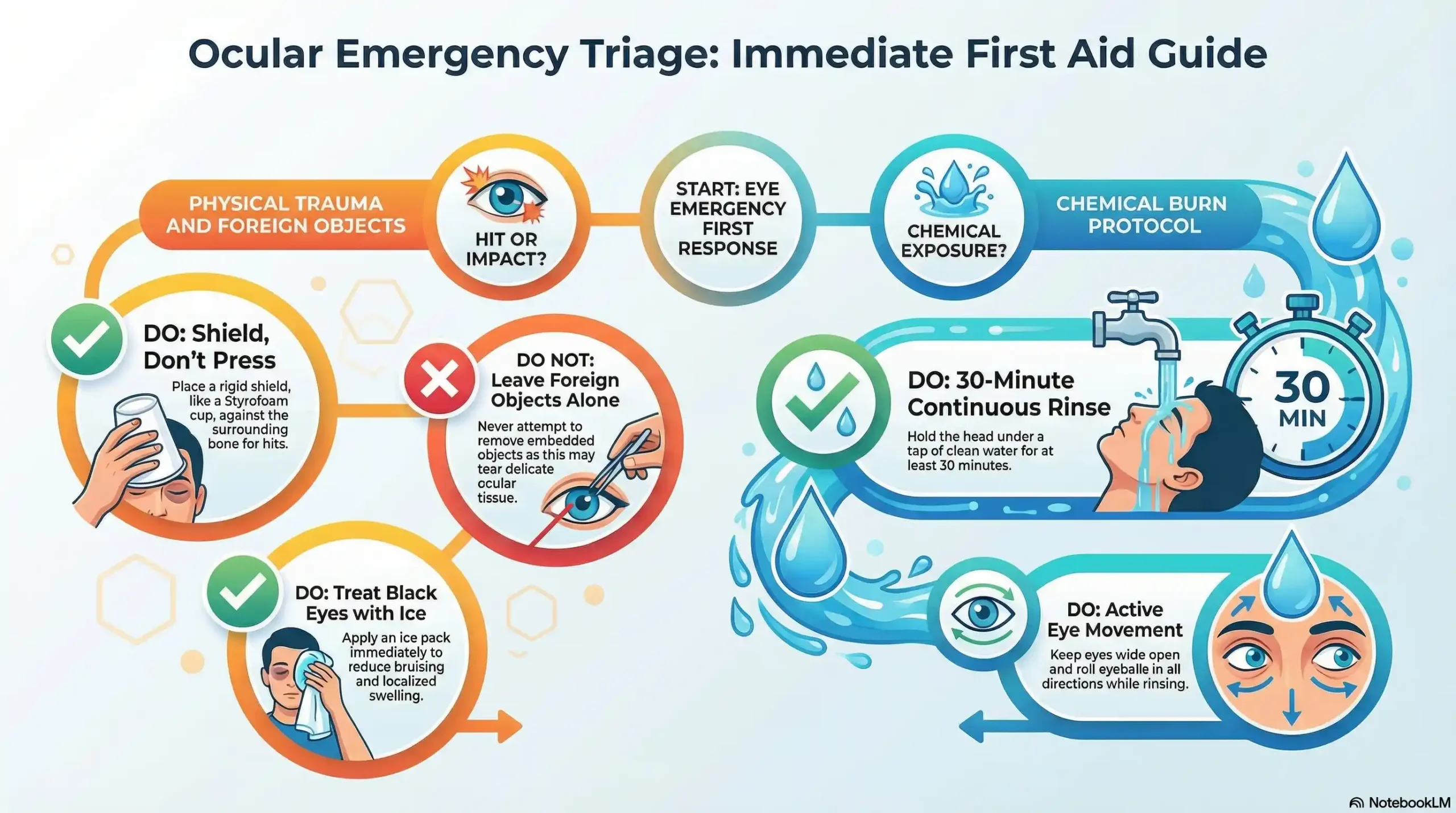
Eye injuries can happen at any time, and it is good to know how to handle such emergencies until you can reach a medical professional.
- If you get hit in the eyes, you should put a shield, like a Styrofoam cup, on the bone of the eye. Avoid putting pressure on the eye.
- If something enters your eyes, avoid removing it, as it may lead to the tearing of important tissue in the eyes. A Styrofoam cup would also do the job here until you can get to a medical professional.
- In the case of a black eye, putting an ice pack on the eye will help to reduce bruising and swelling.g
- If it’s a chemical burn, rinse the eyes with clean water for about 30 minutes, holding your head beneath the tap. While rinsing, keep your eyes wide open, rolling your eyeballs in all directions so as to ensure the water gets to every part.
Household & Chemical Safety: Preventing Accidents at Home
Most eye injuries don’t happen at a construction site; they happen in the kitchen, the garden, or the garage. Common household chemicals like bleach and drain cleaners can cause permanent scarring within seconds.
-
ANSI Z87.1 Protection: If you are doing yard work or using power tools, standard glasses aren’t enough. Ensure your protective gear is rated ANSI Z87.1, meaning it is impact-resistant and won’t shatter.
-
The “Head-Away” Pour: When pouring liquid chemicals, turn your face slightly away from the container to prevent accidental splashes.
-
Emergency Protocol: If a chemical splash occurs, flush your eyes with clean water for at least 15 minutes and contact us immediately for emergency eye care.
Sources & Resources
The information in this article is supported by research from the following authoritative health organizations:
-
American Academy of Ophthalmology (AAO): For clinical recommendations on diet, smoking cessation, and protective eyewear.
- Centers for Disease Control and Prevention (CDC): For information on eye safety, emergency first aid protocols, and the link between obesity/diabetes and eye health.
Ready to prioritize your vision? Don’t wait for a problem to arise. Schedule your annual eye exam with Dr. Sarah Zaver today and ensure your eyes are protected for years to come.
FAQs
-
The best foods are dark, leafy greens like kale and spinach. They are rich in Lutein and Zeaxanthin, which help protect the macula from sun damage.