
Prism Correction Explained: Relief for Double Vision
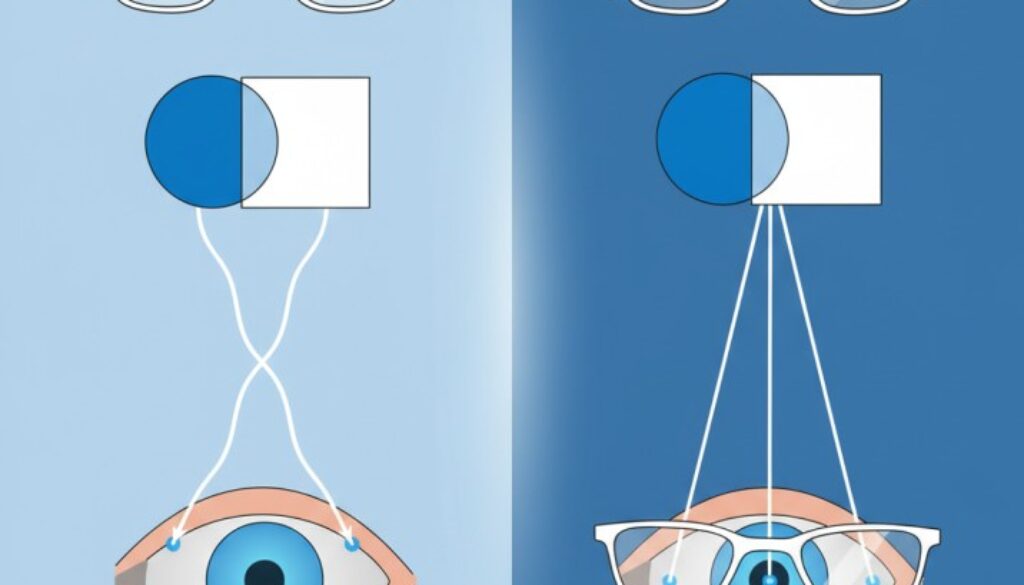
Prism correction is a specialized optical treatment using wedge-shaped lenses to redirect light, effectively merging double vision into a single, clear image. At Frame & Focus Eye Care, we use this technology to provide immediate relief for patients suffering from persistent headaches, eye strain, and binocular misalignment.
What Is Prism Correction?
Prism correction is a specialized optical treatment that uses wedge-shaped lenses to redirect light before it enters your eyes. Unlike traditional prescription glasses that focus on refractive errors like nearsightedness or farsightedness, prism correction specifically addresses eye alignment issues that can cause double vision and eye strain.
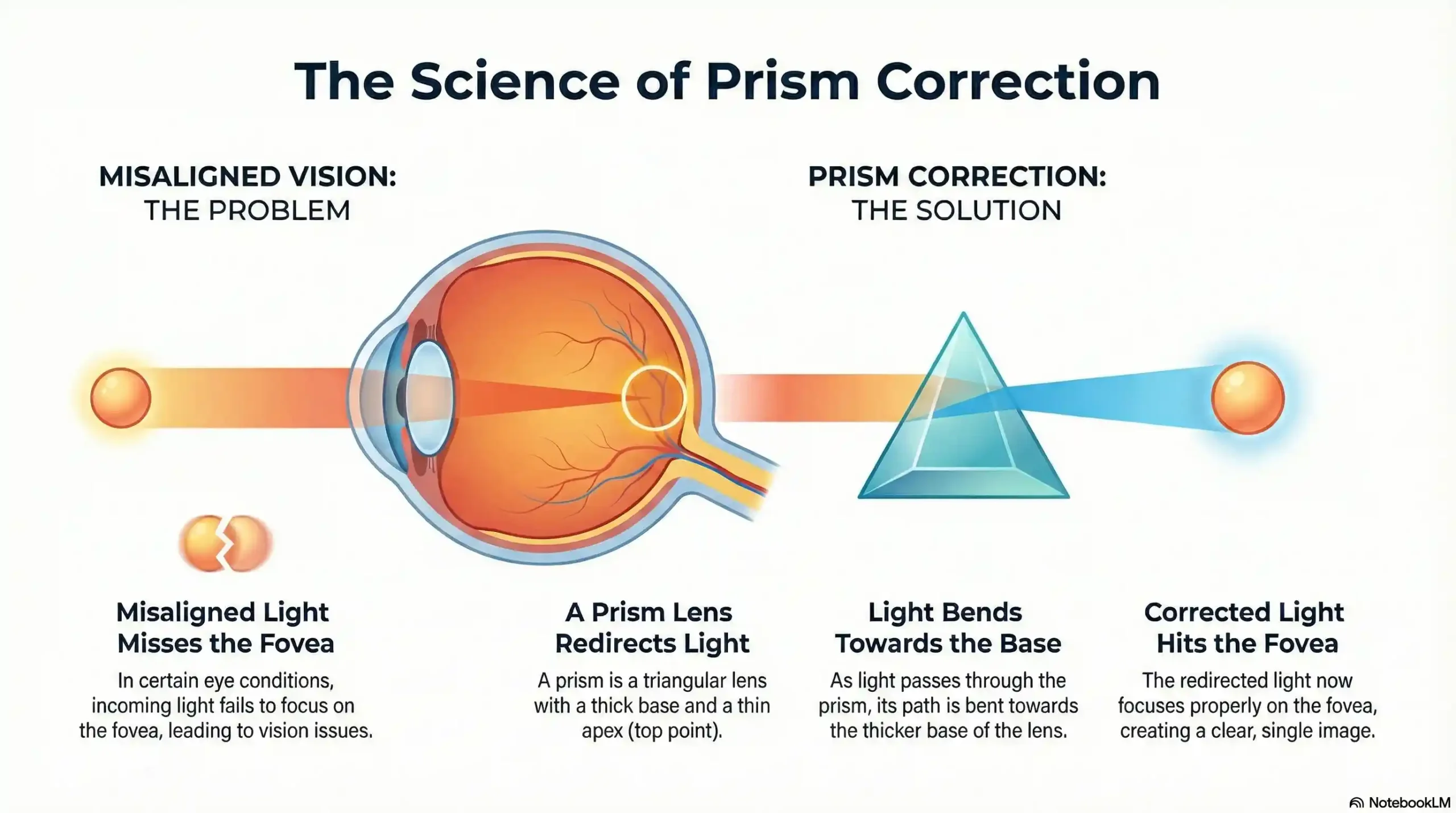
The prism lens is triangular in shape, with a thicker base and a thinner apex. When light passes through this wedge-shaped lens, it bends toward the thicker base, effectively shifting the image to help your eyes work together more efficiently. This redirection allows your brain to merge the two separate images from each eye into one clear, single image.
How Prism Correction Differs from Regular Glasses
While standard prescription glasses correct how light focuses on your retina, prism glasses correct where light falls on your retina. This distinction is crucial for patients with eye misalignment issues. Regular glasses help with clarity, but prism correction helps with coordination between your eyes.
Dr. Sarah Zaver explains, “Many patients come to our Richmond practice frustrated because their regular glasses prescription isn’t solving their vision problems. When we discover they need prism correction, it’s often a breakthrough moment that finally provides the relief they’ve been seeking.”
Schedule a Prism Alignment Evaluation in Richmond
Understanding Double Vision (Diplopia)
Double vision, medically known as diplopia, occurs when you see two images of a single object. This can happen side by side, one above the other, or at an angle. The condition significantly impacts daily activities and can be particularly dangerous while driving or operating machinery.
Types of Double Vision
Binocular Diplopia: This occurs when both eyes are open and typically results from eye misalignment. The condition disappears when you close one eye. This is the type most commonly treated with prism correction.
Monocular Diplopia: This affects only one eye and persists even when the other eye is closed. It’s usually caused by issues within the eye itself, such as cataracts or corneal problems.
Common Causes of Double Vision
Several conditions can lead to double vision that may benefit from prism correction:
- Strabismus (Crossed Eyes): When eye muscles don’t work together properly
- Convergence Insufficiency: Difficulty focusing both eyes on near objects
- Neurological Conditions: Including stroke, traumatic brain injury, or multiple sclerosis
- Thyroid Eye Disease: Inflammation affecting eye muscles
- Muscle Weakness Disorders: Such as myasthenia gravis
- Cranial Nerve Damage: From diabetes, high blood pressure, or other conditions
According to recent research published in StatPearls (2023), prism correction has been successfully used in ophthalmology for over 100 years, with significant advances in treatment approaches since the 1960s.
The Connection Between Eye Misalignment and Eye Strain
Eye strain isn’t just about tired eyes—it can be a complex symptom of underlying eye coordination problems. When your eyes aren’t properly aligned, your brain works overtime trying to merge the conflicting visual information, leading to a cascade of uncomfortable symptoms.
Symptoms of Eye Misalignment
Patients with eye misalignment may experience:
- Physical Symptoms:
- Frequent headaches, especially around the temples and forehead
- Eye pain or soreness
- Neck and shoulder tension
- Fatigue, particularly after reading or computer work
- Chronic eye strain that worsens throughout the day
- Visual Symptoms:
- Blurred or double vision
- Difficulty focusing
- Words appearing to move on the page
- Light sensitivity
- Poor depth perception
- Functional Symptoms:
- Difficulty reading or concentrating
- Problems with driving, especially at night
- Losing place while reading
- Avoiding close-up tasks
The Role of Trigeminal Nerve Stimulation
Recent research has revealed that eye misalignment can trigger what’s called “trigeminal dysphoria”—overstimulation of the trigeminal nerve due to constant eye realignment efforts. This explains why patients with minor eye misalignments often experience headaches, dry eye sensation, and neck tension.
A landmark study published in 2022 found that specialized contoured prism lenses reduced headache symptoms by more than 77%, with dizziness improving by almost 90% in treated patients. A subsequent 2024 double-masked, randomized crossover clinical trial published in Translational Vision Science & Technology involving 195 patients across 10 practices demonstrated statistically significant improvement in quality of life for individuals impacted by headaches when wearing Neurolens contoured prism technology.
How Prism Correction Works
Prism correction operates on a simple but elegant principle: by bending light before it reaches your eyes, these specialized lenses can compensate for eye misalignment and reduce the strain on your visual system.
The Science Behind Prism Lenses
When your eyes are misaligned, each eye sends a slightly different image to your brain. Your brain then works overtime trying to merge these disparate images into a coherent picture. This constant effort leads to the symptoms many patients experience—headaches, eye strain, and fatigue.
Prism lenses “trick” your brain by shifting the image position, making it appear as if your eyes are properly aligned. This reduces the muscular effort required for your eyes to work together and allows your visual system to function more comfortably.
Types of Prism Correction
Ground-In Prisms: These are permanently incorporated into your lens prescription and are ideal for long-term correction. They provide the most stable and cosmetically appealing option.
Fresnel Prisms: These temporary, adhesive prisms can be applied directly to existing glasses. Available in powers from 1.0 to 40.0 prism diopters, they’re useful for testing whether prism correction will help before committing to permanent lenses, or for patients whose prescription may change.
Contoured Prisms: A newer technology that gradually increases prism power from distance to near vision, addressing the fact that 90% of patients need different prism requirements at different distances.
Prism Measurement and Prescription
Prism strength is measured in prism diopters (Δ or PD). One prism diopter shifts an image by approximately one centimeter at a distance of one meter. Most patients require between 0.5 and 10 prism diopters, though higher powers up to 40 prism diopters may be necessary in some cases. For prescriptions requiring more than 10 prism diopters, consultation with a strabismus specialist should be considered.
The prism prescription includes:
- Power: The strength of the prism (e.g., 2.0Δ)
- Base Direction: Where the thicker part of the prism is positioned (base up, down, in, or out)
- Eye: Which eye (or both) receives the prism correction
Comprehensive Testing and Diagnosis
Getting an accurate prism prescription requires specialized testing that goes beyond a standard eye exam. At Frame & Focus Eye Care, Dr. Zaver uses state-of-the-art technology to precisely measure eye alignment and determine the optimal prism correction.
Diagnostic Tests for Prism Correction
Cover Tests: The gold standard for detecting eye misalignment. During this test, your eye doctor covers and uncovers each eye while you focus on a target, watching for any eye movement that indicates misalignment.
Prism Cover Test: Uses prisms of varying strengths to neutralize any eye movement, helping determine the exact amount of prism correction needed.
Hirschberg Test: A quick screening test where light is shone into your eyes. The reflection should appear centered in each pupil if the eyes are properly aligned.
Krimsky Test: Similar to the Hirschberg test, but uses prisms to center the light reflex in both eyes, providing a measurement of the misalignment.
Maddox Rod Test: Each eye sees a different image (lines vs. dots), and the separation between these images helps determine the type and amount of double vision.
Advanced Diagnostic Technology
Modern practices now use sophisticated devices like the Neurolens Measurement Device (NMD2), which can detect eye misalignments as small as 0.10 prism diopters and measure how your eyes work together at both distance and near.
This technology analyzes over 10,000 measurements to provide precise prism prescriptions, leading to more successful outcomes for patients.

Treatment Options and Approaches
Prism correction isn’t one-size-fits-all. The best treatment approach depends on your specific type of eye misalignment, the severity of symptoms, and whether the condition is stable or changing.
Temporary vs. Permanent Solutions
Fresnel Prisms (Temporary):
- Applied directly to existing glasses
- Ideal for testing effectiveness
- Used when the prism’s needs may change
- Less expensive initial option
- Slightly visible on the lenses
Ground-In Prisms (Permanent):
- Integrated into the lens during manufacturing
- Better optical quality
- More cosmetically appealing
- Suitable for stable, long-term needs
- Higher initial cost but better durability
Combination Approaches
When prism correction alone isn’t sufficient, your eye care provider may recommend additional treatments:
Referral to Specialists: For complex cases requiring specialized care, we coordinate with vision therapy specialists and other eye care professionals to ensure comprehensive treatment.
Progressive Prism Adjustment: Starting with a lower prism power and gradually increasing as your visual system adapts. This approach helps minimize adjustment symptoms.
Lifestyle Modifications: Including proper computer ergonomics, adequate lighting, and regular visual breaks to support your treatment.
Recent Treatment Advances (2024-2025)
A 2024 clinical trial published in BMC Ophthalmology examined different treatment approaches for convergence insufficiency in presbyopic patients, providing insights into optimal prism prescribing practices for different patient populations.
Additionally, a 2025 study published in the Indian Journal of Ophthalmology examined effective prism diopter measurements and conversion between different prism materials, leading to more accurate prescribing guidelines for practitioners worldwide.
What to Expect: Living with Prism Glasses
Starting prism correction is a journey, and understanding what to expect can help ensure your success with treatment.
Initial Adjustment Period
Most patients experience some adaptation symptoms during the first few days to weeks of wearing prism glasses:
Common Initial Symptoms:
- Mild dizziness or disorientation
- Slight changes in depth perception
- Temporary increase in eye strain
- Feeling like the world is “tilted.”
These symptoms typically resolve within 1-2 weeks as your visual system adapts to the new lens correction.
The Progressive Relaxation Process
Many patients experience what specialists call “progressive relaxation”—as your eye muscles stop working overtime, your symptoms gradually decrease. This process can reveal that you need adjustments to your prism prescription as your eyes relax into their natural position.
Long-Term Benefits
Patients successfully adapted to prism correction often report:
- Significant reduction in headaches
- Improved reading comfort and concentration
- Better depth perception
- Reduced eye fatigue
- Enhanced quality of life
A study tracking 179 patients with chronic daily headaches found that 81.6% showed a positive response to treatment with contoured prism lenses, with 54% reporting their headaches were substantially reduced or eliminated. Additionally, patients wearing these specialized lenses improved their reading speed by 70%.
Lifestyle Considerations
Driving: Most patients can drive safely with prism glasses, though you should practice in familiar areas first and avoid driving until you’re comfortable with the correction.
Computer Work: Prism glasses often significantly improve computer comfort and reduce digital eye strain, with some studies showing 70% improvement in reading speed.
Sports and Activities: Most activities can be performed normally with prism glasses, though some sports may require special consideration.
Potential Side Effects and Complications
While prism correction is generally safe and effective, it’s important to understand potential side effects and when to seek help.
Common Side Effects
Temporary Adjustment Symptoms:
- Mild headaches during adaptation
- Slight nausea or dizziness
- Depth perception changes
- Visual distortions
Frame-Related Issues:
- Lens thickness (prism lenses may be thicker than standard lenses)
- Weight distribution
- Frame alignment importance
When to Contact Your Eye Doctor
Seek professional help if you experience:
- Severe or persistent headaches
- Worsening double vision
- Significant nausea or vertigo
- Symptoms that don’t improve after 2-3 weeks
Minimizing Side Effects
Choose the right frame style to accommodate thicker prism lenses, ensure proper frame adjustment and fit, and follow your eye doctor’s wearing schedule recommendations.
Special Considerations for Different Conditions
Different underlying conditions may require modified approaches to prism correction.
Stroke and Traumatic Brain Injury
Patients recovering from stroke or brain injury may benefit from prism correction as part of their overall care:
- Careful assessment and gradual introduction of prism power
- Coordination with neurological care teams
- Regular monitoring and adjustments as recovery progresses
- Referral to specialized rehabilitation services when appropriate
Progressive Neurological Conditions
For conditions like multiple sclerosis or myasthenia gravis:
- Prism needs may fluctuate
- Fresnel prisms may be more practical
- Regular follow-up is essential
- Backup correction options should be available
Insurance Coverage and Costs
Understanding the financial aspects of prism correction helps you make informed decisions about your care.
Insurance Considerations
Many insurance plans cover prism correction when medically necessary. Coverage typically includes:
- Comprehensive eye examination
- Diagnostic testing
- Prescription lenses with prism correction
- Follow-up care
Cost Factors (2025 Pricing)
Fresnel Prisms: Generally $250-$500 Ground-In Prism Glasses: Typically $600-$1,500 (not including frames) Specialized Testing: May have additional costs
The investment in proper prism correction often pays dividends in improved quality of life, reduced medication needs for headaches, and increased productivity.
Finding the Right Eye Care Provider
Not all eye care providers have equal experience with prism correction. Choosing the right practitioner is crucial for successful treatment.
What to Look For
Specialized Training: Look for providers with specific training in binocular vision and prism correction.
Advanced Testing Equipment: Modern diagnostic tools provide more accurate measurements and better outcomes.
Experience with Your Condition: Some providers specialize in particular conditions like traumatic brain injury or convergence insufficiency.
Comprehensive Approach: The best providers consider your complete visual needs, not just the prism correction.
Questions to Ask Your Eye Doctor
- How much experience do you have with prism correction?
- What testing equipment do you use?
- What’s your approach to prism prescription?
- How do you handle adjustment issues?
- Do you work with vision therapists?
When to Seek Professional Help
Don’t wait to address vision problems that could benefit from prism correction. Early intervention often leads to better outcomes and prevents the development of compensatory habits that can complicate treatment.
Red Flag Symptoms
Seek immediate evaluation for:
- Sudden onset of double vision
- Double vision accompanied by a severe headache
- Vision changes after a head injury
- Progressive worsening of symptoms
Quality of Life Indicators
Consider prism evaluation if you experience:
- Avoiding reading or close work due to discomfort
- Frequent headaches, especially after visual tasks
- Difficulty concentrating or focusing
- Feeling overwhelmed in visually complex environments
Additional Resources and Medical References
For readers seeking additional information about prism correction and related vision conditions, we recommend these authoritative medical resources that contributed to this comprehensive guide:
1. StatPearls Medical Encyclopedia – Prisms in Ophthalmology
This peer-reviewed medical reference, published by the National Center for Biotechnology Information (NCBI), provides comprehensive coverage of prism optics principles, clinical applications, and diagnostic uses in ophthalmology. Updated June 2023, it serves as a primary resource for healthcare professionals and includes detailed information about prism diopter measurements, testing methods, and therapeutic applications for diplopia and strabismus.
2. Translational Vision Science & Technology – Neurolens Clinical Trial
This 2024 randomized, double-masked, crossover clinical trial published in ARVO’s peer-reviewed journal demonstrates the effectiveness of contoured prism lenses for headache relief. The study involved 195 participants across 10 optometry practices and utilized the validated Headache Impact Test (HIT-6) to measure treatment outcomes, providing evidence-based support for prism correction in treating vision-related headaches.
3. American Academy of Ophthalmology – Prism Correction Guidelines
The American Academy of Ophthalmology’s patient education resource explains prism correction in an accessible language while maintaining medical accuracy. Updated in 2024, this resource covers the basic principles of how prism glasses work, common causes of double vision, diagnostic testing methods, and what patients can expect during examination and treatment.
Conclusion: Taking the Next Step
Prism correction has provided life-changing relief for thousands of patients struggling with double vision, eye strain, and related symptoms. While the initial adjustment period requires patience and commitment, the long-term benefits often far exceed expectations.
If you’re experiencing symptoms that could indicate a need for prism correction, don’t wait. Early evaluation and treatment can prevent the progression of symptoms and help you regain comfortable, efficient vision.
The journey to better vision starts with a comprehensive eye examination. At Frame & Focus Eye Care, we’re committed to providing the expert care and personalized attention you need to achieve your best possible vision.
Ready to explore whether prism correction could help you? Contact Frame & Focus Eye Care today to schedule a comprehensive evaluation with Dr. Sarah Zaver. Located at 18310 W Airport Blvd #900, Richmond, TX 77407, we serve patients throughout the Richmond area, including Sugar Land, Rosenberg, and Fulshear.
Don’t let vision problems continue to impact your quality of life. Take the first step toward clearer, more comfortable vision today.
FAQs
-
A prism correction is a feature in eyeglass lenses that bends light before it enters your eyes. It shifts the image to help your brain fuse two misaligned images into a single, clear picture.
Please note: None of the above should be considered medical advice. If you have any concerns about your vision, please contact us immediately or consult your primary care provider.


