More Than Dryness: 7 Conditions Linked to Eye Pain
Persistent eye pain and dryness are rarely just a lack of tears; they are usually signs of underlying conditions like Meibomian Gland Dysfunction (MGD) or Blepharitis. While eye drops provide temporary relief, long-term comfort requires diagnosing which of the two core types of dry eye—Evaporative or Aqueous-Deficient—is causing your discomfort.
Schedule a Precise Dry Eye Diagnosis
Understanding the Two Core Types of Dry Eye
Modern optometry divides chronic dry eye disease into two main categories. Often, patients have a mix of both:

-
1. Evaporative Dry Eye (EDE): This is the most common form (upwards of 86% of cases). The problem isn’t the quantity of tears, but the quality. Tears evaporate too quickly because the protective oil layer is deficient or unstable.
-
2. Aqueous-Deficient Dry Eye (ADDE): This occurs when the lacrimal glands fail to produce enough of the watery component of tears. This is often associated with age or underlying autoimmune diseases.
Here are the conditions linked to these two types:
The Top 7 Underlying Conditions & Systemic Links
1. Meibomian Gland Dysfunction (MGD) – The #1 Culprit
MGD is the single most common cause of Evaporative Dry Eye and the primary reason most people cannot find lasting relief.
-
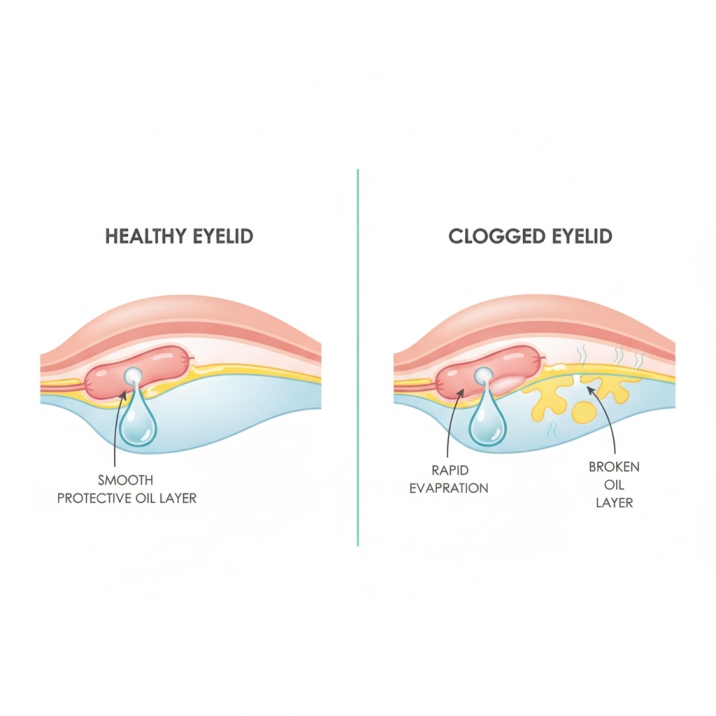
The Link to Dry Eye: Your eyelids contain approximately 30 small glands (Meibomian glands) that secrete a crucial oil called meibum. This meibum forms the outermost layer of your tear film, sealing the tear and preventing rapid evaporation. In MGD, these glands become blocked, inflamed, or atrophied, leading to poor-quality oil. Without this protective coating, your tears evaporate 4 to 16 times faster than normal, leading to chronic dryness and irritation.
-
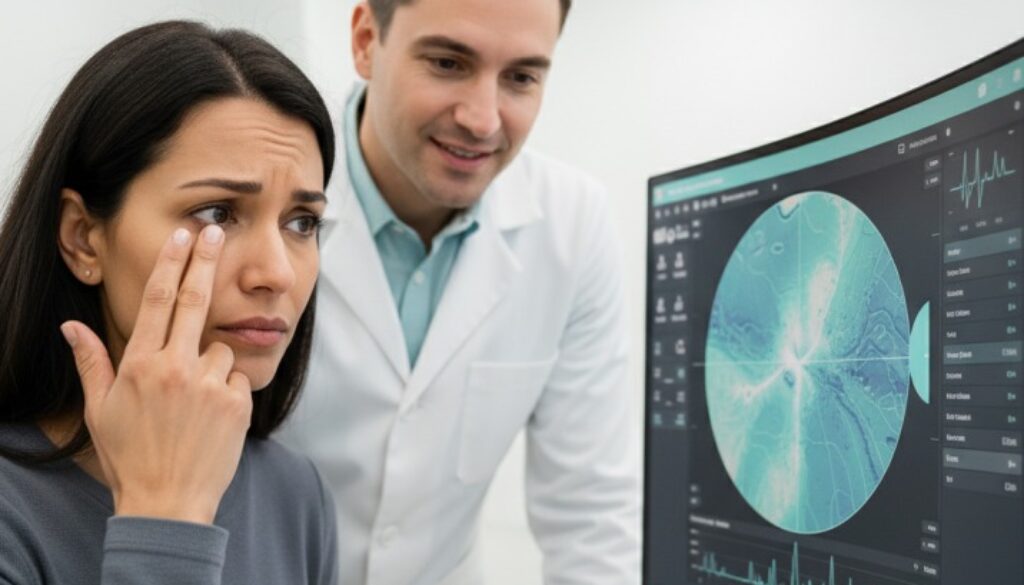
The Frame & Focus Solution: MGD is often missed without specialized testing. We use high-resolution diagnostic imaging (like the Lipiview interferometer) to grade your Meibomian glands, allowing us to see if they are clogged or permanently atrophied. Our targeted dry eye treatment protocols focus on clearing blockages and restoring gland function.
2. Blepharitis: Inflammation at the Eyelid’s Edge
Blepharitis is an inflammatory condition of the eyelids that frequently coexists with MGD and dry eye.
-
The Link to Dry Eye: Blepharitis involves inflammation and often an overgrowth of normal bacteria (or even microscopic mites, called Demodex) at the base of your eyelashes. This inflammation is physically close to the Meibomian glands, causing debris and toxins to clog the oil ducts and destabilize the tear film. This often results in crusty, red, swollen eyelids and persistent grittiness.
-
The Frame & Focus Solution: Treatment involves a combination of specialized in-office deep cleaning (such as BlephEx) to remove bacteria and debris, combined with at-home hygiene protocols designed to control inflammation and restore eyelid health.
3. Systemic Autoimmune Conditions (Sjögren’s Syndrome, RA, Lupus)
When the problem stems from tear production (Aqueous-Deficient Dry Eye), the cause is often systemic.
-
The Link to Dry Eye: Sjögren’s Syndrome is an autoimmune disease where the body’s immune system mistakenly attacks moisture-producing glands, including the salivary and lacrimal (tear) glands. Other inflammatory conditions, such as Rheumatoid Arthritis (RA) and Lupus, can also trigger a similar immune response that damages the tear-producing structures. This leads to a severe reduction in watery tear volume.
-
The Frame & Focus Solution: If we detect severe aqueous deficiency, your treatment will involve collaborative care. We work closely with your rheumatologist to manage the systemic condition while treating your eyes with specialized drops and procedures, such as punctal plugs, to preserve every single tear.
4. Thyroid Eye Disease (TED)
Thyroid issues, particularly Graves’ Disease, can physically and chemically impact the eye’s surface.
-
The Link to Dry Eye: TED can cause physical changes, such as the eyelids pulling back (retraction). This makes it difficult to fully close the eye, increasing the surface area exposed to air and causing tears to evaporate extremely quickly, leading to severe evaporative dry eye. Furthermore, the underlying immune dysregulation contributes to ocular surface inflammation.
-
The Frame & Focus Solution: Addressing TED-related dry eye requires managing both the inflammation and the exposure. This may involve custom lubricants, anti-inflammatory therapies, and working with specialists to manage the underlying thyroid condition.
5. Ocular Rosacea
Most people associate Rosacea with facial redness, but it is deeply linked to eye health.
-
The Link to Dry Eye: Ocular rosacea causes chronic inflammation that primarily targets the Meibomian glands in the eyelids. The inflammation thickens the meibum oil and causes the glands to clog faster and more severely, driving aggressive Evaporative Dry Eye and symptoms like chronic redness and a burning sensation.
-
The Frame & Focus Solution: Effective treatment requires addressing the eyelid inflammation directly. This often involves oral anti-inflammatory medications and in-office treatments like the IPL (Intense Pulsed Light) procedure, which targets the root inflammation and improves the function of the Meibomian glands.
6. Lifestyle Factors: Cosmetics and Improper Hygiene
Sometimes, the cause is a simple, yet consistent, daily habit that clogs your delicate oil glands.
-
The Link to Dry Eye: As recent studies confirm, the consistent use of heavy or waterproof eye makeup—particularly eyeliner applied to the waterline (the inner rim of the eyelid)—is a major lifestyle contributor to MGD. Waterproof formulas are designed to resist removal, which means they are more likely to harden and plug the Meibomian gland openings along the eyelid margin, accelerating dry eye symptoms.
-
The Frame & Focus Solution: We provide patients with “Straight Talk” advice on proper eye hygiene, recommending specific non-toxic products and techniques (like warm compresses and lid massage) to clean the eyelids without irritation. The best solution is often a combination of professional cleaning and changing habits.
7. The Anxiety and Depression Connection
The latest research confirms that the connection between dry eye and mental health is two-way.
-
The Link to Dry Eye: While anxiety and depression do not cause the physical mechanism of dry eye (MGD or ADDE), they severely intensify the perception of pain and discomfort. Chronic, unmanaged dry eye is proven to reduce quality of life, which in turn fuels emotional distress. Furthermore, many medications used to treat anxiety and depression (like certain antidepressants) list dry eyes as a known side effect, creating a difficult cycle.
-
The Frame & Focus Solution: We use advanced metrics like the OSDI (Ocular Surface Disease Index) questionnaire to gauge the severity of your symptoms versus the severity of your signs. If your pain score is disproportionately high, we can offer specialized counseling or co-management with your primary care physician to address the full spectrum of your well-being, recognizing that the eye and the mind are deeply connected.
Citations & Further Reading
For more information on the research supporting the systemic and lifestyle links to dry eye disease, please consult the following external resources:
-
Dry Eye and Mental Health:
-
Zhao, A. T., et al. (2024). Dry Eye Disease and Risk of Mental Health Disorders: A Nationwide Study. American Journal of Ophthalmology. Link to Study
-
-
The Gut-Eye Axis:
-
Spörri, D., et al. (2024). Unveiling the gut-eye axis: how microbial metabolites influence ocular health and disease. Frontiers in Medicine. Link to Review
-
-
Makeup and Meibomian Gland Dysfunction:
-
Ercan, Ö., et al. (2022). Effect of eyeliner and mascara use on tear film and meibomian glands. Saudi Journal of Ophthalmology (PMC). Link to Study
-
Your Path to Real Relief in Richmond, TX
The truth about chronic dry eye is that effective relief starts with the right diagnosis. Simply buying another bottle of over-the-counter drops is treating the effect, not the cause.
At Frame & Focus Eye Care, our commitment to using state-of-the-art technology—like advanced tear film analyzers, digital Meibomian gland imaging, and specialized anti-inflammatory treatments—means we don’t guess; we diagnose and treat the specific condition causing your pain.
Our dedicated team, including Dr. Zaver and our compassionate staff, is committed to providing the kind of patient-centered care that turns frustration into confidence. We understand that vision issues are “out here trying to ruin our lives,” and we are here to stop them.
If you are tired of living with the daily grind of chronic dry eye, it’s time to find out what is truly causing your discomfort.
Schedule Your Comprehensive Dry Eye Evaluation Today.
Don’t just treat the symptom—treat the disease. Contact Frame & Focus Eye Care in Richmond, TX, to schedule your personalized consultation.
FAQs
-
The most common links are Meibomian Gland Dysfunction (MGD), which affects the oil production, and various forms of blepharitis (eyelid inflammation) that cause irritation and poor tear quality.
Please note: None of the above should be considered medical advice. If you have any concerns about your vision, please contact us immediately or consult your primary care provider.