
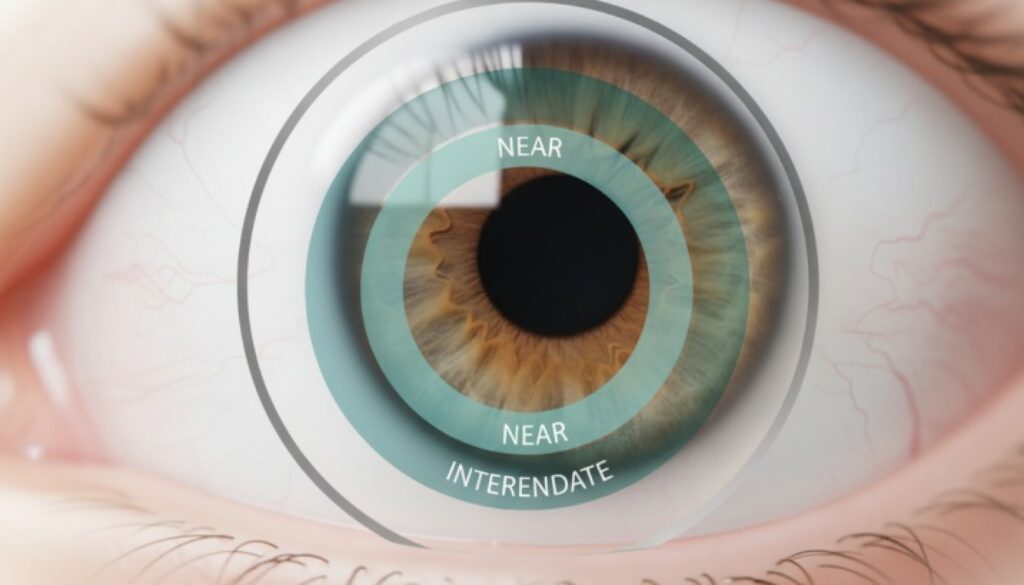
Presbyopia & Multifocal Contacts After 40: Richmond Expert Guide
Modern presbyopia multifocal contacts now achieve an 85-90% success rate, allowing most adults over 40 to regain clear vision at all distances without reading glasses. While presbyopia is a natural stiffening of the eye’s lens, advanced aspheric and concentric lens designs now provide a seamless transition between near and far focus.
View Multifocal Lens Pricing & Schedule Your Fitting
Understanding Presbyopia: The Natural Changes After Age 40
Presbyopia after age 40 is derived from Greek words meaning “old eye,” and is not a disease or vision defect—it’s a completely natural part of aging that begins in your twenties but becomes noticeable around age 40-45. The process occurs when the lens inside your eye gradually loses its flexibility, making it progressively harder for your ciliary muscles to change the lens shape for close-up focus.
The Science Behind Presbyopia
Recent research published in the Contact Lens and Anterior Eye journal reveals that presbyopia typically develops after age 40 when the stiffness of the lens nucleus and cortex equalizes, usually happening between ages 35 and 40. This process affects everyone, regardless of whether you’ve had perfect vision your entire life or have worn glasses since childhood.
According to the latest 2025 research from multiple peer-reviewed sources, approximately 1.8 billion people worldwide have presbyopia, representing 24.9% of the global population. This number is projected to reach 2.1 billion by 2030 due to population aging dynamics, with nearly 80% of individuals experiencing presbyopia symptoms by age 45-55.
Common Signs and Symptoms of Presbyopia After Age 40
Presbyopia after age 40 typically manifests through several recognizable symptoms:
- Difficulty reading small print, especially in dim lighting
- Holding the reading material farther away to see the text clearly
- Eye fatigue or headaches after prolonged close work
- Needing brighter lighting for reading tasks
- Difficulty transitioning focus between near and distant objects
- Blurred vision when using computers or smartphones for extended periods
Key Insight: If you recognize these symptoms, you’re not alone—presbyopia is a universal experience that affects virtually everyone as they age.
What Are Multifocal Contact Lenses for Presbyopia?
Presbyopia multifocal contacts are revolutionary optical devices designed specifically to address presbyopia by incorporating multiple prescriptions within a single lens. Unlike traditional single-vision contacts that correct vision for only one distance, multifocal lenses for presbyopia provide clear vision at near, intermediate, and distance ranges simultaneously.
How Presbyopia Multifocal Contacts Work
Modern presbyopia multifocal contacts use sophisticated optical designs to create different zones within the lens. Your eyes and brain work together to automatically select the appropriate zone based on what you’re trying to see. Think of it like looking through a screen door—you can either focus on the screen itself (near vision) or on the image beyond it (distance vision).
Types of Multifocal Contact Lens Designs for Presbyopia
There are three primary presbyopia multifocal contact designs available after age 40:
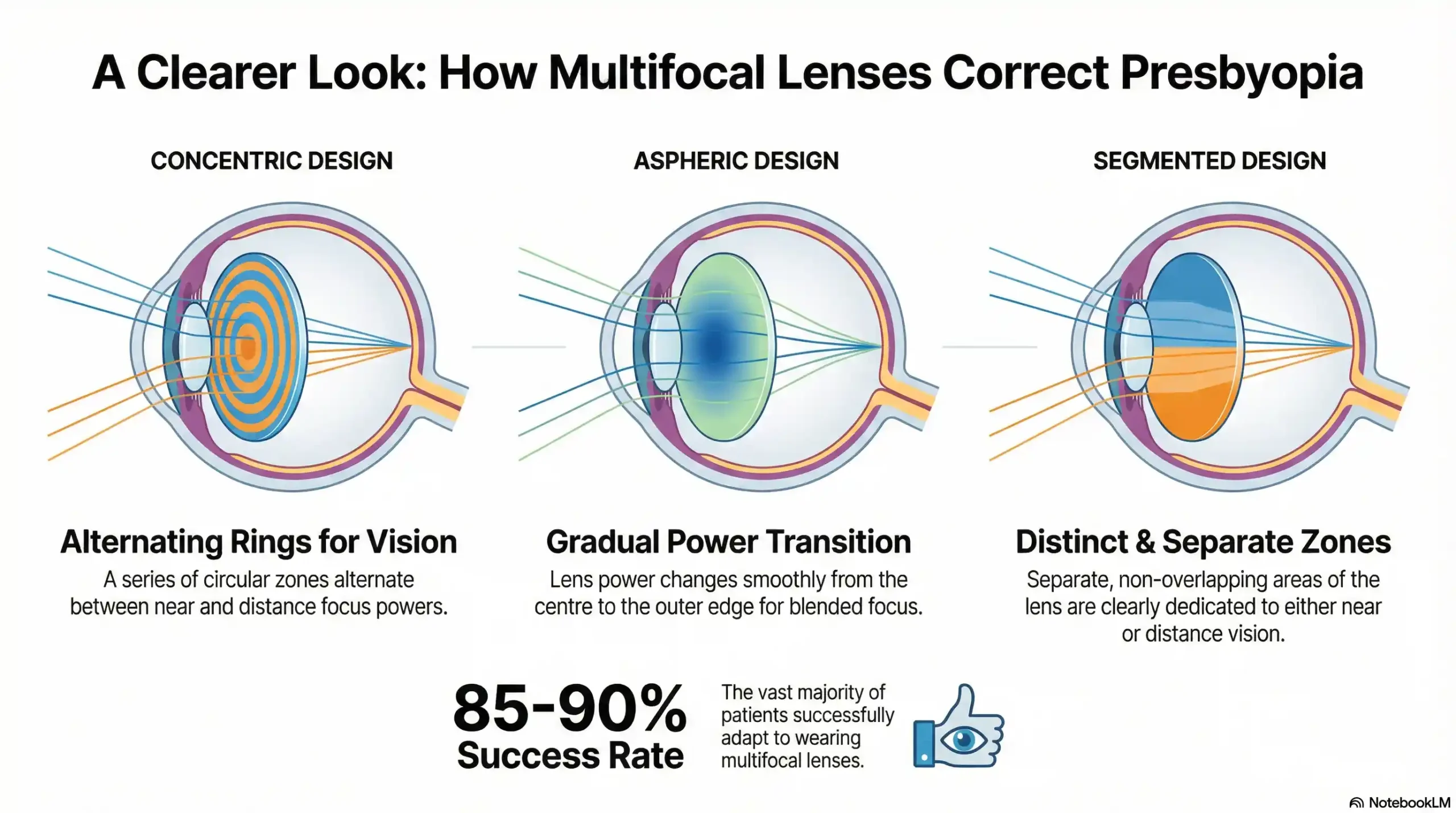
1. Concentric Multifocal Lenses
These presbyopia-correcting lenses feature concentric rings of different powers. The center zone typically handles distance vision, surrounded by alternating rings for near and intermediate vision.
Best for: Patients with mild to moderate presbyopia who need reliable distance vision
2. Aspheric Multifocal Lenses
Similar to progressive eyeglass lenses, these presbyopia multifocal contacts gradually transition from distance to near power across the lens surface, providing a seamless visual experience.
Best for: Patients seeking smooth transitions between vision zones
3. Segmented Multifocal Lenses
Made from rigid gas permeable materials, these lenses have distinct zones separated by visible lines, similar to traditional bifocal glasses.
Best for: Patients with advanced presbyopia requiring crisp optics
Benefits of Presbyopia Multifocal Contacts After Age 40
Presbyopia multifocal contacts offer numerous advantages over traditional presbyopia correction methods for patients after age 40:
Visual Freedom and Convenience
- All-in-One Vision: See clearly at all distances without switching between multiple pairs of glasses
- Active Lifestyle Support: Perfect for sports, exercise, and outdoor activities without glasses falling off or fogging up
- Professional Advantages: Maintain natural head positioning for computer work and presentations
- Aesthetic Appeal: Maintain your natural appearance without frames
Enhanced Visual Experience
- Wider Field of Vision: Better peripheral vision compared to progressive glasses
- Natural Binocular Vision: Both eyes work together for improved depth perception
- Weather Independence: No fogging, rain spots, or temperature changes affecting vision
Clinical Evidence: Studies show that 85-90% of patients achieve functional vision satisfaction with modern multifocal designs.
Understanding the Adjustment Period for Presbyopia Multifocal Contacts
While presbyopia multifocal contacts offer remarkable benefits for patients after age 40, it’s important to understand that there’s typically an adjustment period as your eyes and brain adapt to this new way of seeing.
What to Expect During Adaptation After Age 40
The adaptation timeline varies by individual, but here’s what most presbyopia multifocal contact lens patients experience after age 40:
Week 1 (Days 1-7):
- The initial learning curve as your brain adapts to blended vision zones
- Some patients may experience slight ghosting or halos around lights
- Consistent daily wear is crucial for adaptation
Week 2 (Days 8-14):
- Most patients achieve 80% satisfaction, the success threshold for presbyopia multifocal contacts
- Vision becomes more stable and predictable
- Night driving typically improves
Beyond 2 weeks:
- If still experiencing difficulties, a follow-up appointment may be needed
- Prescription adjustments or different lens types may be recommended
Patient Success Story: “I only grab readers once a week now! The freedom of not constantly searching for my glasses has been life-changing.” — Recent Frame & Focus Patient
The “80% Rule” for Success
Remember the “80% Rule”—if you’re satisfied with your vision 80% of the time without needing readers, the presbyopia multifocal contact fitting is successful. Modern designs like Air Optix Multifocal and Biofinity Multifocal are significantly advanced compared to older technologies.
Common Adjustment Challenges
Slight Distance Blur: Some compromise in distance sharpness is normal, as the lens uses part of your distance vision to enhance near sight
Night Vision Adjustments: Temporary glare or halos around lights in low-light conditions
Variable Near Vision: Reading clarity may fluctuate initially as your eyes learn to use the correct lens zone
Types of Presbyopia Multifocal Contacts Available After Age 40
Choosing the right presbyopia multifocal contacts depends on your lifestyle, vision needs, and eye health after age 40. Here are the main categories available:
By Replacement Schedule
Daily Disposable Presbyopia Multifocal Contacts
Ideal for:
- Part-time wearers
- Travel
- Those prone to dry eyes
- Patients new to contacts
Advantages:
- Fresh lens daily
- No cleaning solutions required
- Reduced infection risk
- Maximum convenience
Cost consideration: Higher per-lens cost, but eliminates care solution expenses
Monthly Replacement Presbyopia Multifocal Contacts
Ideal for:
- Full-time wearers (5+ days/week)
- Budget-conscious patients
- Those wanting premium materials
Advantages:
- More cost-effective long-term
- Advanced lens materials
- Extended wear options
Requirements: Proper daily cleaning and storage routine
Specialized Multifocal Options for Presbyopia
Toric Presbyopia Multifocal Contacts
For patients after age 40 with both presbyopia and astigmatism, toric presbyopia multifocal contacts correct both conditions simultaneously. These specialized lenses require precise fitting but offer excellent vision correction for complex prescriptions.
Success Rate: 85% when properly fitted by experienced practitioners
Hybrid Presbyopia Multifocal Contacts
Combining the visual clarity of rigid gas permeable centers with the comfort of soft lens edges, hybrid presbyopia multifocal contacts offer superior optics for demanding visual tasks.
Best for: Patients with irregular corneas or high visual demands

Cost Considerations for Presbyopia Multifocal Contacts After Age 40
Understanding the investment in presbyopia multifocal contacts helps you make an informed financial decision about your vision care after age 40.
Annual Cost Breakdown (2025 Updated Pricing)
Based on current 2025 market data, presbyopia multifocal contacts typically cost between $300-600 annually for most patients after age 40, depending on lens type and replacement schedule.
Your investment includes:
- Contact lens supply (12-month)
- Specialized fitting appointments
- Care solutions (for monthly lenses)
- Follow-up visits for optimization
- Professional support throughout adaptation
Value Comparison: Vision Correction Options After Age 40
| Option | Annual Cost (2025) | Convenience Rating | Visual Quality | Lifestyle Impact |
|---|---|---|---|---|
| Presbyopia Multifocal Contacts | $300-600 | ⭐⭐⭐⭐⭐ High | 80-90% satisfaction | Excellent – All activities |
| Reading Glasses | $150-300 | ⭐⭐ Low | Near vision only | Limited – Must carry/find |
| Monovision Contacts | $180-350 | ⭐⭐⭐ Medium | Variable | Good – Some depth perception loss |
| Progressive Glasses | $200-800 | ⭐⭐⭐ Medium | Good for all distances | Good – Frame dependent |
Value Analysis: While presbyopia multifocal contacts require a higher initial investment, they offer the best combination of visual freedom, lifestyle flexibility, and overall satisfaction for active adults after age 40.
Tips for Presbyopia Multifocal Contacts Success After Age 40
Maximizing your success with presbyopia multifocal contacts after age 40 requires the right approach and realistic expectations. Here are proven strategies from Frame & Focus Eye Care:
Pre-Fitting Preparation
1. Set Realistic Expectations
Understand that presbyopia multifocal contacts provide functional vision, not perfection. The goal is 80% satisfaction without reading glasses.
2. Address Dry Eyes First
Treat any existing dry eye conditions before fitting. A healthy tear film is critical for clarity and comfort with presbyopia multifocal contacts.
3. Choose an Experienced Provider
Work with optometrists who specialize in presbyopia multifocal contact fittings for higher success rates.
Pro Tip: Look for practices that fit 50+ multifocal patients annually for optimal expertise.
During the Adaptation Period
4. Wear Consistently
Use your presbyopia multifocal contacts daily during the first two weeks. Sporadic wear delays adaptation.
5. Use Good Lighting
Ensure adequate lighting for near tasks, especially during the first few weeks with presbyopia multifocal contacts.
6. Practice Eye Movements
Learn to move your eyes, not just your head, when looking at different distances.
7. Maintain Head Position
Keep your head straight and use eye movements to find the clearest vision zone.
Success Metric: If you achieve 80% vision satisfaction by week two, you’re on track for long-term success.
When to Consider Alternative Solutions for Presbyopia After Age 40
While presbyopia multifocal contacts work well for most patients after age 40, certain situations may require alternative approaches:
Monovision Contact Lenses for Presbyopia
How it works: One lens for distance vision (typically the dominant eye) and another for near vision.
Cost advantage: 30-40% less than presbyopia multifocal contacts
Best for patients after age 40 who:
- Have budget constraints
- Don’t require precise depth perception for work
- Adapt well to using one eye for specific distances
Important note: Monovision may reduce depth perception, making it less suitable for surgeons, dentists, or frequent night drivers.
Progressive Glasses for Presbyopia After Age 40
Progressive lenses remain an excellent option for patients after age 40 who:
- Cannot tolerate contact lens wear due to dry eyes
- Have irregular corneas or significant astigmatism
- Prefer the wider intermediate zones of progressive lenses
- Want to combine presbyopia multifocal contacts with glasses for different activities
Recent Advances in Presbyopia Multifocal Contact Technology
The field of presbyopia correction continues to evolve rapidly, with exciting developments improving both options and outcomes for patients after age 40.
2024-2025 Clinical Research Findings
Growing Market Adoption: According to the latest industry data, the global contact lens market reached $18.6 billion in 2024 and is projected to reach $26.6 billion by 2033. Presbyopia multifocal contacts now represent approximately 15-22% of all contact lens fits in 2024, a significant increase from just 9-17% in 2014.
Improved Success Rates: Modern presbyopia multifocal contact designs achieve 85-90% patient satisfaction rates, with most patients adapting within two weeks of consistent wear.
Enhanced Lens Materials: Silicone hydrogel presbyopia multifocal contacts like Air Optix Aqua Multifocal, Biofinity Multifocal, and Acuvue Oasys for Presbyopia now offer superior oxygen transmission and comfort for patients after age 40.
Emerging Treatment Options for Presbyopia
Presbyopia Eye Drops
FDA-approved medications like Vuity (1.25% pilocarpine) can now complement presbyopia multifocal contacts for patients needing additional near vision enhancement.
How it works: Temporarily constricts the pupil to increase depth of focus
Hybrid Lens Technology
Lenses like Duette Progressive combine gas-permeable centers with soft edges, offering superior optics with enhanced comfort for presbyopia multifocal contact wearers.
Advantage: Combines the crisp optics of RGP lenses with soft lens comfort
Your Presbyopia Multifocal Contacts Journey at Frame & Focus Eye Care
At Frame & Focus Eye Care in Richmond, Texas, Dr. Sarah Zaver brings over a decade of experience to every presbyopia multifocal contact fitting for patients after age 40. Our patient-centered approach ensures you receive personalized care tailored to your unique visual demands and lifestyle.
Our Specialized Presbyopia Multifocal Contacts Fitting Process
We follow a comprehensive approach that maximizes your success with presbyopia multifocal contacts:
Step 1: Comprehensive Eye Examination
- Advanced technology, including retinal photography
- Complete assessment of your overall eye health
- Detection of any conditions that might affect presbyopia multifocal contact wear
- Baseline measurements for precise fitting
Step 2: Lifestyle Assessment
- Discussion of your daily activities and visual demands
- Goal setting for your vision correction
- Selection of the most appropriate presbyopia multifocal contact design
- Customized fitting plan
Step 3: Trial Fitting
- Experience different presbyopia multifocal contact types.
- Real-world testing before commitment
- Fine-tuning for optimal fit and vision
- Education on proper care and handling
Step 4: Follow-up Care
- Regular check-ins during your adaptation period
- Adjustments as needed for optimal comfort and vision
- Long-term eye health monitoring
- Ongoing support and education
Patient Testimonial: “Dr. Zaver’s patience and expertise made my transition to presbyopia multifocal contacts seamless. I can now work on my computer, read my phone, and drive at night all without reaching for reading glasses.” — Frame & Focus Patient
Why Choose Frame & Focus Eye Care for Presbyopia Multifocal Contacts?
- Expert Specialization: Dr. Zaver’s extensive experience with presbyopia multifocal contact fittings ensures higher success rates
- State-of-the-Art Technology: Advanced diagnostic equipment for precise measurements and optimal lens selection
- Transparent Communication: Clear explanations without medical jargon, so you understand your options.
- Comprehensive Follow-up: Dedicated support throughout your presbyopia multifocal contacts adaptation period
- Insurance Optimization: We help maximize your insurance benefits to make quality eye care affordable
- Local Authority: Serving Richmond, Pecan Grove, Sugar Land, Rosenberg, and Fulshear for over a decade
Our Success Rate: 85%+ of our presbyopia multifocal contact patients achieve functional vision satisfaction
References and Additional Resources
This comprehensive guide is based on peer-reviewed research and authoritative medical sources. For readers interested in diving deeper into the science behind presbyopia and multifocal contact lens technology, we recommend these valuable resources:
1. BCLA CLEAR Presbyopia: Epidemiology and Impact Study
Contact Lens and Anterior Eye – ScienceDirect
This landmark 2024 research, published in Contact Lens and Anterior Eye, provides the most current global presbyopia statistics cited in this article. The study confirms that 1.8 billion people worldwide have presbyopia (24.9% of the global population) and projects growth to 2.1 billion by 2030. This peer-reviewed research forms the foundation for our statistical claims about presbyopia prevalence and demographic trends.
2. World Health Organization – Vision Impairment and Blindness Fact Sheet
WHO Global Vision Impairment Data
The World Health Organization’s comprehensive fact sheet provides authoritative global vision statistics, including the confirmation that presbyopia affects 826 million people with uncorrected near vision impairment. This official WHO data supports our article’s claims about the global burden of presbyopia and the need for effective correction methods like multifocal contact lenses.
3. Global Prevalence of Presbyopia – Systematic Review and Meta-Analysis
PubMed – National Library of Medicine
This comprehensive systematic review and meta-analysis, published in Ophthalmology, provides the scientific foundation for understanding presbyopia prevalence patterns worldwide. The research validates our claims about presbyopia affecting 25% of the global population and provides the evidence-based framework for understanding who is most likely to benefit from presbyopia multifocal contacts after age 40.
Take the Next Step Toward Visual Freedom After Age 40
Presbyopia after age 40 is inevitable, but compromised vision isn’t. Modern presbyopia multifocal contacts offer a sophisticated solution that can restore your visual freedom and active lifestyle. While the adjustment period requires patience and realistic expectations, the majority of patients achieve remarkable success and wonder why they waited so long to make the switch to presbyopia multifocal contacts.
At Frame & Focus Eye Care, we’re committed to helping you navigate this transition with expert guidance, advanced technology, and personalized care. Dr. Zaver and our experienced team have helped hundreds of Richmond-area residents discover the confidence that comes with clear, all-distance vision through presbyopia multifocal contacts.
Ready to Get Started with Presbyopia Multifocal Contacts?
Don’t let presbyopia after age 40 hold you back from living your best life. Contact Frame & Focus Eye Care today to schedule your comprehensive eye examination and presbyopia multifocal contacts consultation.
📍 Address: 18310 W Airport Blvd #900, Richmond, TX 77407
🌟 Serving: Richmond, Pecan Grove, Sugar Land, Rosenberg, and Fulshear
Experience the Frame & Focus difference—where your vision and comfort are always our priority.
FAQs
-
Presbyopia is the natural, age-related hardening of the eye’s lens, which reduces flexibility. This makes it difficult to focus on close-up objects, usually beginning around age 40.
Please note: None of the above should be considered medical advice. If you have any concerns about your vision, please contact us immediately or consult your primary care provider.