Importance of Routine Eye Exams
Routine eye exams in Richmond, TX, are your first line of defense against “silent” conditions like glaucoma and systemic issues like diabetes or hypertension.
Book Your $99 Richmond Eye Exam Online
At Frame & Focus Eye Care, we use advanced retinal imaging to protect your vision and total health without the need for traditional, blurry dilation in most cases.
Key Takeaways: Your Vision and Total Health
Routine eye exams are more than just a check for new glasses; they are a vital, proactive measure for your overall physical health.
-
Proactive Disease Screening: The eye is the only place in the body where a doctor can directly view exposed blood vessels and nerve tissue, making the eye exam a non-invasive screening tool for major systemic diseases, not just ocular conditions.
-
Early Detection Saves Vision: Conditions like Glaucoma and Macular Degeneration are progressive and often show no initial symptoms or pain. Regular, comprehensive exams are the only way to detect them early enough to begin treatments that can slow or halt vision loss.
-
Identify Systemic Conditions: Your eye doctor can spot early warning signs of health issues like diabetes (bleeding/swelling in the retina), high blood pressure (bent or leaking blood vessels), and even brain tumors (swelling of the optic nerve).
-
Frequency is Personalized: The recommended frequency for an exam is not one-size-fits-all. Adults should generally go every 1–2 years, but those with existing risk factors (like diabetes, thyroid disease, or contact lens wear) or those over 60 need annual exams.
-
Watch for Urgent Signs: Do not wait for your scheduled appointment if you experience sudden changes like blurriness, flashes of light, or increased floaters. These symptoms require immediate professional evaluation (emergency eye care).
It may be important to see a doctor more frequently if one is experiencing any of the following:
- Blurry vision or loss of vision.
- Difficulty seeing things near and/or far away, and performing basic tasks.
- Flashing light in the eye.
- Eye floaters or small spots that appear in vision.
1. Subtle Symptoms: Why “Good Vision” Isn’t Always Healthy Eyes
Many patients believe that if they can see clearly, their eyes are fine. However, “20/20 vision” only measures acuity, not the health of the eye or the efficiency of the visual system.
Subtle signs like frequent headaches, neck pain, and digital eye strain are often dismissed as stress but are frequently caused by a misalignment between the eyes. At Frame & Focus, we specialize in Neurolens, a contoured prism technology designed to correct these misalignments and provide relief from chronic discomfort. Furthermore, “silent” conditions like Glaucoma—the silent thief of sight—can progress significantly before you ever notice a change in your vision.
2. Myopia Management and Pediatric Eye Care: Setting Students Up for Success
Vision is the primary sense used for learning. A school screening is not a substitute for a pediatric eye exam. We focus heavily on Myopia Control because simply getting stronger glasses every year doesn’t stop the underlying problem. By managing nearsightedness early, we reduce the risk of retinal detachment and cataracts later in your child’s life.
3. Why Should You Have Regular Eye Exams?
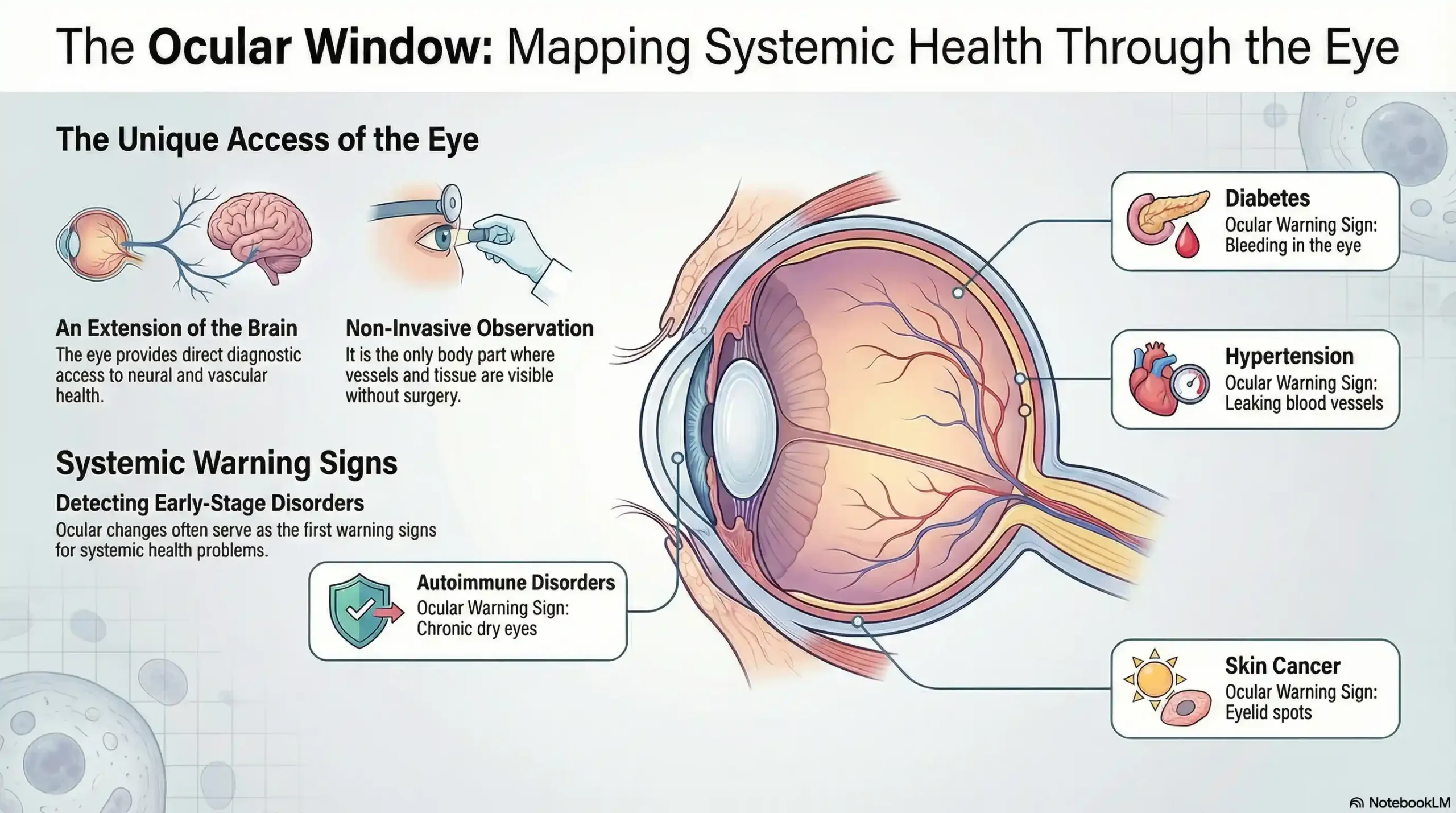
Since the eye is an extension of the brain and the only part of the body where blood vessels and tissue are visible without surgery, it allows an eye doctor to detect warning signs of the early stages of health problems:
-
Diabetes: Can present as bleeding in the eye or swelling in the retina. Diabetic patients require a dilated eye exam every year.
-
Hypertension (High Blood Pressure): Appears as blood vessels in the back of the eye appearing bent, leaking, or narrowing.
-
Autoimmune Disorders: Rheumatoid arthritis or lupus may be the underlying cause of chronic dry eyes.
-
Skin Cancer: The eyelid is highly sensitive to UV rays; regular checks can detect spots before they spread.
4. Advanced Eye Care Technology: See What Dr. Zaver Sees
We believe in a “Straight Talk” philosophy, but we back that talk with state-of-the-art diagnostics. We utilize Retinal Imaging and OCT scans to see deep beneath the surface of the retina. This often allows for a “dropless” experience, identifying issues without the prolonged blurriness of traditional dilation.
5. Specialized Solutions: Beyond Just Glasses
If you struggle with chronic discomfort, a routine exam is the first step toward specialized relief:
-
Dry Eye Therapy: We offer targeted treatments like Blephex to tackle the root causes of itchy, sandy-feeling eyes.
-
Specialty Contact Lenses: For those told they “can’t wear contacts,” our specialty contact lens fittings provide custom solutions for astigmatism or keratoconus.
6. Emergency Eye Care: Same-Day Urgent Appointments
Vision changes can be frightening. You should not wait for a scheduled appointment if you experience:
-
Sudden blurry vision or loss of vision.
-
Flashing lights or a sudden increase in floaters.
-
Eye injuries or painful infections. We offer emergency eye care in Richmond, TX, with same-day appointments to provide immediate peace of mind.
7. Affordable Quality: Value for the Richmond Community
We believe eye care should be accessible. While we provide medical excellence, we also offer a $99 Special for frames and lenses to ensure our neighbors don’t have to choose between their budget and their vision. Our team works to maximize your insurance benefits so you get the highest value possible.
Sources & Further Reading
The information in this article is supported by leading medical and optometric organizations, highlighting the critical link between eye health and total body wellness.
-
National Eye Institute (NEI): Information on Detecting Systemic Diseases Through Eye Exams (e.g., Diabetes and Hypertension).
-
American Optometric Association (AOA): Recommended Examination Frequencies for Pediatric and Adult Populations.
Vision changes can have a profound effect on a person’s day-to-day life, but early treatments can help to slow or stop vision loss, and regular eye exams can help ensure a lifetime of clear sight
Ready to protect your vision? Schedule your comprehensive eye exam online or call us at (832) 930-7797.
FAQs
-
All adults need a full eye exam every 1-2 years. These exams detect early, symptomless diseases like Glaucoma and Macular Degeneration, and screen for health issues like high blood pressure.