Pinguecula vs Pterygium: When to See an Eye Doctor
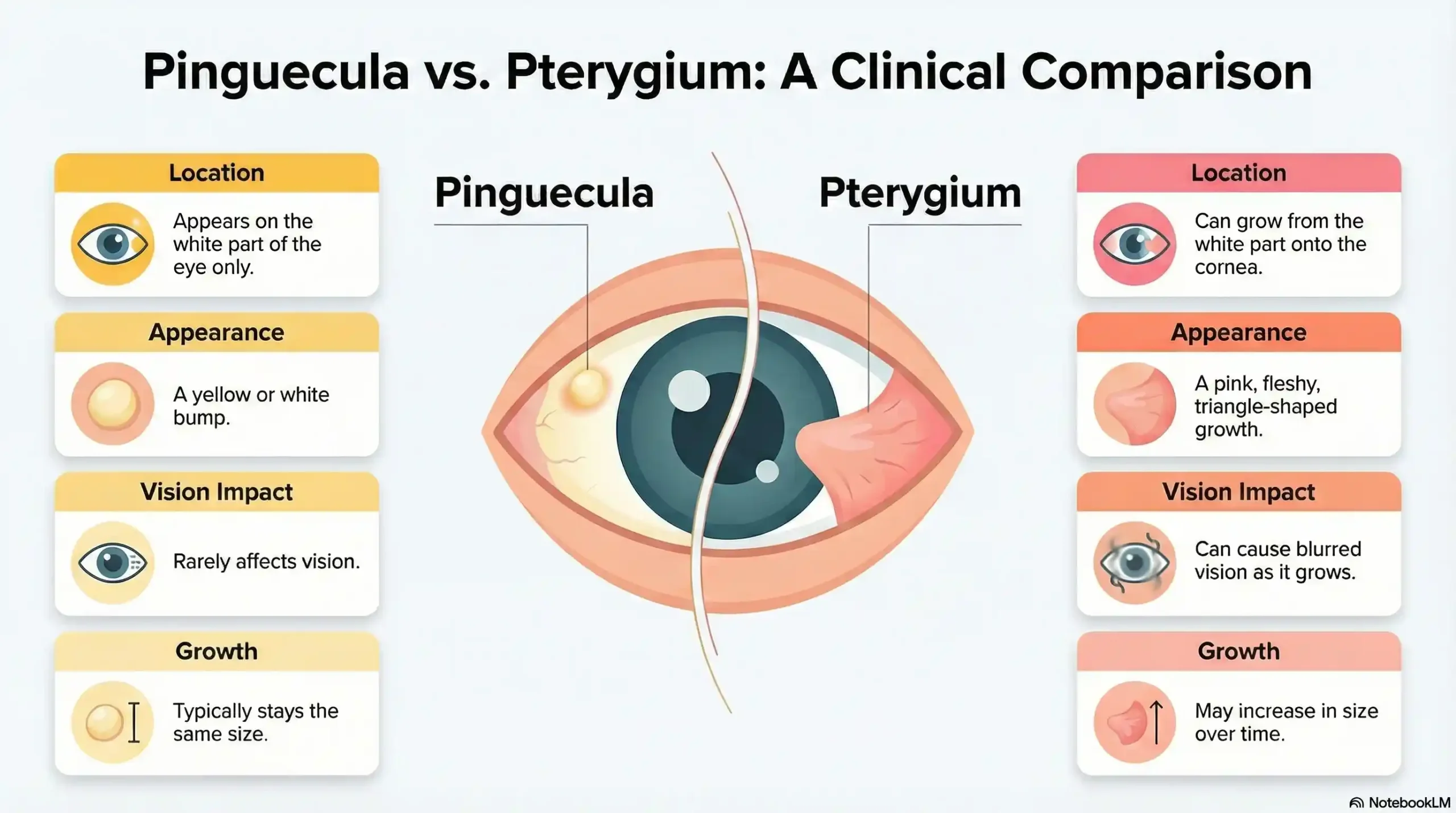
A pinguecula is a yellowish bump on the white of the eye that does not affect vision, while a pterygium is a fleshy growth that can spread to the cornea and cause sight distortion. While both are benign, understanding these key differences is essential for knowing when to seek professional treatment versus using home care.
Schedule a Medical Eye Evaluation in Richmond
What Are Pinguecula and Pterygium?
Understanding Pinguecula
A pinguecula (pronounced “ping-GWEK-yuh-lah”) is a small, raised, yellowish bump that forms on the conjunctiva—the clear tissue covering the white part of your eye. Think of it as a “callus” that develops from prolonged exposure to environmental irritants.
Key characteristics of pinguecula:
- Appears as a creamy yellow or white raised area
- Usually develops near the side of the eye
- Does not grow onto the clear cornea
- Typically stays the same size over time
- Often described as looking like a “grain of rice” to the eye
What causes pinguecula formation?
Pinguecula develops when deposits of protein, fat, and calcium accumulate beneath the conjunctiva. This happens gradually over time due to:
- Chronic ultraviolet (UV) light exposure
- Wind and dust irritation
- Age-related changes in eye tissue
- Dry eye conditions
Understanding Pterygium
A pterygium (pronounced “tur-IH-jee-um”) is a fleshy, triangular growth that starts on the conjunctiva but can extend onto the cornea. Often called “surfer’s eye” because it’s common in people who spend significant time in sunny, windy conditions, pterygium is more concerning than pinguecula because it can affect vision.
Key characteristics of pterygium:
- Appears as a fleshy, pink or white triangular growth
- Contains visible blood vessels
- Can grow onto the clear cornea
- May progressively increase in size
- Often described as looking like “tissue growing across the eye.”
What drives pterygium development?
Pterygium forms when irritated conjunctival tissue begins to grow abnormally, typically due to:
- Intense, prolonged UV radiation exposure
- Chronic dryness and irritation
- Genetic predisposition
- Environmental factors like wind, dust, and sand
Pinguecula vs. Pterygium: The Key Differences
Understanding the distinctions between these conditions is essential for proper care and treatment decisions.
| Characteristic | Pinguecula | Pterygium |
|---|---|---|
| Location | The white part of the eye only | It can grow onto the cornea |
| Appearance | Yellow/white bump | Pink/white triangular growth |
| Blood vessels | Generally not visible | Contains visible vessels |
| Vision impact | Rarely affects vision | Can blur or distort vision |
| Growth pattern | Usually stays the same size | May grow larger over time |
| Surgical need | Rarely requires surgery | May need removal if large |
| Recurrence after surgery | Very low | 1-2% with modern techniques |
The critical difference: A pinguecula stays on the white part of your eye and rarely affects vision, while a pterygium can grow onto the clear cornea and potentially impact your sight if left untreated.
Can a pinguecula become a pterygium? While traditionally thought that pinguecula could progress to pterygium, recent research suggests this relationship is more complex. Some eye care professionals consider them related but distinct conditions, while others view pterygium as an advanced form of pinguecula.
Recognizing the Symptoms: When Should You Be Concerned?
Common Symptoms of Both Conditions
Most people with pinguecula or pterygium experience similar initial symptoms:
Mild symptoms include:
- Feeling like something is “in your eye.”
- Occasional eye redness
- Mild irritation or dryness
- Difficulty wearing contact lenses
- Cosmetic concerns about eye appearance
For pinguecula specifically:
- A yellowish bump is visible in the mirror
- Symptoms often worsen in dry or windy conditions
- May become inflamed (called “pingueculitis”), causing increased redness and irritation
For pterygium specifically:
- Triangular growth extending toward the pupil
- More persistent irritation and redness
- Progressive symptoms that worsen over time
- Possible vision changes if growth reaches the cornea
Red Flag Symptoms: When to Seek Immediate Care
While pinguecula and pterygium are generally not emergencies, certain symptoms warrant immediate attention from an eye care professional:
See an eye doctor immediately if you experience:
- Sudden vision changes or blurriness
- Severe eye pain
- Significant redness that doesn’t improve
- Discharge or signs of infection
- Growth that changes color or grows rapidly
- Double vision or visual distortion
Schedule an appointment soon if you notice:
- Persistent foreign body sensation
- Chronic eye dryness has not improved with over-the-counter drops
- Growth that interferes with blinking
- Cosmetic concerns affecting your confidence
- Symptoms that worsen despite home care
At Frame & Focus Eye Care, we offer same-day appointments for urgent eye concerns, ensuring Richmond-area patients receive prompt attention when they need it most.
Understanding when to seek immediate care versus routine evaluation is crucial for optimal outcomes. The following treatment options range from conservative management to advanced surgical interventions.
Treatment Options: From Conservative Care to Surgery
Conservative Treatment Approaches
Most cases of pinguecula and early-stage pterygium can be managed effectively without surgery.
First-line treatments include:
1. Artificial Tears and Lubricating Drops
- Preservative-free formulations work best
- Use 4-6 times daily or as needed
- Helps reduce irritation and dryness
- Recommended brands include Refresh, Systane, and TheraTears
2. Steroid Eye Drops
- Prescribed for inflammation (pingueculitis or pterygium irritation)
- Typically used for short periods (1-2 weeks)
- Requires monitoring by an eye care professional
- Effective for reducing redness and swelling
3. Lifestyle Modifications
- Wear UV-protective sunglasses outdoors
- Use wraparound styles for maximum protection
- Consider wide-brimmed hats in bright sunlight
- Avoid prolonged exposure to wind and dust
Emerging Treatment Options
Recent research has introduced promising new approaches for managing these conditions without surgery.
Innovative treatments being studied:
- Dipyridamole eye drops: A 2025 study showed a 52% reduction in symptoms and evidence of pterygium regression
- Topical cyclosporine: Shows promise in reducing inflammation and preventing progression
- Anti-VEGF treatments: Being researched for reducing blood vessel formation in pterygium
Surgical Treatment: When and Why
Surgery becomes necessary when conservative treatments fail or when the condition significantly impacts vision or quality of life.
Surgical indications include:
- Pterygium growing onto the cornea (>2mm)
- Vision distortion or astigmatism
- Persistent severe symptoms despite medical treatment
- Cosmetic concerns significantly affect the quality of life
- Interference with contact lens wear
Modern surgical techniques:
Conjunctival autograft remains the gold standard, involving:
- Removal of the pterygium or pinguecula
- Transplantation of healthy tissue from another area of the patient’s eye
- Very low recurrence rates (1-2% with modern techniques vs 10-40% with older methods)
- Typically performed as an outpatient procedure under local anesthesia
Recovery expectations:
- Surgery typically takes 30-45 minutes
- Most patients return to normal activities within 3-5 days
- Complete healing occurs over 4-6 weeks
- Antibiotic and steroid drops are required for 1-2 months post-surgery

Prevention: Protecting Your Eyes in the Houston Area
Living in sunny Houston and surrounding areas like Richmond, Sugar Land, and Rosenberg means year-round sun exposure. Effective prevention strategies can significantly reduce your risk of developing these conditions.
Essential Sun Protection
- Invest in quality sunglasses: Look for 100% UV protection (both UVA and UVB)
- Choose wraparound styles: Protect from peripheral UV exposure
- Don’t forget cloudy days: UV rays penetrate clouds
- Consider UV-blocking contact lenses: an Additional protection layer
- Add wide-brimmed hats: Especially during peak sun hours (10 AM – 4 PM)
Environmental Protection
For outdoor enthusiasts, common in our area:
- Use protective eyewear during activities like fishing, boating, or construction work
- Rinse eyes after beach or pool days to remove salt and chemicals
- Consider moisture chamber glasses for very dry or windy conditions
- Stay hydrated to maintain natural tear production
Workplace Considerations
For outdoor workers in Richmond and surrounding areas:
- Wear safety glasses with UV protection
- Take regular breaks in shaded areas
- Use artificial tears during long outdoor shifts
- Schedule regular eye exams to monitor for early changes
Special Considerations for Houston-Area Residents
Climate Factors
Living in Southeast Texas presents unique challenges for eye health:
- High humidity summers: Can reduce dry eye symptoms but increase exposure to reflective surfaces
- Year-round sun: Consistent UV exposure requires constant protection
- Hurricane season: Wind-blown debris can irritate existing conditions
- Urban heat island effect: Increased reflection from concrete and buildings
Lifestyle Adaptations
For active Gulf Coast lifestyles:
- Water sports enthusiasts: Consider specialized floating sunglasses
- Gardeners: Wear protective eyewear when working in bright sunlight
- Commuters: Use UV-protective car window film and sunglasses while driving
- Golfers and outdoor athletes: Schedule activities during early morning or evening hours when possible
When to See Your Eye Doctor: A Richmond Perspective
Routine Eye Care Recommendations
Regular examination schedule:
- Adults over 40: Annual comprehensive eye exams
- High-risk individuals: Every 6-12 months (those with family history, extensive sun exposure, or existing conditions)
- Contact lens wearers: Annual exams with contact lens evaluation
- Those with chronic dry eye: More frequent monitoring may be needed
Why Choose Frame & Focus Eye Care
Dr. Sarah Zaver and Dr. Angela Chu, along with the team at Frame & Focus Eye Care, bring over a decade of experience serving the Houston area, with specialized expertise in managing pinguecula and pterygium. Both doctors are graduates of the University of Houston College of Optometry and provide comprehensive eye care with state-of-the-art diagnostic technology.
What sets Frame & Focus apart:
- State-of-the-art diagnostic technology: Including slit-lamp examination and retinal photography for comprehensive evaluation
- Clear communication: Dr. Zaver explains conditions in terms you’ll understand, not confusing medical jargon
- Comprehensive family care: From pediatric eye exams to adult treatment
- Same-day urgent appointments: When eye concerns can’t wait
- Insurance-friendly approach: Maximizing benefits and offering affordable options like the No Hassle $99 Frame Special (stylish frames from their fashionable in-house collection with standard polycarbonate lenses and anti-reflective coating)
For patients requiring specialized treatment beyond conservative management, our team provides expert referrals to trusted ophthalmologic surgeons in the Houston area while continuing to manage your ongoing eye health needs.
Patient-centered approach:
“Our goal is for every patient to leave confident knowing their vision and eye health were prioritized and customized to their unique needs,” explains Dr. Zaver. “Whether you’re dealing with a simple pinguecula or considering pterygium surgery, we’re here to guide you through every step with expertise and compassion.”
Serving the Greater Richmond Community
Frame & Focus Eye Care proudly serves patients throughout:
- Richmond (primary location)
- Sugar Land
- Rosenberg
- Pecan Grove
- Fulshear
Conveniently located at 18310 W Airport Blvd #900, Richmond, TX 77407, the practice offers flexible scheduling Monday through Friday, with emergency care available when needed.
Latest Research and Future Directions
Breakthrough Treatment Developments
Recent scientific advances are changing how we approach pinguecula and pterygium treatment:
2025 Research Highlights:
1. Dipyridamole Eye Drops Study (2025)
- Cardiovascular drug repurposed for eye conditions
- 52.4% average reduction in dry eye symptoms associated with pterygium
- Evidence of actual pterygium regression in some patients
- Currently undergoing expanded clinical trials
2. Tehran Geriatric Eye Study (2025)
- Largest recent population study of these conditions
- Found pinguecula in 55.57% of adults over 60
- Pterygium prevalence of 3.64% overall
- Confirmed strong correlation with outdoor activity and UV exposure
3. Advanced Surgical Techniques (2023-2024)
- Improved conjunctival autograft procedures
- Use of amniotic membrane grafts for complex cases
- Anti-metabolite treatments reduce recurrence rates
- Minimally invasive techniques with faster recovery
Implications for Patient Care
These research developments mean:
- Better non-surgical options may soon be available
- More precise surgical techniques are reducing complications
- Personalized treatment plans based on genetic and environmental factors
- Improved prevention strategies for high-risk populations
References and Additional Resources
For readers interested in diving deeper into the research behind this article, here are key external resources that informed our comprehensive guide:
1. Latest Surgical Outcomes Research (2025)
This comprehensive 2025 study analyzed 462 eyes over ten years, providing the most current data on surgical success rates. The research confirms that modern conjunctival autograft techniques achieve remarkably low recurrence rates of just 1%, significantly better than historical outcomes.
2. Groundbreaking Prevalence Study (2025)
Published in Nature’s Scientific Reports, this 2025 Tehran-based study provides crucial insights into the actual prevalence of these conditions in adult populations. The research reveals that pinguecula affects over half of adults over 60, highlighting the importance of preventive care and early detection.
3. Innovative Treatment Research (2025)
The Safety of Office-Based Pterygium Surgery – American Journal of Ophthalmology
This recent study examines modern office-based surgical approaches and emerging treatments, including promising research on dipyridamole eye drops showing significant symptom reduction. The research supports the trend toward more accessible, effective treatment options for patients.
Take Action for Your Eye Health Today
Don’t let concerns about eye growth affect your confidence or quality of life. Whether you’ve noticed a small bump on your eye, experienced persistent irritation, or simply want to protect your vision for the future, professional evaluation is your first step toward clear, comfortable vision.
Why wait? Eye conditions like pinguecula and pterygium are most effectively managed with early intervention. The sooner you understand what you’re dealing with, the more treatment options you’ll have available.
Your Next Steps:
- Schedule a comprehensive eye exam immediately if you notice any unusual growths or persistent symptoms
- Implement sun protection strategies starting today to prevent progression
- Contact Frame & Focus Eye Care for expert evaluation and personalized treatment recommendations
Don’t ignore the signs. Many patients wish they had sought care sooner. Dr. Zaver and her team are here to provide the answers and peace of mind you deserve.
Ready to take control of your eye health?
📞 Call Now for Same-Day Appointments
Frame & Focus Eye Care
18310 W Airport Blvd #900
Richmond, TX 77407
📅 Online Scheduling Available | 🚨 Emergency Eye Care When You Need It
Visit us online to schedule your appointment or learn more about our comprehensive eye care services. Dr. Zaver, Dr. Chu, and their team are ready to provide the expert, compassionate care you deserve.
Your vision is irreplaceable. Don’t wait – protect it today.
FAQs
-
A pinguecula is a yellowish, raised bump that stays on the white part of the eye (conjunctiva). A pterygium is a fleshy growth that extends onto the clear front surface (cornea).
Please note: None of the above should be considered medical advice. If you have any concerns about your vision, please contact us immediately or consult your primary care provider.