
Office Lighting Ruining Your Eyes? 7 Warning Signs & Solutions
Office lighting causes eye strain by forcing your eyes to constantly adjust between harsh fluorescent glare and digital screens, which can reduce your blink rate by up to 60%. While traditional office lights can increase the risk of cataracts and digital eye strain, most damage is preventable through specific lighting adjustments and behavioral changes.
Schedule a Comprehensive Eye Exam to Assess Digital Strain
The Shocking Reality: How Office Lighting Silently Damages Your Eyes
You’re not imagining it—that daily headache, burning eyes, and afternoon focus struggles aren’t just “part of working.” Nearly 3 out of 4 employees now struggle with digital eye strain, according to 2024 research from VSP Vision Care and Workplace Intelligence. This represents a dramatic increase from the 50% reported just three years ago.
The statistics paint a concerning picture:
- 69-74% of office workers globally experience Computer Vision Syndrome symptoms
- Remote workers spend an average of 13 hours daily staring at screens
- 43% of remote workers report worsening eye health since the pandemic
- Office workers accumulate 7+ hours of daily screen time, not including personal device use
Why Office Lighting Is Different (And Dangerous)
Modern office environments create unique visual challenges that our eyes weren’t designed to handle. Unlike natural light, which provides a full spectrum of wavelengths that change throughout the day, artificial office lighting often delivers:
Harsh Fluorescent Exposure: Most offices rely on inexpensive fluorescent lighting that produces artificial ultraviolet (UV) light. A landmark 2011 study by the Australian National University published in the American Journal of Public Health found that fluorescent lighting may increase UV-related eye diseases by up to 12%, potentially causing an additional 3,000 cases of cataracts and 7,500 cases of pterygia annually in Australia alone.
Digital Screen Complications: When combined with computer work, poor lighting forces your visual system beyond optimal operational parameters. Your eyes constantly adjust between bright screens and dimmer surroundings, creating measurable strain that affects concentration and comfort.
Reduced Blink Rates: Under artificial lighting conditions, especially when focused on screens, our natural blink rate drops from 18-22 blinks per minute to just 3-7 blinks per minute. This dramatic reduction leads to tear film instability and dry eye symptoms.
The Science Behind Office Lighting Eye Damage
Three Recent Studies That Should Concern You
Study 1: Computer Vision Syndrome Meta-Analysis (2024) A comprehensive review published in Nature analyzed 103 cross-sectional studies with 66,577 participants from 20 countries. The findings revealed that Computer Vision Syndrome affects approximately 66% of knowledge workers, with the pooled prevalence determined to be around two-thirds of all digital device users.
Study 2: Australian National University Fluorescent Lighting Research (2011) A landmark study published in the American Journal of Public Health by researchers at The Australian National University found that fluorescent lighting may increase UV-related eye diseases by up to 12%. The research calculated that this could result in an additional 3,000 cases of cataracts and 7,500 cases of pterygia annually in Australia alone.
Study 3: Remote Work Eye Strain Crisis (2024 VSP-Workplace Intelligence Report) The most recent data shows that remote workers now spend 90% of their waking hours on screens. The study found 63% of workers have at least one eye issue (up from 50% the previous year), with symptoms directly correlating with increased screen time under suboptimal lighting conditions.
Who’s Most at Risk
High-Risk Categories
Knowledge Workers (Highest Risk):
- Employees spending 6+ hours daily on computers
- Workers in open office environments with overhead fluorescents
- Remote workers with suboptimal home office lighting setups
- Night shift workers are exposed primarily to artificial lighting
Age and Genetic Factors:
- People over 40 experiencing age-related vision changes
- Individuals with blue or light-colored eyes (less protective pigment)
- Contact lens wearers (increased friction and dryness)
- People with existing vision problems or dry eye conditions
The Hidden Cost of Ignoring Eye Strain
Beyond personal discomfort, unmanaged office lighting problems create massive economic impacts:
- Individual productivity loss: $1,920 per person annually
- Workplace absenteeism: Nearly 1 in 10 workers miss more than a full work week due to eye strain
- Presenteeism: Reduced on-the-job effectiveness due to difficulty concentrating
The Different Types of Office Lighting Ruining Your Eyes
Fluorescent Lighting: The Biggest Culprit
Traditional Fluorescent Systems remain prevalent in office environments due to cost-effectiveness, but clinical evidence demonstrates significant health implications:
Immediate Effects:
- Eye strain and blurred vision within hours of exposure
- Headaches, particularly when the lights flicker
- Double vision and increased light sensitivity
- Difficulty keeping eyes open or concentrating
Long-term Consequences:
- Increased risk of cataracts and macular degeneration due to UV exposure
- Exacerbation of migraine conditions
- Potential contribution to pterygium (“surfer’s eye”)
LED Lighting: Not Automatically Better
While LED lights offer energy efficiency, they’re not inherently eye-friendly without proper consideration:
Potential Problems:
- Excessive blue light emissions linked to digital eye strain
- Low Color Rendering Index (CRI) values contribute to visual discomfort
- High color temperatures can disrupt circadian rhythms
When LEDs Work Well: High-quality LEDs with adjustable color temperature settings, high CRI values (80+), and proper diffusion can actually support eye health better than traditional alternatives.
Digital Eye Strain: The Perfect Storm
When Screens Meet Poor Lighting
The combination of digital screens and suboptimal office lighting creates Computer Vision Syndrome (CVS)—a condition that now affects an estimated 60 million people globally.
The Triple Threat:
- Pixelated displays requiring constant micro-focus adjustments
- Poor contrast ratios between text and background
- Artificial lighting is competing with screen illumination
The Blink Rate Crisis
Perhaps the most underestimated factor in office lighting eye strain is how artificial environments alter our natural blinking patterns. Under optimal conditions, we blink about 15-22 times per minute to maintain a healthy tear film. During concentrated screen use under artificial lighting, this rate can drop by 50% or more.
The Warning Signs: Is Office Lighting Already Damaging Your Eyes?
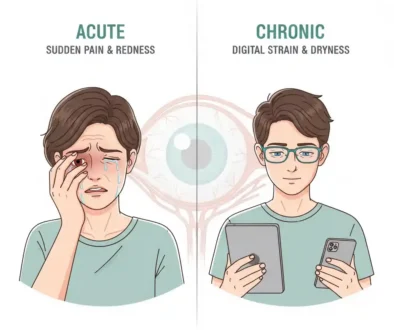
Immediate Symptoms (Within Hours)
Visual Symptoms:
- Blurred or double vision when switching between the screen and paper documents
- Difficulty focusing on objects at different distances
- Colors appear washed out or less vibrant
Physical Discomfort:
- Burning, stinging, or gritty feeling in the eyes
- Excessive tearing or unusually dry eyes
- Heavy eyelids or difficulty keeping eyes open
- Increased sensitivity to light
Secondary Effects:
- Headaches, particularly around the temples or behind the eyes
- Neck and shoulder tension from compensatory posturing
- General fatigue that worsens throughout the workday
Proven Solutions: Protecting Your Eyes from Office Lighting Damage
Immediate Lighting Adjustments (Implement Today)
1. Eliminate Direct Overhead Fluorescents. Replace or supplement harsh overhead lighting with:
- Desk lamps with adjustable arms and dimming capabilities
- Floor lamps provide indirect, ambient lighting
- LED panels with high CRI (80+) and adjustable color temperature

2. Control Natural Light Effectively
- Position your workstation perpendicular to windows (not facing or backing them)
- Install adjustable blinds or shades for glare control
- Use window film to filter UV radiation while maintaining visibility
3. Create Layered Lighting. Implement a three-layer approach:
- Ambient lighting: Soft, general illumination (floor lamps, indirect fixtures)
- Task lighting: Focused illumination for specific work (adjustable desk lamps)
- Accent lighting: Decorative elements that reduce harsh shadows
Screen and Technology Optimization
Monitor Configuration:
- Position screens 20-28 inches from your eyes
- The top of the monitor should be at or slightly below eye level
- Tilt the screen slightly backward (10-20 degrees) to reduce neck strain
- Adjust screen brightness to match surrounding lighting
Color Temperature Management:
- Use blue light filtering software (f.lux, Night Light, True Tone)
- Adjust color temperature throughout the day (cooler in the morning, warmer in the evening)
- Consider computer glasses with blue light filtering
Behavioral Modifications for Eye Health
The Enhanced 20-20-20 Rule: Every 20 minutes, look at something 20 feet away for 20 seconds, but add these improvements:
- Blink deliberately 10-15 times during the break
- Focus on the furthest object you can see clearly
- Look out a window when possible to exercise distance vision
Professional Interventions:
- Schedule comprehensive eye exams annually
- Discuss your work environment and symptoms with your eye care provider
- Consider specialized computer glasses with an anti-reflective coating
- Ask about prescription adjustments optimized for computer work
The Remote Work Challenge
Remote workers face unique challenges that office workers typically don’t encounter. Research shows that remote employees spend nearly 13 hours daily staring at screens (according to All About Vision research), compared to 7+ hours for their office counterparts.
Common Home Office Lighting Mistakes:
- Working from kitchen tables with inadequate overhead lighting
- Positioning laptops on coffee tables, forcing downward gaze
- Using only overhead room lighting without task-specific illumination
- Failing to control glare from windows
Home Office Solutions:
- Adjustable LED desk lamp with color temperature control (3000K-6500K range)
- Ambient floor lighting to reduce contrast between the screen and surroundings
- Bias lighting (LED strip behind monitor) to reduce eye strain
- Natural light management tools (adjustable blinds, light-filtering curtains)
When to Seek Professional Help
Red Flag Symptoms Requiring Immediate Attention
Urgent Symptoms:
- Sudden vision changes or vision loss
- Persistent headaches that don’t respond to environmental changes
- Eye pain that continues after work hours
- Significant increase in light sensitivity
What to Discuss with Your Eye Care Provider:
- Hours of daily screen time and lighting conditions
- Specific symptoms and their timing
- Current corrective lens prescription and age
- Previous eye injuries or medical conditions affecting vision
The Economic Case: Why Employers Should Care
Return on Investment
Immediate Benefits of Lighting Improvements:
- Productivity gains: Up to $45.5 billion in estimated annual productivity improvements
- Reduced healthcare costs: Fewer vision-related medical visits and treatments
- Improved employee retention: Better workplace conditions reduce turnover
Long-term Strategic Advantages:
- Attraction and retention of top talent
- Reduced workers’ compensation claims
- Improved company culture and employee satisfaction
Additional Resources & Expert Citations
1. VSP Vision Care – 2024 Workplace Vision Health Report
Access the complete VSP Vision Care workplace study – This landmark 2024 study reveals that nearly 3 out of 4 employees struggle with digital eye strain, with 59% reporting it affects their productivity.
2. American Optometric Association – Screen Time Impact Report
Read the full AOA economic impact analysis – The American Optometric Association’s comprehensive report quantifies the $151 billion annual cost of unmanaged screen time in the United States.
3. Australian National University – Fluorescent Lighting Eye Disease Study
View the peer-reviewed research on fluorescent lighting risks – This groundbreaking 2011 study established that fluorescent lighting may increase UV-related eye diseases by up to 12%.
Conclusion: Taking Action to Protect Your Vision
Office lighting is indeed ruining eyes for millions of workers worldwide, but this crisis is entirely preventable with proper knowledge and action. If you’ve been wondering, “Is office lighting ruining your eyes?”—the answer is yes for many workers. The latest research shows that nearly 3 out of 4 office workers experience digital eye strain (VSP Vision Care, 2024), with remote workers facing even greater risks due to suboptimal home office setups.
The key takeaways for protecting your vision:
- Recognize the Problem: Poor office lighting combined with increased screen time creates a perfect storm for vision damage
- Implement Immediate Solutions: Adjust your workspace lighting, optimize screen settings, and practice the 20-20-20 rule
- Address Systemic Issues: Advocate for workplace lighting improvements and invest in proper home office lighting
- Monitor Your Health: Schedule regular eye exams and seek professional help when symptoms persist
Your vision is irreplaceable. The small investments you make today in proper lighting and eye care habits will pay dividends in maintaining your sight, comfort, and productivity for years to come. Don’t wait until symptoms worsen—start implementing these changes today.
Remember: If you’re experiencing persistent eye strain or vision problems related to office lighting exposure, prompt professional evaluation is strongly recommended. At Frame & Focus Eye Care, our clinical team specializes in addressing work-related vision problems and developing personalized treatment protocols for individual patient needs.
Ready to protect your vision? Contact our eye care specialists to discuss your specific workplace vision challenges and develop a comprehensive plan for maintaining healthy eyes in the digital age.
FAQs
-
The most common symptoms of eye strain from poor office lighting include:
-
Headaches and migraines.
-
Dry or irritated eyes.
-
Blurred or double vision.
-
Increased sensitivity to light.
-
Please note: None of the above should be considered medical advice. If you have any concerns about your vision, please contact us immediately or consult your primary care provider.