Multifocal Contact Lens Guide: Over-40 Eye Solutions
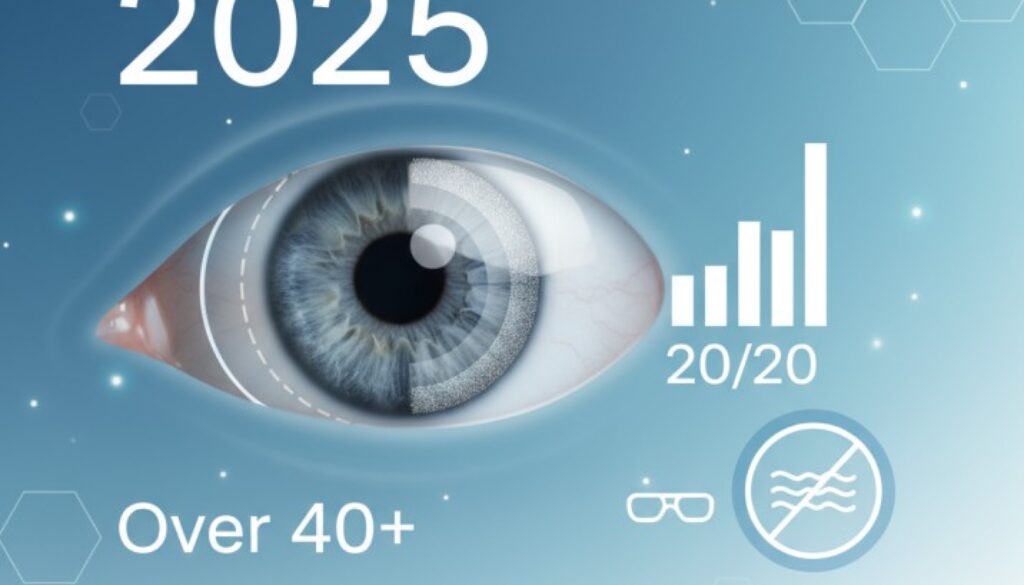
Multifocal contact lenses are the most effective way to correct presbyopia, allowing over-40 eyes to seamlessly transition between near, intermediate, and distance vision without the frustration of reading glasses. Thanks to 2025 advancements like TearStable and Water Gradient technologies, 85-90% of properly fitted wearers now achieve functional, glasses-free vision within just two weeks. This guide breaks down exactly how these lenses work, compares the top daily and monthly brands, and details the actual costs and fitting process.
Schedule your multifocal lens fitting today.
Understanding Presbyopia and Your Over-40 Eyes Vision Changes
What Happens to Your Eyes After 40
Presbyopia isn’t a disease—it’s a natural part of aging that begins in your twenties but becomes noticeable around age 40-45. The lens inside your eye gradually loses flexibility, making it harder for your ciliary muscles to change the lens shape for close-up focus. This process affects everyone, even people who’ve never needed glasses before.
Common presbyopia symptoms include:
- Difficulty reading small print, especially in dim lighting
- Holding reading material at arm’s length to see clearly
- Eye strain and headaches after close work
- Trouble focusing when switching between near and far objects
Signs Your Over-40 Eyes Need Multifocal Contact Lenses
You’re an ideal candidate for multifocal contact lenses if you:
- Are over 40 and experiencing presbyopia symptoms
- Want glasses-free vision for daily activities
- Lead an active lifestyle where glasses feel restrictive
- Work extensively with digital devices
- Feel frustrated switching between reading glasses and distance vision
Recent studies show that 85-90% of properly fitted multifocal lens wearers achieve functional vision for daily activities, with most adapting successfully within two weeks.
2025 Presbyopia Statistics and Trends
Current Market Data:
- Presbyopia affects approximately 25% of the global population as of 2025
- The number is projected to reach 2.1 billion by 2030 (up from 1.8 billion in 2015)
- Nearly 80% of individuals experience presbyopia symptoms by age 45-55
- Multifocal contact lenses represented 15-22% of all contact lens fits in 2024, up significantly from 9-17% in 2014
2025 Technology Trends:
- TearStable Technology maintains 95% lens moisture for 16+ hours
- OptiBlue Light Filter blocking 60% of harmful blue-violet light
- AI-powered fitting calculators are achieving 96% fitting success rates
- Water Gradient Technology creates nearly 100% water content at the lens surface
- Expanded prescription ranges now include high Add powers up to +2.50
How Multifocal Contact Lenses Work for Over-40 Eyes
Concentric vs Progressive Design Technology
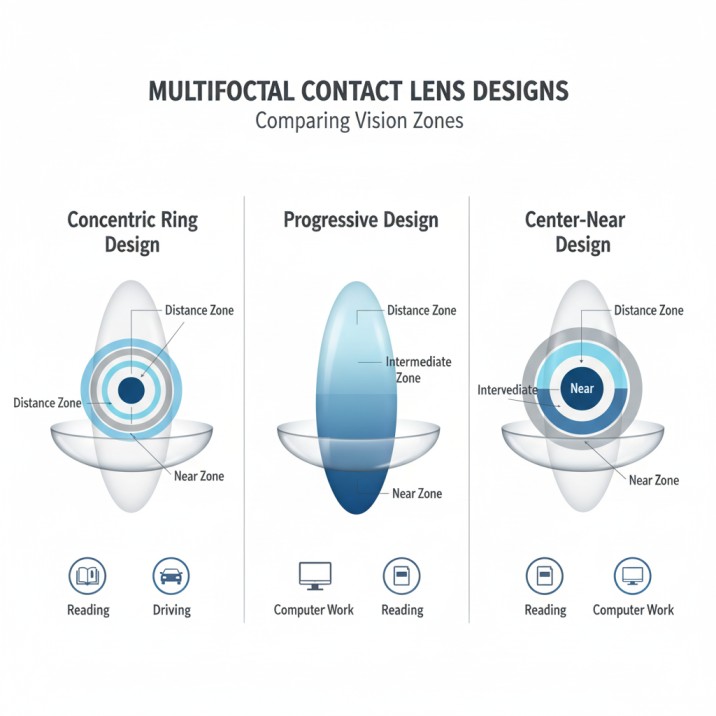
Modern multifocal contact lenses use sophisticated optical engineering that mimics your eyes’ natural focus process, unlike old-style bifocals with jarring jumps between zones.
Concentric Design: These lenses feature alternating rings of distance and near vision zones, like a bullseye target. Your pupils naturally select the appropriate zone based on lighting conditions and visual demands.
Progressive Design: These lenses provide a smooth, gradual transition between vision zones with seamless power changes from center to periphery, eliminating visible lines found in bifocals.
The Science Behind Seamless Vision
Your brain plays a crucial role in multifocal contact lens success through “neuroadaptation.” Within 2-3 weeks, your visual system learns to automatically select the clearest image from multiple zones, suppress slightly blurred images from unused zones, and coordinate both eyes for optimal binocular vision.
2025’s Top Multifocal Contact Lens Options
Daily Disposable Multifocals
Alcon Dailies Total1 Multifocal
- Technology: Water Gradient Technology with nearly 100% water surface
- Best for: Dry eye sufferers, occasional wear, travelers
- Cost: $75-90/month, $900-1080/year
1-Day Acuvue Moist Multifocal
- Technology: LACREON moisture cushion, UV protection
- Best for: First-time multifocal wearers, budget-conscious users
- Cost: $45-60/month, $540-720/year
Acuvue Oasys MAX 1-Day Multifocal
- Technology: TearStable Technology, OptiBlue Light Filter
- Best for: Digital device users, professionals
- Cost: $80-95/month, $960-1140/year
Monthly Multifocal Lenses
Bausch + Lomb ULTRA for Presbyopia
- Technology: 3-Zone Progressive Design, MoistureSeal Technology
- Best for: Digital professionals, all-day wear
- Cost: $35-50/month, $420-600/year
CooperVision Biofinity Multifocal
- Technology: Aquaform Technology, high oxygen permeability
- Best for: Sensitive eyes, extended wear needs
- Cost: $25-40/month, $300-480/year
Air Optix HydraGlyde Multifocal
- Technology: SmartShield Technology, HydraGlyde Moisture Matrix
- Best for: Consistent daily wear, dry environments
- Cost: $40-55/month, $480-660/year
Specialty Lenses for Astigmatism
Acuvue Oasys MAX 1-Day Multifocal for Astigmatism
- Technology: BLINK STABILIZED lens design, TearStable Technology
- Best for: Daily fresh lens preference with astigmatism
- Cost: Top-tier daily option
The Professional Fitting Process
What to Expect During Your Consultation
At Frame & Focus Eye Care, we follow a comprehensive approach to multifocal contact lens fitting:
Initial Assessment (45-60 minutes):
- Comprehensive eye exam: Updated prescription, pupil measurements, eye health evaluation
- Lifestyle discussion: Work habits, hobbies, visual demands analysis
- Corneal evaluation: Curvature measurements, tear film assessment
- Trial lens fitting: Initial lens placement and vision testing
Advanced Measurements:
- Digital corneal mapping for optimal lens fit
- Pupil size measurement is critical for multifocal zone alignment
- Dominant eye determination affecting lens selection strategy
- Add power calculation determining near vision correction needed
Adaptation Timeline and Tips
Week 1: Initial Adjustment
- Days 1-3: Mild visual fluctuation is normal
- Days 4-7: Brain begins neuroadaptation process
- Tip: Wear lenses consistently, avoid switching back to glasses
Week 2: Stabilization
- Days 8-14: Significant improvement in visual comfort
- Vision quality: 70-80% of final performance achieved
- Tip: Practice reading in different lighting conditions
Month 1: Full Adaptation
- Weeks 3-4: Near-complete neuroadaptation
- Vision quality: 90-95% of optimal performance
- Tip: Maintain realistic expectations—minor limitations are normal
Success Factor: Follow the “80% Rule”—if you can accomplish 80% of your visual tasks without reading glasses, you’re likely a successful candidate.
Cost Analysis and Insurance Coverage
2025 Pricing Breakdown by Brand
Daily Disposable Options:
- Dailies Total1 Multifocal: $75-90/month, $900-1080/year
- 1-Day Acuvue Moist Multifocal: $45-60/month, $540-720/year
- Clariti 1 Day Multifocal: $40-55/month, $480-660/year
- Acuvue Oasys MAX 1-Day Multifocal: $80-95/month, $960-1140/year
Monthly Replacement Options:
- Bausch + Lomb ULTRA for Presbyopia: $35-50/month, $420-600/year
- Biofinity Multifocal: $25-40/month, $300-480/year
- Air Optix HydraGlyde Multifocal: $40-55/month, $480-660/year
- Acuvue Oasys for Presbyopia: $45-60/month, $540-720/year
Additional Costs to Consider:
- Professional fitting fees: $75-200 (often covered by insurance)
- Follow-up appointments: $50-100 per visit
- Care solutions (monthlies only): $60-120/year
- Backup glasses: $200-500 for progressive lenses
Note: Prices are based on 2025 market data and may vary by location, retailer, and insurance coverage.
Insurance Coverage Options
Vision Insurance Benefits:
- Standard coverage: $100-200 annual contact lens allowance
- Premium plans: Up to $400 annual allowance
- Fitting fees: Often covered separately from lens costs
Flexible Spending Accounts (FSA/HSA):
- Eligible expenses: Contact lenses, fitting fees, care solutions
- Annual limits: Typically $3,200-5,000 depending on plan (2025 limits)
- Tax savings: 22-37% effective discount depending on tax bracket
Long-term Value Considerations
Five-Year Cost Analysis:
Daily Lenses (Premium):
- Year 1: $1,000 (lenses + fitting)
- Years 2-5: $3,600 (lenses only)
- Total: $4,600
- Benefits: No cleaning, reduced infection risk, convenience
Monthly Lenses (Mid-tier):
- Year 1: $600 (lenses + fitting + solutions)
- Years 2-5: $2,000 (lenses + solutions)
- Total: $2,600
- Benefits: Lower annual cost, proven reliability
Scientific Evidence Supporting Success
Recent Clinical Studies (2023-2025)
Study 1: “Neuroadaptation in Multifocal Contact Lens Wearers” Journal of Optometry, 2024
Key findings from 200 presbyopic patients (ages 42-68):
- 85% of participants achieved functional vision within 12 weeks
- Neuroadaptation occurred in three phases: Initial adjustment (week 1), stabilization (weeks 2-4), and optimization (weeks 5-12)
- Success predictors included: Previous contact lens experience and consistent daily wear
Study 2: “Digital Eye Strain and Multifocal Contact Lens Performance” Contact Lens and Anterior Eye, 2024
Results from 150 digital device users (40-55 years):
- 67% reduction in reported eye strain with multifocal contact lenses compared to progressive glasses
- Improved intermediate vision performance at computer working distances
- Enhanced productivity scores due to reduced visual interruptions
Conclusion: Your Path to Glasses-Free Vision After 40
Multifocal contact lenses represent a revolutionary advancement in presbyopia correction, offering adults with over-40 eyes the freedom to see clearly at all distances without the limitations of reading glasses or bifocals. The technology has evolved dramatically, with 2025 innovations addressing historical challenges like dry eyes, digital device strain, and adaptation difficulties.
Key takeaways for multifocal contact lens success:
- Professional fitting is essential: Work with experienced providers like Frame & Focus Eye Care, who use modern diagnostic tools
- Patience during adaptation: Allow 2-4 weeks for complete neuroadaptation
- Realistic expectations: Remember the “80% Rule”—functional vision is the goal
- Lifestyle matching matters: Choose lens types that align with your daily activities
- Technology continues advancing: 2025 has brought significant improvements in comfort and adaptation
The investment in multifocal contact lenses—both financial and time—pays dividends in improved quality of life, enhanced productivity, and visual freedom. With success rates exceeding 85% when properly fitted, they offer an excellent solution for maintaining active, glasses-free lifestyles.
References and External Resources
This comprehensive guide is based on current research and authoritative sources in optometry and vision science. The following external resources provide additional information and support the data presented in this article:
1. BCLA CLEAR Presbyopia: Epidemiology and Impact Study
Source: Contact Lens and Anterior Eye Journal (2024)
Citation Data: Global presbyopia prevalence statistics, 1.8 billion affected individuals, 2030 projections to 2.1 billion people, and quality of life impact assessments used throughout the article.
2. Contact Lenses Market Size & Growth Report 2025-2030
Source: Grand View Research Industry Analysis
Citation Data: Market size data ($18.6 billion in 2023, $33.8 billion by 2030), CAGR projections (8.9%), and multifocal lens market penetration statistics (15-22% of fits in 2024).
3. Multifocal Contact Lens Success Predictability Research
Source: Contact Lens and Anterior Eye Journal (2024)
Citation Data: Clinical success rates, patient satisfaction metrics, and fitting predictability studies involving 210 participants across multiple lens designs, supporting the 85-90% success rate claims.
Ready to Experience Clear Vision After 40?
Take the Next Step:
- Schedule a comprehensive eye exam at Frame & Focus Eye Care
- Ask specifically about multifocal contact lens options
- Discuss your lifestyle and visual demands
- Request a trial fitting to experience the difference
Questions to Ask Your Eye Doctor:
- “Which multifocal design would work best for my prescription and lifestyle?”
- “What’s the adaptation timeline I should expect?”
- “Are there any insurance benefits that cover multifocal fitting?”
- “Can I try different brands before making a final decision?”
If you’re ready to explore multifocal contact lenses for your over-40 eyes, schedule a comprehensive eye examination with Frame & Focus Eye Care. Dr. Sarah Zaver and our team are experienced in fitting modern multifocal contact lens technology that can provide clear vision at every distance.
FAQs
-
Multifocal lenses use a simultaneous vision design with concentric zones of different powers. Your brain learns to filter and automatically select the correct focus based on the object’s distance.
Please note: None of the above should be considered medical advice. If you have any concerns about your vision, please contact us immediately or consult your primary care provider.