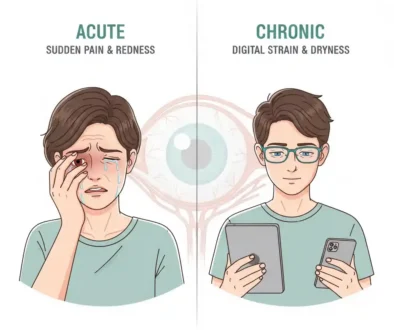
Is Your Screen Time Drying Out Your Eyes?
Screen time contributes to dry eyes because focusing on digital devices significantly lowers your blink rate, preventing adequate tear distribution across the cornea. This condition, often called digital eye strain, causes grittiness, burning, and blurred vision after prolonged use. While symptoms typically resolve with rest, persistent irritation may indicate chronic dry eye syndrome requiring clinical management.
In today’s digital world, our eyes are working harder than ever before. Recent research shows that nearly seven in 10 adults experience symptoms of digital eye strain, with over 50% spending an average of 6+ hours daily on digital devices. At Frame & Focus Eye Care in Richmond, Texas, we’re seeing firsthand how increased screen time is contributing to the growing prevalence of dry eye symptoms among our patients.
Whether you’re working from home, attending virtual meetings, or simply staying connected through your smartphone, prolonged screen use can significantly impact your eye health. The combination of reduced blinking, increased focusing demands, and blue light exposure creates the perfect storm for dry, uncomfortable eyes. Understanding this connection between screen time and dry eye symptoms is the first step toward protecting your vision and maintaining comfortable, healthy eyes in our screen-saturated world.
Screens are now a constant part of our lives, from morning emails on your laptop to evening scrolling on your phone. But spending hours in front of digital devices can come with a downside. If you’ve noticed your eyes getting itchy, burning, or just tired after long periods of screen use, you’re not alone. Understanding why this happens and how to prevent it can make a big difference in your daily comfort and long-term eye health.

What is Dry Eye?
Dry eye is a common condition that occurs when your eyes don’t produce enough tears or when the quality of your tears isn’t sufficient to keep your eyes properly lubricated. This lack of moisture can lead to symptoms like burning, stinging, redness, and a gritty sensation, as if something is stuck in your eye. Dry eye can be triggered by various factors, including ageing, certain medications, medical conditions, and environmental influences. Left untreated, dry eye can impact your comfort, vision, and overall quality of life.
How Screen Time Contributes to Dry Eyes
When you focus on a screen, your blinking rate drops significantly. Blinking is essential for spreading tears evenly across the surface of your eyes, keeping them moist and comfortable. Reduced blinking means less moisture, which can cause your eyes to feel dry, gritty, or even burn. In addition, air conditioning, fans, or staring at screens in a dry indoor environment can make symptoms worse.
Common symptoms of screen-related dry eyes include:
- Itchiness or burning sensation
- Grittiness, as if something is in your eye
- Blurred vision
- Redness
- Watery eyes
How to Prevent Dry Eyes from Screen Time
There are practical steps you can take to help prevent or relieve digital eye strain and dryness:
- Follow the 20-20-20 Rule: Every 20 minutes, look at something 20 feet away for at least 20 seconds. This helps your eyes relax and encourages more frequent blinking.
- Adjust Your Screen: Position your screen slightly below eye level and at a comfortable distance (about arm’s length away). Lowering your gaze can help minimize tear evaporation.
- Optimise Your Environment: Use a humidifier to add moisture to the air, especially if you spend a lot of time in air-conditioned or heated spaces.
- Take Regular Breaks: Frequent breaks from your screen give your eyes a chance to rest and recover.
- Stay Hydrated: Drink plenty of water throughout the day to support healthy tear production.
- Use Artificial Tears: Over-the-counter lubricating eye drops can provide relief, especially during long periods of screen use.
When to See Your Optometrist
If you consistently experience dry, irritated eyes despite following these tips, it may be time to schedule an appointment. Persistent dry eye symptoms can signal an underlying condition that needs professional attention. Your doctor can help identify the cause and recommend effective treatment options, which may include prescription drops, in-office therapies, or lifestyle adjustments.
Schedule Dry Eye Assessment
Additional Resources and Information
American Optometric Association
The American Optometric Association provides comprehensive guidance on computer vision syndrome and digital eye strain. Their resources include detailed information on the 20-20-20 rule, proper screen ergonomics, and when to seek professional eye care. Learn more: Computer Vision Syndrome – AO.A
American Academy of Ophthalmology
The Academy offers evidence-based information about digital screens and eye health, including current research on blue light exposure and practical tips for reducing digital eye strain in both professional and home environments. Learn more: Computer Usage and Eye Health – A.AO
Don’t Let Dry Eyes Slow You Down
Screen time is part of daily life, but it doesn’t have to mean living with dry, uncomfortable eyes. With the right habits and preventive measures, you can keep your eyes healthy, comfortable, and focused on what matters most.
If dryness or discomfort is affecting your quality of life, schedule a consultation with Frame & Focus Eye Care at our office in Richmond, Texas, to find lasting relief and support your eye health in a digital world. We are also happy to serve the surrounding areas, Greatwood, Rosenberg, Sugar Land, Pecan Grove, Four Corners, Mission Bend, New Territory, and Sugar Land. Please call (832) 664-7900 to book an appointment today.
FAQs
-
Staring at screens significantly reduces your blink rate, sometimes by 66%. Less blinking means tears evaporate rapidly, leading to dry, irritated eyes and a condition called Digital Eye Strain.