Pinguecula & Pterygium: Symptoms, and Treatment Options
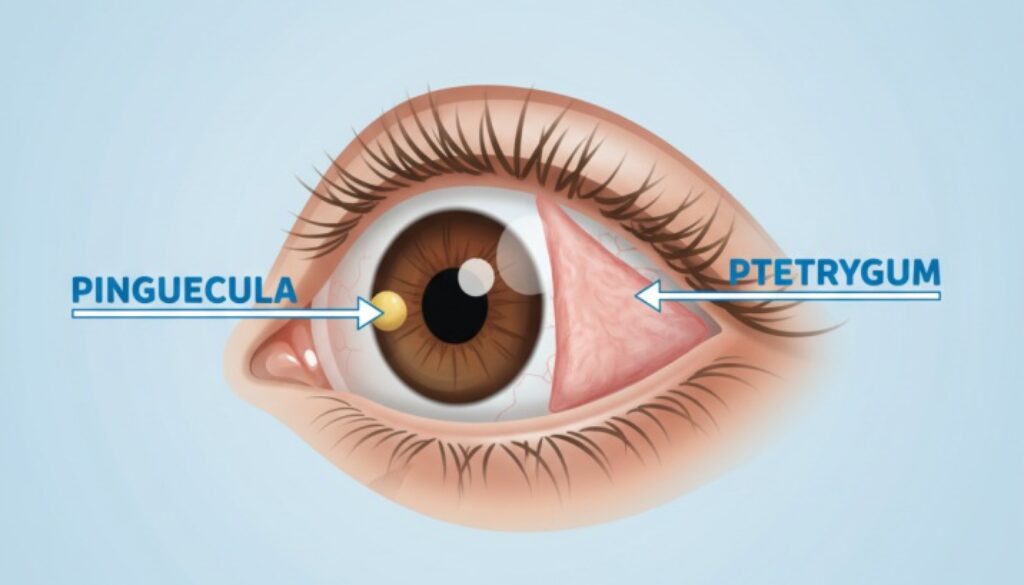
A yellowish bump on the white of your eye is typically a pinguecula, while a fleshy, wedge-shaped growth extending onto the cornea is a pterygium. While both are benign growths caused by UV exposure, early diagnosis is essential to prevent vision changes. At Frame & Focus Eye Care, Dr. Sarah Zaver provides expert evaluations and modern treatment plans to manage these conditions and protect your long-term eye health.
Schedule a Comprehensive Eye Exam in Richmond
Understanding the Basics: What Are Pinguecula and Pterygium?
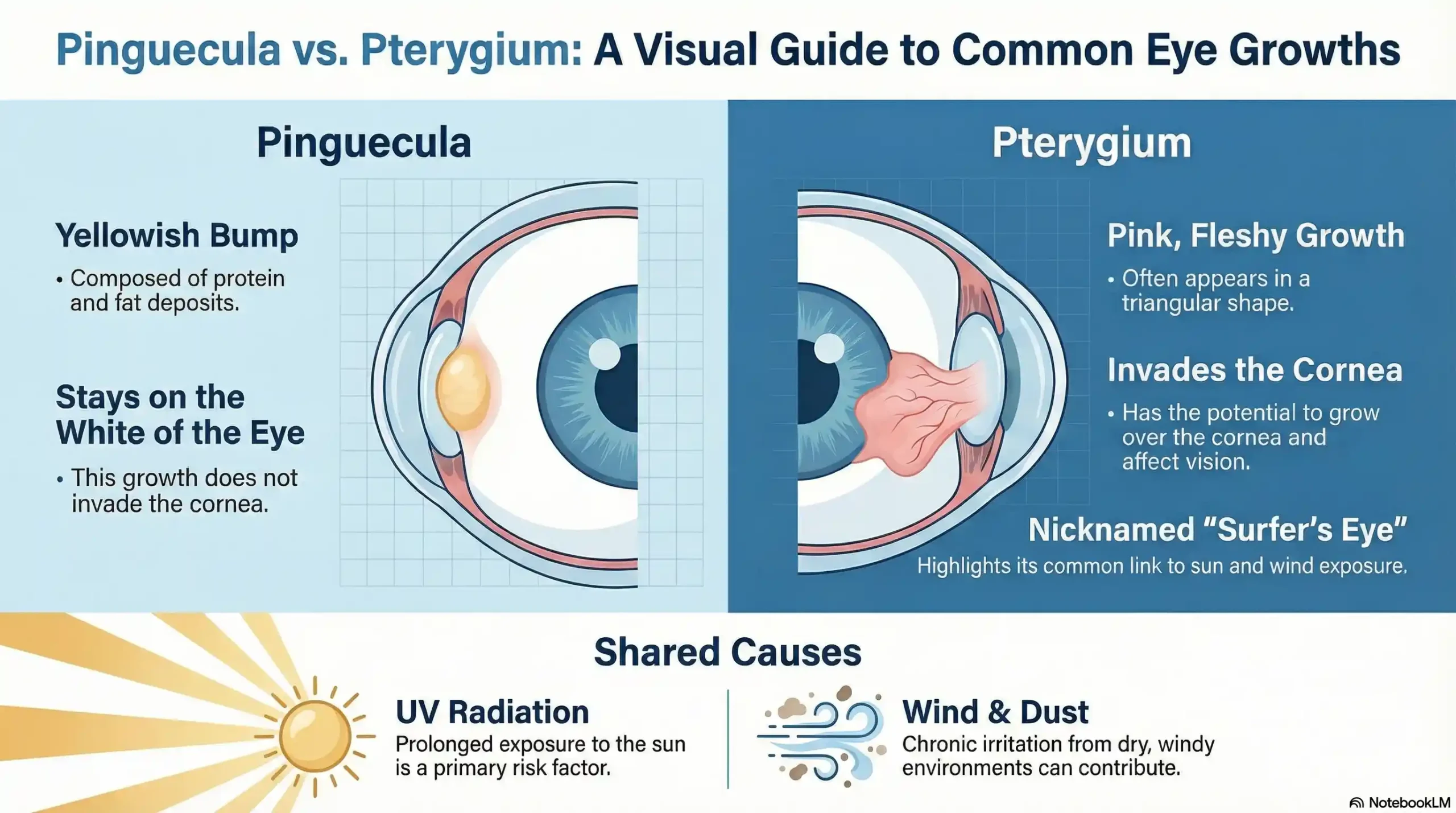
Quick Answer: Pinguecula is a yellowish, raised bump on the white part of your eye that doesn’t affect the cornea. Pterygium is a fleshy, triangular growth that extends from the white part onto the clear cornea and can affect vision. Both are caused primarily by UV exposure and are benign but treatable.
Pinguecula: The Yellow Bump
A pinguecula (pronounced “pin-GWEK-yoo-la”) is a small, raised, yellowish or whitish growth that appears on the conjunctiva—the clear membrane covering the white part of your eye. Think of it as similar to a callus on your skin, representing a thickening of the tissue in response to chronic irritation.
Key characteristics of pinguecula:
- Appears as a yellow or white bump on the eye’s surface
- Usually located near the cornea, often on the side closest to the nose
- Does not extend onto the cornea itself
- Contains deposits of protein, fat, or calcium
- Typically remains stable in size
- Rarely affects vision directly
Pterygium: “Surfer’s Eye”
A pterygium (pronounced “tur-IJ-ee-um”) is a fleshy, triangular growth that starts on the conjunctiva but extends onto the cornea—the clear front surface of your eye. Often called “surfer’s eye” due to its prevalence among people who spend extensive time outdoors, particularly near reflective surfaces like water, sand, or snow.
Key characteristics of pterygium:
- Appears as a pink, wedge-shaped growth with visible blood vessels
- Extends from the white part of the eye onto the cornea
- It can grow progressively larger if untreated
- It may cause vision changes if it reaches the central cornea
- Often more symptomatic than a pinguecula
- Can develop in one or both eyes
The Connection Between the Two
While these conditions are distinct, they share several similarities:
- Both are benign (non-cancerous) growths
- Both develop on the conjunctiva
- Both are primarily caused by environmental factors
- A pinguecula can sometimes develop into a pterygium over time
Key Symptoms to Watch For
Pinguecula Symptoms
Most people with pinguecula experience minimal symptoms, but when present, they may include:
Mild symptoms:
- Slight eye irritation or dryness
- Feeling like something is in your eye (foreign body sensation)
- Occasional redness around the growth
- Mild burning or itching
Pingueculitis (inflamed pinguecula) symptoms:
- Increased redness and swelling
- More pronounced irritation
- Discomfort when blinking
- Temporary increase in size
Pterygium Symptoms
Pterygium typically causes more noticeable symptoms than pinguecula:
Early-stage symptoms:
- Persistent eye irritation
- Redness in the affected area
- Burning or stinging sensation
- Excessive tearing
- Feeling of grittiness in the eye
Advanced-stage symptoms:
- Blurred or distorted vision
- Double vision
- Astigmatism (irregular corneal shape)
- Difficulty wearing contact lenses
- Significant cosmetic concerns
- Complete vision obstruction (in severe cases)
When symptoms worsen: Both conditions can become more symptomatic when exposed to:
- Wind
- Dust
- Bright sunlight
- Dry air
- Smoke or other irritants
💡 Expert Tip from Dr. Zaver: “If you’re experiencing persistent eye irritation, redness, or vision changes, don’t wait to seek professional evaluation. Early intervention often leads to better outcomes and can prevent complications.”
Ready for a professional evaluation? Contact Frame & Focus Eye Care to schedule your comprehensive eye examination.
Root Causes and Risk Factors
Primary Causes
Ultraviolet (UV) radiation exposure is the leading cause of both pinguecula and pterygium. The sun’s harmful UV rays damage the conjunctival tissue, leading to abnormal growth patterns over time.
Environmental factors:
- Prolonged sun exposure without eye protection
- Wind exposure
- Dust and debris in the air
- Dry, arid climates
- Reflective surfaces (water, sand, snow, concrete)
High-Risk Groups
Geographic factors:
- People living between 37° north and south latitude (the “pterygium belt”)
- Residents of tropical or subtropical regions
- Individuals at high altitudes
- Coastal communities with high sun reflection
Occupational risks:
- Outdoor workers (farmers, construction workers, landscapers)
- Water sports enthusiasts (surfers, sailors, fishermen)
- Pilots and aviation professionals
- Athletes in outdoor sports
Demographic factors:
- Age: Most common in people aged 20-50
- Gender: Slightly more prevalent in men
- Ethnicity: Higher rates in certain ethnic groups
- Family history: Possible genetic predisposition
Contributing Factors
Chronic dry eye: Insufficient tear production or poor tear quality can increase irritation and inflammation, potentially accelerating growth and development.
Pre-existing eye conditions:
- Chronic blepharitis
- Contact lens overwear
- Previous eye trauma
- Autoimmune disorders affecting the eyes
Professional Diagnosis Methods
Comprehensive Eye Examination
At Frame & Focus Eye Care, Dr. Zaver uses state-of-the-art technology to provide thorough evaluations:
Slit-lamp biomicroscopy:
- Detailed examination of the conjunctiva and cornea
- Measurement of growth size and extent
- Assessment of inflammation levels
- Documentation for tracking progression
Advanced diagnostic techniques:
- Retinal photography to document the condition
- Corneal topography to assess vision impact
- Tear film analysis for dry eye evaluation
- Digital imaging for monitoring changes over time
Differential Diagnosis
Professional diagnosis is crucial because several conditions can mimic pinguecula or pterygium:
Similar-appearing conditions:
- Conjunctival tumors (rare but serious)
- Inflammatory conditions
- Allergic reactions
- Infectious growths
- Conjunctival cysts
Why professional diagnosis matters:
- Ensures accurate identification
- Rules out serious conditions
- Enables appropriate treatment planning
- Provides a baseline for monitoring progression
- Identifies contributing factors
Modern Treatment Options
Conservative Management
Artificial tears and lubricating drops: Most cases of pinguecula and early-stage pterygium respond well to conservative treatment:
- Regular use of preservative-free artificial tears
- Lubricating ointments for severe dryness
- Specialized dry eye treatments
- Anti-inflammatory drops when needed
Steroid eye drops: For inflamed pinguecula (pingueculitis) or irritated pterygium:
- Short-term use under professional supervision
- Reduces inflammation and discomfort
- Often combined with lubricating therapy
- May prevent progression in some cases
Surgical Treatment
Pterygium surgery costs (2025 estimates):
- Office-based procedures: $1,700-$1,900
- Surgical centers: $2,600-$5,000
- Hospitals: $5,100-$6,000
- Comprehensive bundles: $2,900-$3,200 (including follow-up care)
Cost factors include:
- Geographic location and cost of living
- Surgeon’s experience and reputation
- Facility type (office vs. hospital)
- Surgical technique complexity
- Insurance coverage and benefits
When surgery is recommended:
For pterygium:
- Growth extends more than 2mm onto the cornea
- Vision is affected or threatened
- Significant discomfort despite conservative treatment
- Cosmetic concerns affecting quality of life
- Progressive growth is documented over time
For pinguecula:
- Severe, persistent inflammation
- Significant cosmetic concerns
- Interference with contact lens wear
- Failure of conservative treatment
Modern surgical techniques:
Pterygium excision with conjunctival autograft:
- Current gold standard procedure
- Removes the growth and covers the area with healthy tissue
- Significantly reduces recurrence rates (2-5%)
- Performed as an outpatient surgery with local anesthesia
- 30-45 minute procedure
Advanced surgical options:
- Amniotic membrane transplantation
- Anti-metabolite therapy (mitomycin-C)
- Fibrin glue instead of sutures
- Minimally invasive techniques
Recovery and Post-Operative Care
Immediate post-surgery period (first week):
- An eye patch is worn for 24 hours after surgery
- Antibiotic and anti-inflammatory eye drops 4-6 times daily
- Vision may be blurry for the first 1-2 days
- Mild discomfort and redness are normal
- No water contact with the eye for the first week
Short-term recovery (1-4 weeks):
- Return to office work: 7-10 days
- Return to outdoor work: 2-3 weeks minimum
- No rubbing or touching the eye
- Continue prescribed eye drops as directed
- Avoid swimming, hot tubs, or dusty environments
- Wear protective sunglasses outdoors
Complete healing (1-3 months):
- Full cosmetic recovery and normal eye appearance
- Final visual outcomes achieved
- Gradual return to all normal activities
- Regular follow-up appointments at 1 week, 1 month, and 3 months
- Monitor for signs of recurrence
Prevention Strategies
UV Protection: Your First Line of Defense
Quality sunglasses:
- 100% UV-A and UV-B protection
- Wraparound styles for maximum coverage
- Polarized lenses to reduce glare
- Larger frames for better protection
Additional protective measures:
- Wide-brimmed hats
- UV-blocking contact lenses
- Protective eyewear for outdoor work
- Seek shade during peak UV hours (10 AM – 4 PM)
Environmental Management
Reduce irritant exposure:
- Use protective eyewear in dusty environments
- Maintain proper indoor humidity levels
- Install air purifiers to reduce airborne particles
- Avoid smoke and chemical irritants
Dry eye management:
- Use preservative-free artificial tears regularly
- Stay adequately hydrated
- Consider omega-3 supplements
- Use humidifiers in dry climates
Lifestyle Modifications
Outdoor activity guidelines:
- Plan activities during lower UV periods
- Take regular breaks from sun exposure
- Use extra protection near reflective surfaces
- Consider UV index reports before outdoor activities
Eye health habits:
- Regular comprehensive eye exams
- Prompt treatment of dry eyes
- Proper contact lens hygiene
- Maintain overall health and nutrition
When to Seek Professional Care
Immediate Attention Required
Contact your eye care provider immediately if you experience:
- Sudden vision changes
- Severe eye pain
- Rapid growth of existing lesions
- Signs of infection (yellow discharge, fever)
- Trauma to the affected eye
Routine Monitoring Recommended
Schedule an appointment if you notice:
- New growths on the eye
- Increasing irritation or discomfort
- Changes in existing pinguecula or pterygium
- Difficulty with contact lens wear
- Persistent redness or inflammation
Regular Eye Exam Schedule
For people at risk:
- Annual comprehensive eye exams
- More frequent monitoring if growths are present
- Immediate evaluation of new symptoms
- Professional guidance on prevention strategies
Recent Research and Developments
Scientific Advances (2024-2025 Studies)
Updated prevalence research: The most recent comprehensive studies provide new insights into global prevalence patterns:
- Tehran Geriatric Study (2024): Found pterygium prevalence of 3.64% and pinguecula at 55.57% in adults over 60, with significantly higher rates in men
- Global meta-analysis (2024): Confirmed overall pterygium prevalence of 12% worldwide, with rates varying from 3% in younger populations to 19.5% in those over 80
- Spanish population study: Reported pinguecula prevalence of 47.9% and pterygium at 5.9% in adults over 40
- Rural vs. urban differences: Studies show 4-fold higher pterygium rates in rural populations due to increased outdoor exposure
Genetic factors: Advanced 2024 transcriptome analysis revealed evidence of genomic instability associated with chronic inflammation in both conditions, with specific gene expression patterns that may predict treatment response.
Office-based surgery outcomes: A major 2025 study of over 1,000 office-based pterygium surgeries showed excellent safety profiles with 2.04% recurrence rates, 88% patient satisfaction, and significant cost savings compared to hospital procedures.
Additional Resources
For more comprehensive information about pinguecula and pterygium, we recommend these authoritative medical resources:
1. American Academy of Ophthalmology – Comprehensive Guide
The AAO provides detailed, physician-reviewed information about both conditions, including prevention strategies and treatment options.
2. Johns Hopkins Medicine – Expert Clinical Information
Johns Hopkins offers in-depth medical information about diagnosis, surgical techniques, and post-operative care from leading ophthalmologists.
3. National Center for Biotechnology Information (NCBI) – Research Database
Access the latest peer-reviewed research and clinical studies on pinguecula and pterygium pathology, treatment outcomes, and epidemiological data.
Conclusion
Understanding pinguecula and pterygium empowers you to take control of your eye health. While these common conditions may initially cause concern, the reality is that both are highly manageable with proper care and professional guidance. The key to successful outcomes lies in three fundamental areas: early detection, appropriate treatment, and consistent prevention.
Your Action Plan for Optimal Eye Health:
🔍 Monitor and Recognize
- Be aware of changes in your eyes’ appearance
- Notice persistent irritation, redness, or vision changes
- Don’t ignore symptoms that interfere with daily activities
🏥 Seek Expert Care
- Schedule regular comprehensive eye examinations
- Consult immediately if symptoms worsen or vision is affected
- Choose experienced professionals who understand these conditions
🛡️ Protect and Prevent
- Wear quality UV-blocking sunglasses daily
- Use protective eyewear in dusty or windy environments
- Maintain good eye hygiene and hydration
Why Choose Frame & Focus Eye Care?
Dr. Sarah Zaver’s decade of experience, combined with our practice’s patient-centered philosophy, ensures you receive not just treatment, but education and support throughout your journey. Our 4.9/5 Google rating from over 315 patients reflects our commitment to exceptional care.
We believe in “straight talk” about your eye health—no medical jargon, just clear explanations that help you make informed decisions about your vision.
Don’t let eye growths affect your confidence or vision. Whether you’re noticing the first signs of these conditions or seeking a second opinion on treatment options, Frame & Focus Eye Care is here to help.
Take the first step toward healthier eyes today. Contact us at or visit our Richmond office to schedule your comprehensive evaluation. Your vision is precious—let us help you protect it.
FAQs
-
No, pinguecula will not disappear naturally and requires treatment for removal. Eye drops can relieve symptoms in 2-4 weeks, while surgical removal achieves complete elimination.
Please note: None of the above should be considered medical advice. If you have any concerns about your vision, please contact us immediately or consult your primary care provider.