Why Are My Eyes Dry When I Wake Up?
Waking up with dry eyes often results from nocturnal lagophthalmos (sleeping with eyes partially open), environmental factors like ceiling fans, or underlying Meibomian Gland Dysfunction (MGD). While it may feel like a minor morning irritation, chronic dryness is a medical signal that your tear film is failing to protect your ocular surface overnight.
Schedule a Dry Eye Evaluation in Richmond
At Frame & Focus Eye Care, Dr. Sarah Zaver uses advanced diagnostic technology to identify whether your morning discomfort is caused by lifestyle habits or a clinical condition requiring a medically managed treatment plan.
Lifestyle Factors That Worsen Morning Eye Dryness
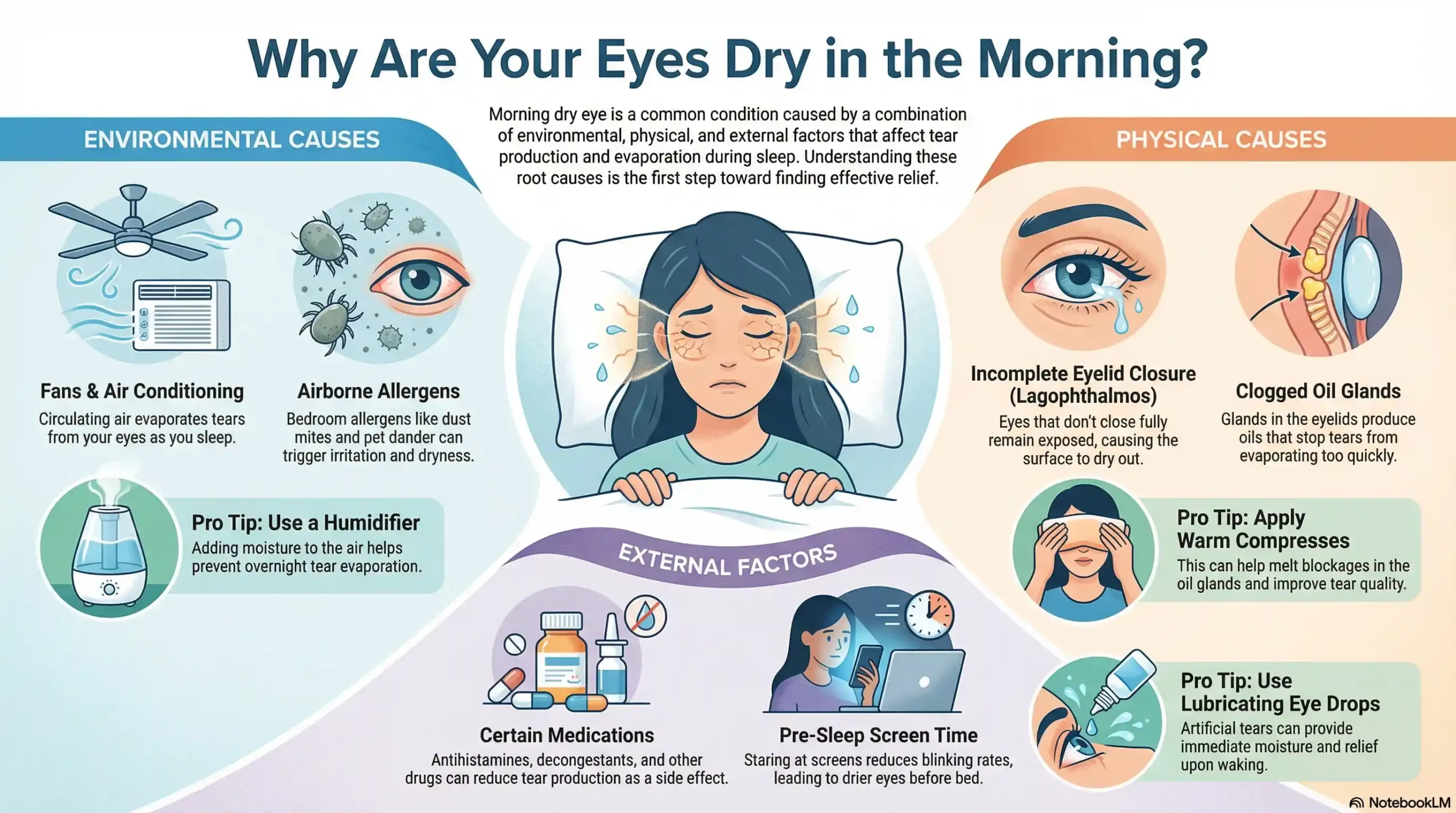
While underlying medical conditions are often the primary cause, your daily habits and environment can significantly worsen morning discomfort. In the Richmond and Sugar Land area, our reliance on air conditioning is a major factor; the constant airflow from overhead vents or floor fans can accelerate tear evaporation while you sleep.
Beyond your physical environment, modern screen time habits during your evening wind-down play a critical role. Research shows that prolonged use of smartphones or tablets reduces your blink rate by up to 60%, leaving your tear film unstable before you even close your eyes. Additionally, lifestyle choices such as systemic dehydration or a diet low in Omega-3 fatty acids can diminish the quality of the oil produced by your meibomian glands, leading to that “sandpaper” feeling the moment you wake up.
When Morning Dry Eyes Signal a Bigger Problem
At Frame & Focus Eye Care, Dr. Zaver emphasizes that chronic dryness is often a “check engine light” for your overall ocular health. If your morning symptoms are accompanied by persistent redness, blurred vision that clears only after multiple blinks, or a stringy discharge, you may be experiencing Dry Eye Syndrome or Meibomian Gland Dysfunction (MGD).
Ignoring these signs can lead to more than just daily irritation; chronic inflammation can eventually cause corneal scarring, permanently affecting your vision. During a comprehensive eye exam, we use advanced technology like Optomap retinal photography to look beyond the surface. We ensure your dry eyes aren’t a secondary symptom of deeper issues, such as ocular rosacea or complications from other health conditions. When “over-the-counter” drops no longer provide relief, it’s a clear signal that your eyes require a medically managed dry eye treatment plan.
Preventive Tips for Healthier Eyes Overnight
Protecting your vision starts long before you hit the pillow. To combat the dry Texas air, we recommend using a humidifier in the bedroom to maintain moisture levels. If you are prone to nocturnal lagophthalmos (sleeping with eyes slightly open), Dr. Zaver may suggest specialized moisture-seal sleep masks or preservative-free nighttime ointments.
A highly effective home routine includes applying a warm compress for 10 minutes before bed; this softens the oils in your glands to ensure they flow properly. For those who wear contact lenses, ensuring you follow proper wear schedules and hygiene is vital to preventing overnight irritation. Finally, reducing allergens in your sleeping environment and scheduling regular eye exams will help you move from simply “managing” the pain to enjoying lasting ocular comfort.
Clogged Oil Glands
The meibomian glands along your eyelids produce oil for the eye’s tear film. The oil helps to prevent the quick evaporation of tears. Sometimes, the glands become clogged or inflamed, a condition known as meibomian gland dysfunction (MGD). If your eyes are dry when you wake up, you could have MGD, the leading cause of dry eye syndrome. Applying a warm compress each night before sleep can help relieve the symptoms.
Damaged Tear Film
The eye is covered by a protective tear film. The tears help to keep the eyes healthy, clean, and lubricated. When the tear film is damaged, you can develop dry eye syndrome. The condition occurs when the lacrimal gland fails to make enough tears or the tears evaporate too fast due to inadequate oil. If you have dry eye, your eye doctor can recommend treatment based on the underlying cause and severity of your symptoms.
Partially Open Eyelids
The eyelids close during sleep, keeping the tear film in place. Closed eyelids prevent tear evaporation, which is why you need to blink when awake. If you wake up with dry eyes, maybe you sleep with your eyes partially open, a condition known as nocturnal lagophthalmos. The condition may occur if you have had jaw or face surgery or a stroke. Individuals with Bell’s palsy, Graves’ disease, or Ramsay-Hunt syndrome may also sleep with partially open eyelids.
Certain Medications
Your dry eye symptoms may be due to certain medications. If you have a certain health condition and take medications, they may be responsible for your morning dry eyes. Many common medications can cause eye dryness, including allergy and blood pressure medications. Some over-the-counter pain relievers, antidepressants, and diuretics can also cause dry eye. Talk to your doctor and find out whether you can get alternatives.
Resources and Citations
This article draws from established medical literature and authoritative sources to provide accurate information about dry eye conditions and their causes:
1. American Academy of Ophthalmology – Dry Eye Syndrome
The American Academy of Ophthalmology provides comprehensive information about dry eye syndrome, including causes such as meibomian gland dysfunction and environmental factors. This resource supports the article’s discussion of oil gland blockages and the importance of proper tear film function for maintaining eye health.
2. National Eye Institute – Dry Eye Disease
The National Eye Institute, part of the National Institutes of Health, offers evidence-based information about dry eye disease symptoms, causes, and treatment options. This resource validates the article’s explanations of tear film damage, nocturnal lagophthalmos, and the impact of medications on eye moisture, providing readers with additional authoritative information about their condition.
Common Indoor Allergens
Your indoor environment could be responsible for your dry eyes. Low humidity from your heating or air conditioning system can affect your eyes. Dust and dander are common indoor allergens that can trigger dry eye symptoms. If you have a new pillow or have adopted a new pet, that could be the reason for your symptoms. Indoor allergens can trigger symptoms, even if you do not have a history of eye allergies.
There are things you can do to keep your eyes from drying out. Using an eye ointment, eyelid scrubs, and a warm compress every night can help. It helps to change your sleeping environment to reduce allergens. Reduce your screen time, especially before you sleep, and use a humidifier to keep the indoor air comfortable. Scheduling regular eye exams will help keep your eyes healthy.
For more on why your eyes feel dry when you wake up, visit Frame & Focus Eye Care. Our office is in Richmond, Texas. Call (832) 664-7900 to schedule an appointment today. We are also happy to serve the surrounding areas, Greatwood, Rosenberg, Sugar Land, Pecan Grove, Four Corners, Mission Bend, New Territory, and Sugar Land.
FAQs
-
The most common condition is Nocturnal Lagophthalmos, where your eyelids do not fully close during sleep, exposing the eye surface to air. Other causes include Meibomian Gland Dysfunction (MGD) or underlying autoimmune conditions.