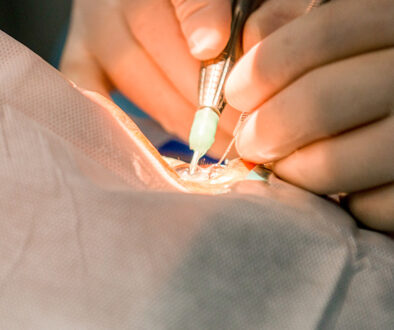

Overview of Visian ICL
Visian ICL (Implantable Collamer Lens) is an advanced vision correction surgery designed for patients with high nearsightedness or thin corneas who may not be candidates for traditional LASIK. Unlike laser procedures that remove corneal tissue, this reversible, “additive” technology involves placing a biocompatible lens behind the iris to provide high-definition vision. At Frame & Focus Eye Care, Dr. Sarah Zaver provides specialized Visian ICL evaluations for residents in Richmond, Pecan Grove, and Sugar Land seeking a permanent but removable alternative to glasses and contacts.
Schedule Your ICL Consultation with Dr. Zaver
This procedure makes a small incision and then implants a personalized prescription lens over the cornea to allow for corrected vision. If your vision then changes due to aging or other natural processes, the lens can be replaced by another lens with an updated prescription.
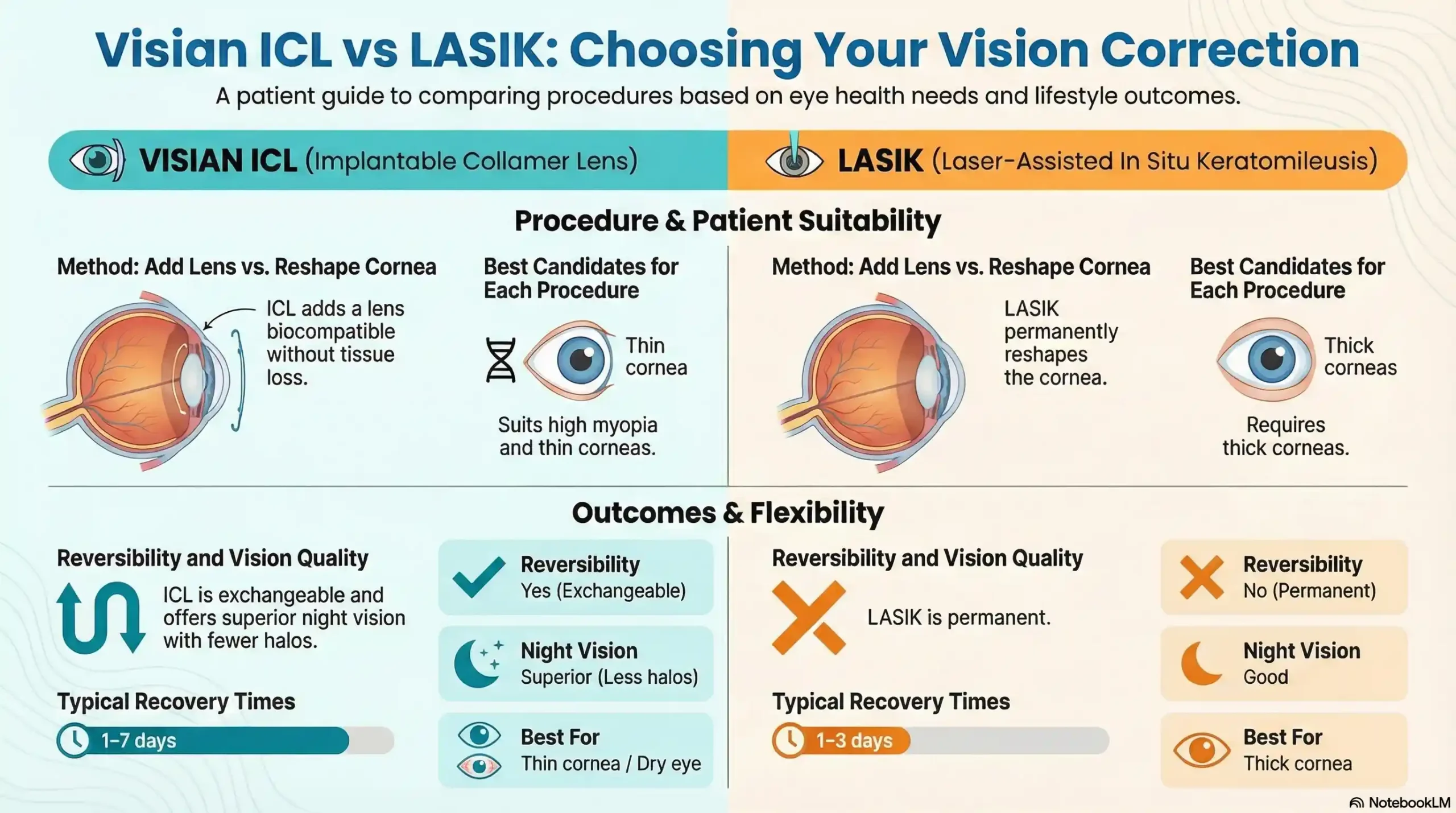
Visian ICL vs. LASIK: A 2025 Value Comparison
Choosing a vision correction procedure is a major health milestone. While LASIK is a well-known household name, the Visian ICL offers a revolutionary “additive” approach. Unlike LASIK, which permanently removes corneal tissue, the ICL works in harmony with your eye’s natural anatomy.
At Frame & Focus Eye Care, Dr. Sarah Zaver emphasizes that for many Richmond patients—especially those with high myopia or thin corneas—the ICL provides a superior quality of vision. A recent clinical review highlighted a 99.4% patient satisfaction rate, often surpassing traditional laser results in low-light environments.
-
Reversibility: Unlike the permanent changes of laser surgery, ICL is removable, offering peace of mind and flexibility for future medical advancements.
-
Corneal Integrity: It is the ideal solution for those told they aren’t candidates for LASIK due to corneal thickness.
-
The Dry Eye Advantage: Because the procedure does not disrupt corneal nerves, it is often the preferred choice for patients already managing dry eye syndrome.
The Collamer® Advantage: Biocompatible Tech for Sensitive Eyes
What makes the Visian ICL feel so natural? The secret lies in Collamer®, a proprietary material used exclusively by STAAR Surgical. Collamer is a unique blend of polymer and purified collagen—the same protein found naturally in your body.
Because the lens is biocompatible, your eye does not perceive it as a foreign object. This “harmony” prevents the inflammatory responses or “gritty” sensations sometimes associated with other implants or specialty contact lenses.
Furthermore, Collamer features a built-in UV filter. This acts like a permanent layer of UV protection inside your eye, protecting your retina from long-term sun damage—a significant benefit for our active neighbors in Pecan Grove and Sugar Land.
Who is a Good Candidate for ICL?
Typically, patients who would benefit from ICL are between the ages of 21-45. This age represents a slight increase from the base age of 18 for LASIK. This procedure is also not well-suited for geriatric or elderly individuals. Patients may also have mild or severe myopia, and they have a relatively unchanged prescription. While the age requirements are more stringent for ICL than for LASIK, there are other, less stringent qualifications. This means that even if you aren’t an ideal candidate for LASIK, ICL could be a good option for you.
Performing the Operation
ICL is considered an outpatient operation and only takes about 30 minutes to complete. This means that you will be in and out of your chosen facility on the same day. Patients are given some numbing drops for their eyes, and individuals who are more hesitant or uncomfortable may also be given a sedative.
The surgeon will make several micro-incisions in the eye to insert and place the lens. When the lens has been inserted, it will be unfolded, and the edges of the lens will be placed behind the iris. After this is completed, the operation is considered complete. Your physician may give you some eye drops for postoperative care and then send you home. There may be a follow-up appointment scheduled 24 hours later.
Post-Operation
After your operation, you will be required to have somebody else drive you home. Anytime that you have an operation that may impair your vision or ability to operate a vehicle, you should plan to have somebody else drive you home. Surgery results are typically noticeable 24 hours after the operation.
Recovery time is minimal, and some patients experience mild discomfort or a gritty feeling in their eyes. Your doctor may require you to stay out of the swimming pool and avoid activities that make you heavily perspire because when sweat gets into your eyes, it may aggravate the micro incisions and cause additional discomfort.
While there are some potential complications both during and after the operation, they are typically minimal. The chances of impairing your vision or causing long-term damage are very low with this operation; however, you should make sure to talk about potential side effects with your physician. If you experience any abnormality, you should seek medical attention immediately.
Considerations
If you are looking into options for correcting your vision, ICL may be a good choice for you. Patients with reduced corneal thickness, or with myopia, are typically ideal candidates for Visian ICL. This operation can be a better avenue for patients who have experienced issues that disqualify them from other vision correcting procedures that include as dry eyes, pregnancy, or a reduced level of health. Visian ICL is a fast procedure that allows patients to see results in as little as 24 hours with little to no downtime. For these reasons, it would be wise to discuss all of your options with your medical professional today.
Your Day-by-Day Recovery Roadmap
Recovery from Visian ICL is famously rapid. Most patients experience a “Wow Moment” within just a few hours. Here is what your first week typically looks like at our Richmond clinic:
-
Day 0 (Surgery Day): You’ll head home with a protective shield. Your vision may be slightly hazy, but the recovery is generally painless.
-
Day 1 (The First Follow-up): Dr. Zaver will perform a comprehensive check of your eye pressure. Most patients are cleared to drive and return to work by the afternoon.
-
Days 2–4: Vision continues to sharpen. If you previously suffered from digital eye strain, you may notice an immediate improvement in how your eyes feel during screen time.
-
Week 1: You can typically resume full exercise routines. Your vision is now stabilizing into its permanent, high-definition state.
Citations and Resources
External Links Used in This Article:
- American Academy of Ophthalmology – Refractive Surgery Guide
- Purpose: Comprehensive resource for understanding different vision correction surgery options and how they compare to help patients make informed decisions about procedures like Visian ICL versus traditional LASIK.
- International Myopia Institute – Patient Education Resources
- Purpose: Evidence-based educational materials about myopia management strategies, current research, and treatment approaches for patients with high myopia who may be considering surgical options like Visian ICL.
Ready to See the World in High Definition? Don’t let “not being a LASIK candidate” be the end of your journey to clear vision. Experience the life-changing clarity and comfort of Visian ICL at Frame & Focus Eye Care. Join the hundreds of Richmond neighbors who have trusted Dr. Sarah Zaver to transform their sight.
Schedule Your ICL Consultation Today Or call us at (832) 930-7797 – Same-day appointments may be available!
FAQs
-
The Visian ICL (Implantable Collamer Lens) is a soft, flexible lens surgically placed behind the iris. It works with your natural lens to focus light, correcting high-level nearsightedness and astigmatism.