Contact Lens Exam vs. Fitting: What’s the Difference?
A contact lens exam determines your eye health and prescription, while a contact lens fitting involves selecting and testing specific trial lenses for comfort and stability. These two distinct services ensure your lenses fit your unique eye anatomy and vision needs safely.
Understanding Contact Lens Exams
A contact lens exam is a specialized eye examination that evaluates your eyes’ suitability for contact lens wear. This comprehensive evaluation determines whether contact lenses are appropriate for your needs while measuring crucial aspects of your eyes for proper lens fit and long-term eye health.
How Contact Lens Exams Differ from Regular Eye Exams
While comprehensive eye exams evaluate overall eye health and vision correction needs, contact lens exams include specialized tests designed specifically for contact lens wear:
Regular Eye Exam Includes:
- Visual acuity testing
- Eye health evaluation
- Disease detection
- Glasses prescription determination
Contact Lens Exam Adds:
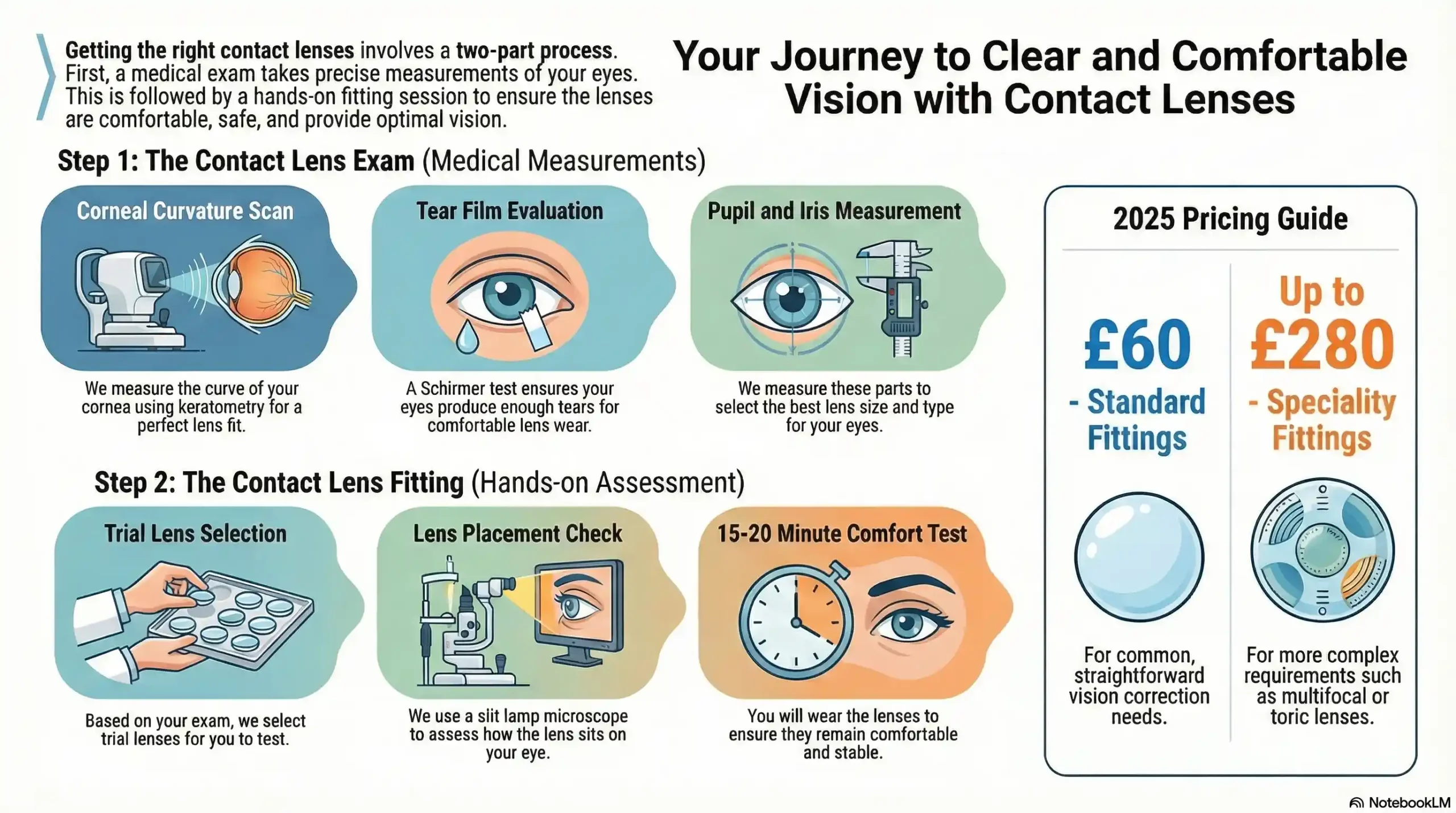
- Corneal curvature measurements
- Eye surface mapping
- Tear film evaluation
- Pupil and iris measurements
- Contact lens material compatibility assessment
Key Components of Contact Lens Exams
Corneal Measurements
Your optometrist uses sophisticated instruments like a keratometer to measure your cornea’s curvature with precision. This determines the base curve of your contact lens (listed as “BC” on prescriptions). For irregular corneal surfaces, advanced corneal topography creates detailed three-dimensional maps of your eye’s contours.
Tear Film Evaluation
Since contact lenses float on your tear film, adequate tear production is essential. Evaluation methods include:
- Schirmer Test: Paper strips measure tear production
- Tear Break-Up Time: Fluorescein dye evaluates tear stability
- Meibomian Gland Assessment: Examines oil-producing glands
This evaluation is crucial because dry eyes are a leading cause of contact lens discomfort.
Pupil and Iris Measurements
Accurate measurements ensure proper lens coverage and vision correction, preventing light distortion and optimizing vision in various lighting conditions.
Contact Lens Fitting: The Hands-On Process
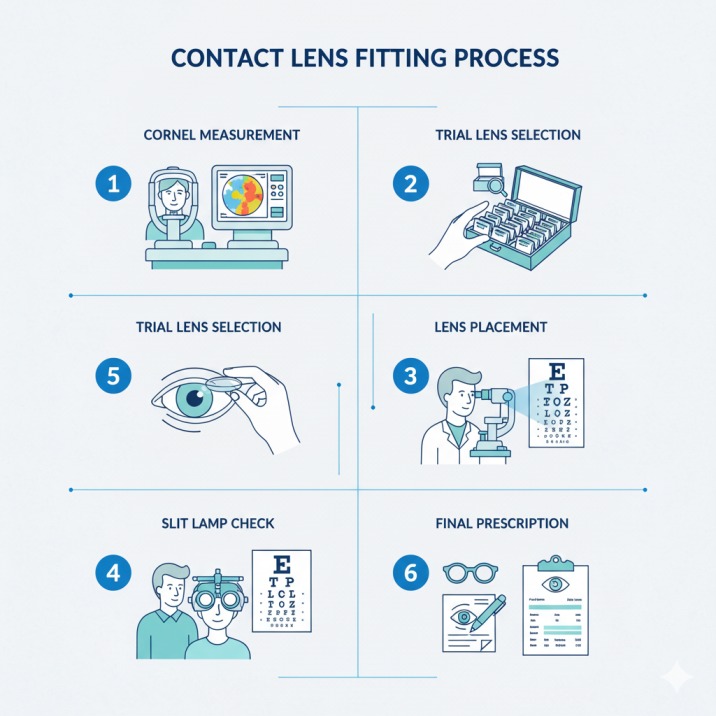
A contact lens fitting applies measurements from your examination to select and evaluate trial lenses on your unique eye anatomy. This process ensures optimal comfort, vision, and eye health.
The Fitting Process
Trial Lens Selection
Based on exam results, your optometrist selects diagnostic lenses matching your prescription and corneal measurements, considering:
- Refractive error type
- Corneal curvature and diameter
- Tear film quality
- Lifestyle requirements
Lens Placement and Assessment
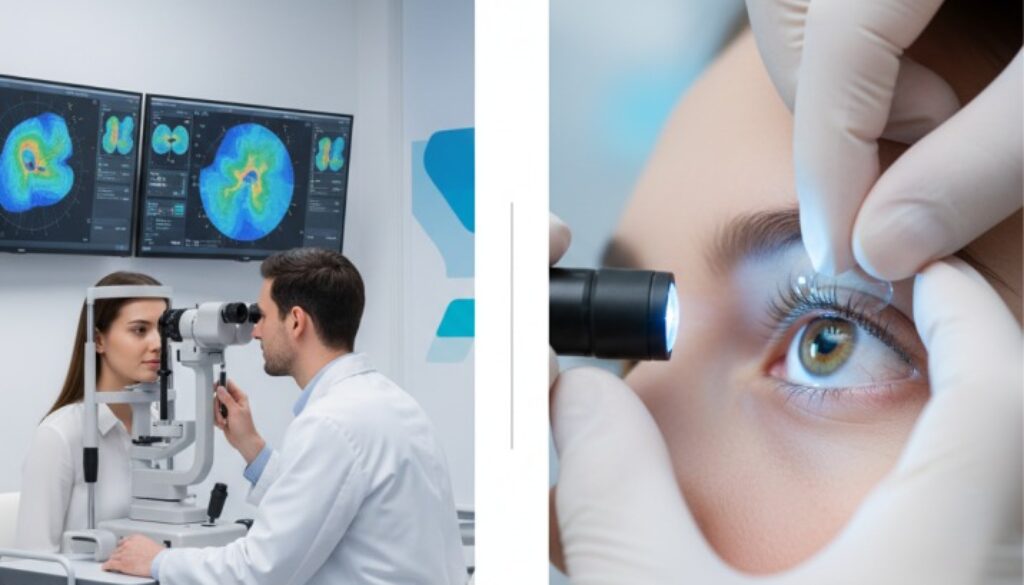
Once trial lenses are placed, detailed slit lamp microscope evaluations assess:
- Lens centration and movement
- Corneal coverage
- Immediate comfort levels
Vision Testing and Comfort Evaluation
You’ll wear trial lenses for 15-20 minutes while your optometrist monitors lens stability, comfort, and visual consistency.
Professional Fitting Importance
Recent research emphasizes professional contact lens fitting for preventing complications:
- Microbial keratitis affects 2-20.9 per 10,000 contact lens wearers annually
- Extended wear carries higher risks (13.3-20.9 per 10,000) versus daily wear (2-4.1 per 10,000)
- Poor hygiene contributes to 66% of contact lens complications
Professional fitting with proper education significantly reduces infection risks and improves long-term success.
Schedule Your Professional Fitting in Richmond
Types of Contact Lens Fittings
Standard Contact Lens Fitting
Includes single vision soft contact lenses for simple prescriptions with minimal astigmatism and healthy tear films. Best for occasional or part-time wear.
Premium Contact Lens Fitting
Encompasses specialty designs including:
- Toric lenses for astigmatism
- Multifocal lenses for presbyopia
- Custom parameters for complex prescriptions
- Advanced materials for dry eye conditions
Cost and Insurance Considerations
2025 Pricing (Verified)
- Contact Lens Exam: $19-$250 (average $120-$200)
- Standard Fitting: $75-$150
- Premium Fitting: $150-$260
- Specialty Fitting: $200-$350
Insurance Coverage
Most vision insurance plans provide:
- Eye exam coverage with $15 copay (typical)
- Contact lens allowances ($120-$200 annually)
- Fitting coverage varies by plan (VSP: $60 copay; EyeMed: $60 deductible)
Common Fitting Challenges and Solutions
Astigmatism Correction
Toric contact lenses feature different powers in different meridians, specifically designed for astigmatism correction with proper orientation and stability.
Presbyopia Management
Multifocal lenses or monovision fitting address age-related focusing changes while maintaining contact lens wear.
Dry Eye Syndrome
Specialized materials with higher water content, silicone hydrogel designs, and daily disposables minimize deposit buildup.
Follow-Up Care
Initial Follow-Up (1-2 weeks)
Assesses adaptation, addresses comfort concerns, and fine-tunes wearing schedules.
Annual Contact Lens Exams
Monitor eye health changes, update prescriptions, and evaluate lens condition while screening for complications.
Contact your provider immediately for persistent discomfort, vision changes, excessive redness, or recurring infections.
Why Choose Frame & Focus Eye Care
Dr. Sarah Zaver brings over a decade of contact lens fitting experience to Richmond. Our practice offers:
- Advanced diagnostic technology
- Extensive trial lens inventory
- Specialty fitting expertise
- Same-day urgent care for contact lens issues
With a 4.9/5 Google rating based on 315 reviews, patients consistently praise our thorough approach to finding perfect contact lens solutions.
Preparing for Your Appointment
Before Your Visit
Gather current eyeglass prescriptions, medication lists, eye problem history, and insurance information. Consider your daily activities, work requirements, and visual needs.
What to Expect
Allow 60-90 minutes for initial contact lens exams and fittings. All procedures are painless and non-invasive, followed by comprehensive instruction on lens care and handling.
References and Additional Resources
For additional information about contact lens safety and fitting procedures, consult these authoritative medical resources:
Contact Lens Complications and Safety Guidelines
StatPearls – Contact Lens-Related Complications
National Center for Biotechnology Information
Professional Contact Lens Standards
American Optometric Association – Contact Lens Care
American Optometric Association
Contact Lens Research Studies
Contact Lens Risk Factors Review – PMC
PubMed Central Medical Literature Database
Conclusion
Understanding contact lens exam and fitting differences empowers informed vision care decisions. While exams evaluate eye suitability and determine prescriptions, fittings ensure optimal comfort and eye health. Both components are essential for success.
Professional contact lens care isn’t one-size-fits-all. Your unique eye anatomy, visual requirements, and lifestyle determine the best lens solution. Investing in proper professional care ensures years of successful contact lens wear.
Ready to experience contact lens freedom? Contact Frame & Focus Eye Care to schedule your comprehensive contact lens exam and fitting with Dr. Sarah Zaver. Our team guides you through every step, ensuring personalized care and attention you deserve.
FAQs
-
A contact lens exam determines your base vision prescription (refraction) and checks for eye disease. A fitting includes special measurements of your eye’s curvature to ensure the lens rests safely and comfortably on the cornea.
Please note: None of the above should be considered medical advice. If you have any concerns about your vision, please contact us immediately or consult your primary care provider.