What is a Refraction Test?
A refraction test is a clinical eye examination that determines your exact vision prescription by measuring how light bends as it passes through your cornea and lens. This essential test identifies refractive errors like nearsightedness, farsightedness, and astigmatism to help you achieve 20/20 vision.
[Schedule Your Comprehensive Eye Exam & Refraction Test in [Richmond, TX]]
Key Takeaways
-
More Than Just Glasses: The refraction test not only identifies common refractive errors (nearsightedness, farsightedness, astigmatism) but also establishes your Best-Corrected Visual Acuity (BCVA), helping doctors rule out more serious non-optical eye conditions.
-
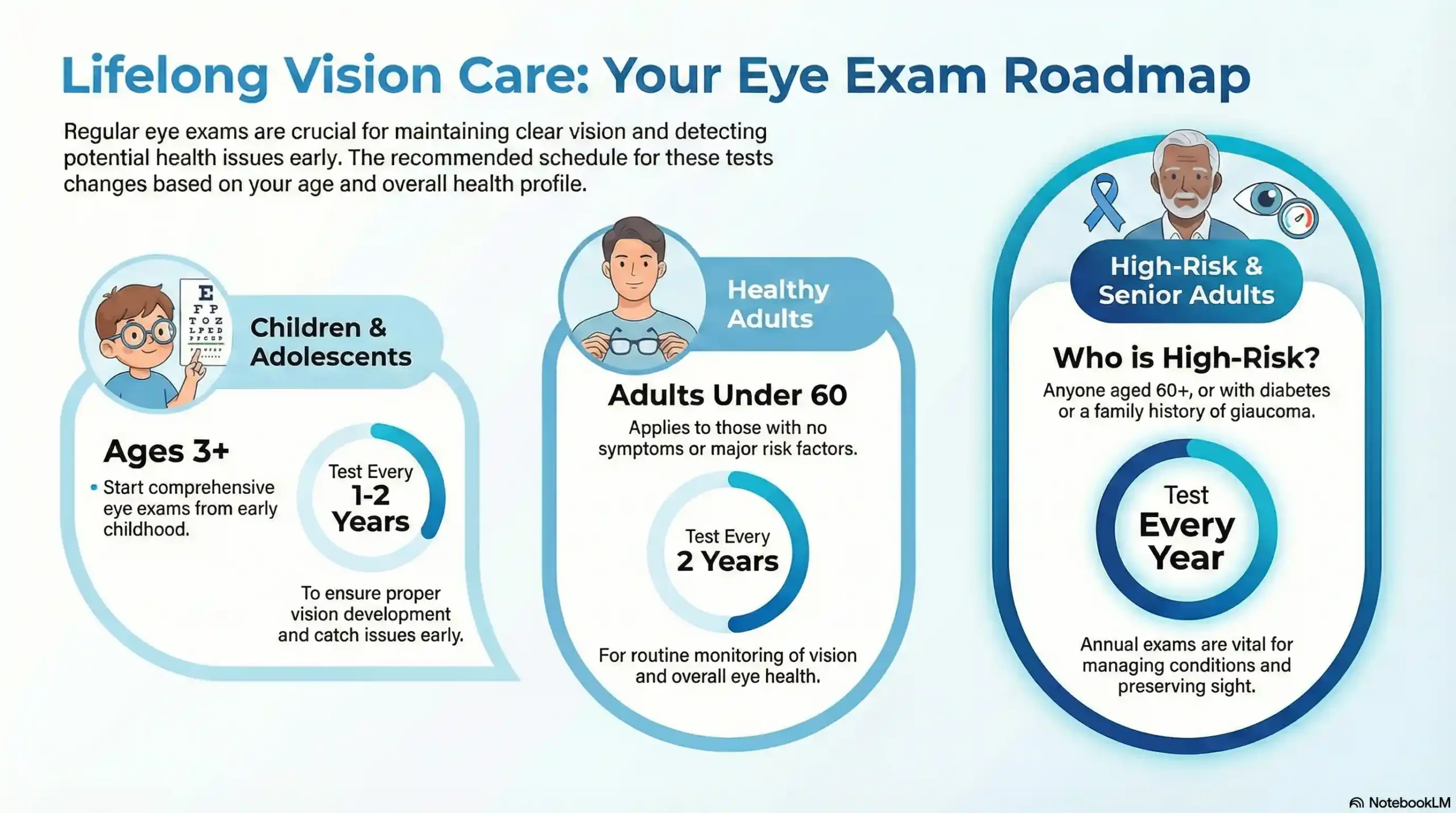
Annual Exams are Essential for At-Risk Groups: If you are over age $60$, have a family history of glaucoma, or have diabetes, you must prioritize having a full eye examination, including refraction, every year.
-
Schedule by Age: Children should begin having refraction tests no later than age $3$, with follow-ups every $1–2$ years, ensuring early detection of visual development issues.
-
Know Your Frequency: Healthy adults should seek a refraction test every two years, while those already wearing corrective lenses should have one every 1–2 years or immediately upon noticing any vision changes.
-
Simple Preparation: For the most accurate result, remember to remove contact lenses prior to the test, which is performed quickly using a device called a phoropter.
A refraction test, also called a vision test, is usually performed as a part of a routine eye examination. The purpose of this test is to determine if a person has a refractive error which would then mean the patient would need glasses or contact lenses.
What Is The Normal Value for Refraction Test?
A value of 20/20 is normal (optimum) vision. This means that individuals who have 20/20 vision are able to read letters that are 3/8-inch (1 centimeter) tall from 20 feet (6 meters) away. The normal uncorrected vision (without glasses or contact lenses) refractive error is zero (plano). Individuals who don’t have 20/20 vision, have what is called a refractive error. A refractive error means that the light is not bending properly when it passes through the lens of the eye. The refraction test will tell the doctor what prescription lens should be used in order to have 20/20 vision.
For people over age 40 who have normal distance vision but difficulty with near vision, a refraction test with a small type size is used to determine normal near vision and the correct power of reading glasses.
How Is The Refraction Test Performed?
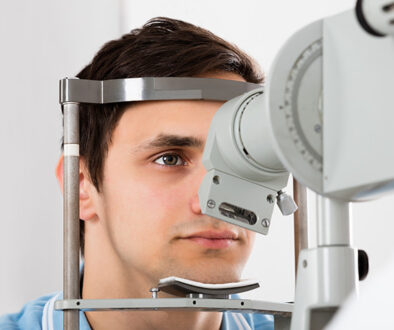
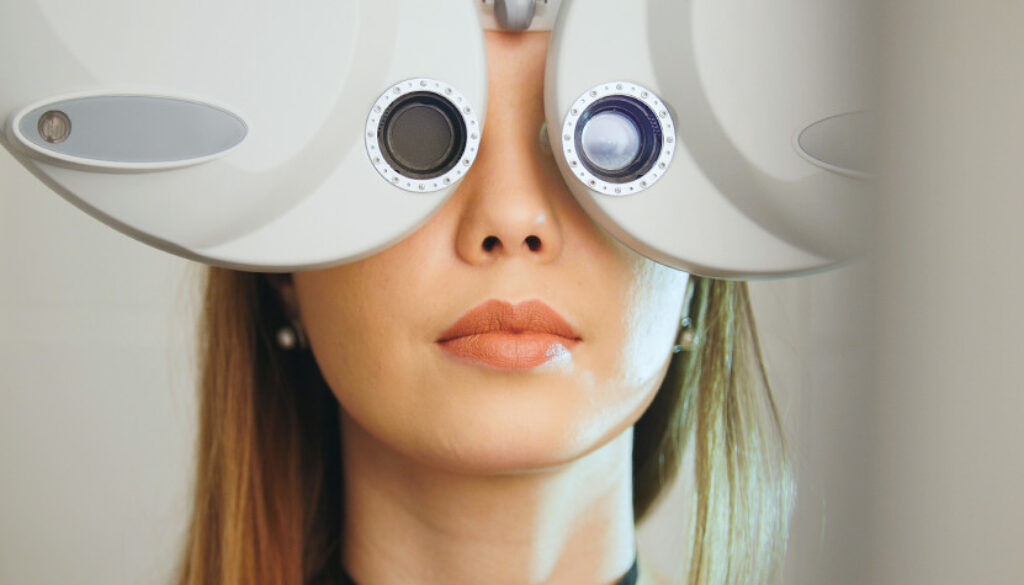
The test is performed by having the patient seated in a chair that has a special device (called a phoropter or refractor) attached to it. The patient looks through the device and focuses on an eye chart 20 feet (6 meters) away. The device contains lenses of different strengths that can be moved into the patient’s view. The test is performed one eye at a time. If the patient is wearing contact lenses, they should be removed before the test.
In case the final vision is less than 20/20 even with lenses, then there is probably another non-optical problem with the eye. The vision level achieved during the refraction test is called the best-corrected visual acuity (BCVA).
What Are The Causes of Abnormal Refraction Test Results?
Abnormal results may be due to:
- Astigmatism (abnormally curved cornea causing blurred vision)
- Hyperopia (farsightedness)
- Myopia (nearsightedness)
- Presbyopia (inability to focus on near objects that develop with age)
Other conditions under which the test may be performed:
- Corneal ulcers and infections
- Loss of sharp vision due to macular degeneration
- Retinal detachment (separation of the light-sensitive membrane (retina) in the back of the eye from its supporting layers)
- Retinal vessel occlusion (blockage in a small artery that carries blood to the retina)
- Retinitis pigmentosa (an inherited disorder of the retina)
There is an art to refraction and the optometrist will always answer the patient’s questions and as well as discuss their findings. Based on the results of the refraction test, they can determine the amount of myopia, hyperopia or astigmatism.
When Should Refraction Tests Be Performed?
Children should have a refraction test every 1-2 years, starting at no later than 3 years of age. Healthy adults under age 60 who aren’t experiencing vision problems should have a refraction test every 2 years, while adults currently wearing prescription glasses or contact lenses or with a refractive error should have a refraction test every 1-2 years or when their vision changes which will allow the doctor to figure out what prescription is necessary as the eyes change. In the case of encountering any vision problems between exams, the eye doctor should be seen for another refraction test.
Patients with diabetes must have an eye examination every year. Many eye conditions are associated with diabetes, such as diabetic retinopathy and glaucoma. According to the American Diabetes Association, people with diabetes are at a greater risk for blindness than other Americans.
External Resources
-
American Optometric Association (AOA): Provides comprehensive guidelines for recommended eye exam frequency by age and risk category.
-
American Diabetes Association (ADA): Offers detailed Standards of Care regarding eye health and screening for individuals with diabetes.
Adults over 60 or who have a family history of glaucoma should also have a refraction test every year. Glaucoma occurs when pressure builds up in the eye, damaging the retina and the optic nerve. Regular exams will help the eye doctor screen for glaucoma and other eye conditions associated with aging and, when necessary, begin early treatment.
Is it time for your next vision check? Don’t wait for your vision to change before seeking professional care. Whether you need a routine refraction test or a comprehensive medical eye exam, our team at Frame & Focus Eye Care is here to ensure your eyes stay healthy and your vision remains sharp.
FAQs
-
It measures how light bends as it enters your eye. This determines the precise lens power needed to correct nearsightedness, farsightedness, or astigmatism.