
Chalazion vs. Stye: What’s the Difference? | Richmond Eye Care
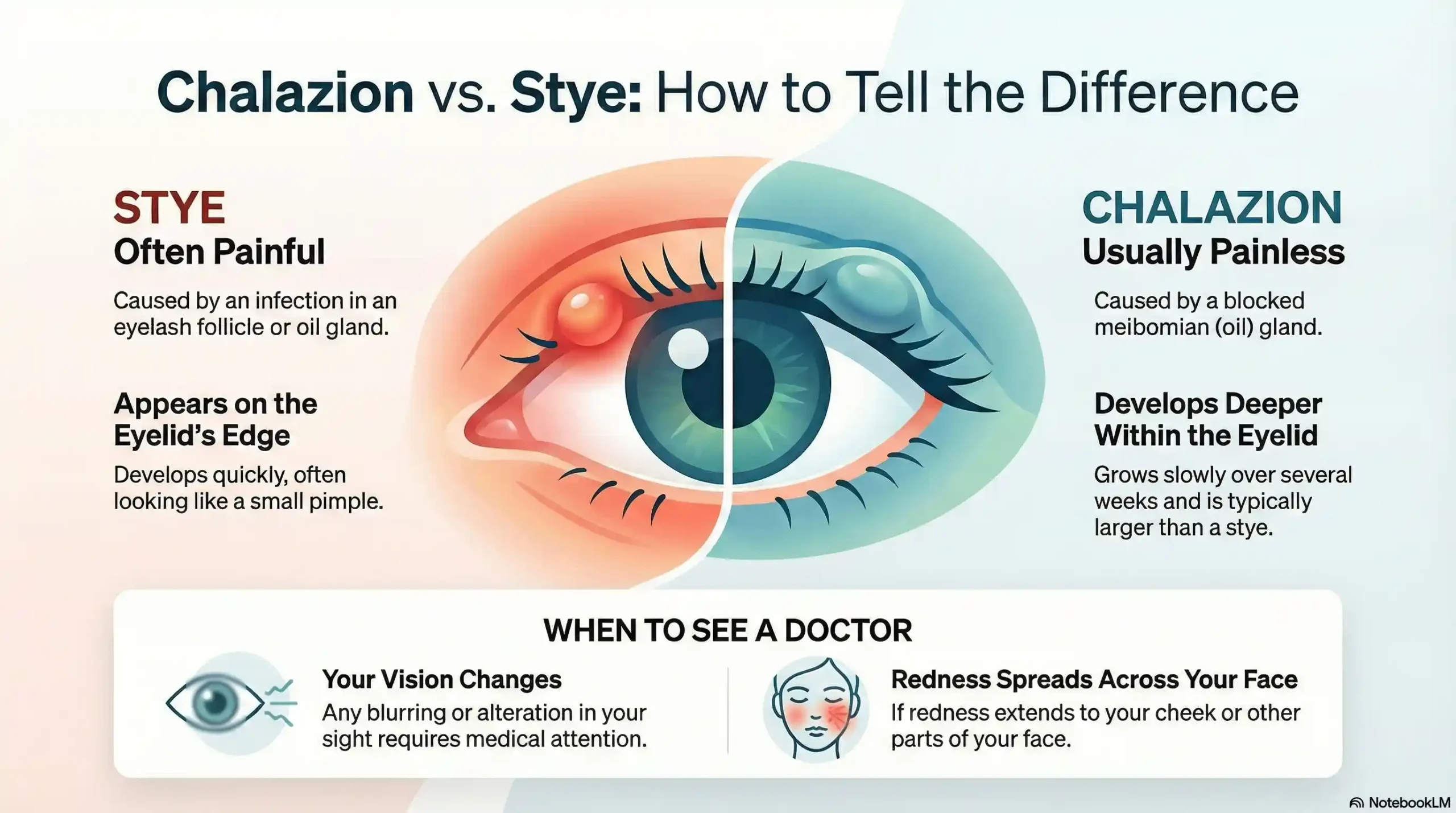
A stye is a painful, red bacterial infection at the eyelid’s edge, while a chalazion is a firm, typically painless bump caused by a blocked oil gland deeper in the lid. While both appear as eyelid bumps, understanding whether your condition is infectious (stye) or a blockage (chalazion) is the first step toward the correct treatment.
Schedule an Eyelid Evaluation in Richmond
What Is a Chalazion?
A chalazion (pronounced kuh-LAY-zee-on) is a painless, chronic bump that develops when one of the tiny oil glands in your eyelid becomes blocked. These oil-producing glands, called meibomian glands, are essential for maintaining healthy tear film and keeping your eyes properly lubricated.
Chalazion Characteristics:
- Location: Usually appears deeper on the eyelid, away from the lash line
- Pain level: Typically painless or mildly uncomfortable
- Appearance: Firm, round bump that may be red or skin-colored
- Duration: Can persist for weeks to months without treatment
- Size: May grow larger over time if left untreated
What Is a Stye?
A stye (also called a hordeolum) is an acute, painful infection of the oil glands or hair follicles along your eyelid margin. Unlike chalazions, styes are caused by bacterial infections, most commonly Staphylococcus aureus bacteria.
Types of Styes:
- External stye: Forms at the base of an eyelash follicle
- Internal stye: Develops within the deeper meibomian glands
Stye Characteristics:
- Location: Usually appears at the eyelid edge, near the lash line
- Pain level: Often very painful and tender to touch
- Appearance: Red, swollen bump that may contain visible pus
- Duration: Typically resolves within 1-2 weeks
- Onset: Develops rapidly, often within 24-48 hours
Key Differences: Chalazion vs. Stye
| Feature | Chalazion | Stye |
|---|---|---|
| Pain | Usually painless | Often painful |
| Location | Away from the lash line | At the eyelid edge |
| Cause | Blocked oil gland | Bacterial infection |
| Onset | Gradual (days to weeks) | Rapid (hours to days) |
| Duration | Weeks to months | 1-2 weeks |
| Appearance | Firm, round bump | Red, swollen, may have pus |
Symptoms to Watch For
Chalazion Symptoms:
- Painless or mildly tender bump
- Gradual increase in size
- Possible mild redness around the bump
- Feeling of fullness in the eyelid
- Blurred vision if the chalazion becomes large
- No discharge or pus
Stye Symptoms:
- Sharp, throbbing pain
- Red, swollen eyelid
- Tenderness when blinking
- Sensation of something in the eye
- Possible yellow or white center (pus)
- Light sensitivity
- Excessive tearing
Causes and Risk Factors
What Causes Chalazions?
Chalazions develop when meibomian glands become blocked by thickened oil secretions. Common contributing factors include:
- Meibomian gland dysfunction (MGD)
- Chronic blepharitis
- Hormonal changes
- Skin conditions like rosacea or seborrheic dermatitis
- Previous eye infections
- Poor eyelid hygiene
What Causes Styes?
Styes result from bacterial infections, typically involving:
- Staphylococcus aureus bacteria (most common)
- Streptococcal bacteria (less common)
- Poor hand hygiene when touching the eyes
- Contaminated makeup or applicators
- Sharing towels or pillowcases
- Weakened immune system
Common Risk Factors for Both Conditions:
- Studies show styes are more common in adults than children, while chalazions most commonly affect people in their third decade of life (ages 20-30)
- Research indicates males account for approximately 51% of chalazion cases, with minimal gender difference
- Blepharitis: Chronic eyelid inflammation increases the risk of both
- Dry eye syndrome: Can contribute to gland dysfunction
- Contact lens wear: Especially with poor hygiene practices
- Stress: May affect immune function and skin health
- Diabetes: Can impair healing and increase infection risk
- Hormonal fluctuations: Particularly in women
Treatment Options
Professional Medical Treatment
For Chalazions:
- Steroid injections: Reduce inflammation and promote healing
- Antibiotic drops: If secondary infection is present
- Surgical drainage: For large or persistent chalazions
- IPL therapy: Advanced treatment for recurrent cases
For Styes:
- Topical antibiotics: Ointments or drops to fight infection
- Oral antibiotics: For severe or spreading infections
- Incision and drainage: For large styes affecting vision
- Pain management: Over-the-counter pain relievers

Advanced Treatment Options
Intense Pulsed Light (IPL) Therapy
A 2023 study in Scientific Reports demonstrated that IPL therapy combined with meibomian gland expression achieved a 70.5% resolution rate for chalazions, comparable to surgical excision. Key findings include:
- Significant reduction in chalazion size and recurrence rates
- Improved meibomian gland function
- Non-invasive alternative to surgery
- Particularly effective for recurrent chalazions
Pediatric IPL Treatment
A 2024 study found that in children, IPL therapy achieved a 22.67% cure rate and 52% effectiveness rate, significantly higher than warm compresses alone (6.76% cure rate). The treatment was particularly effective for granulomatous-type chalazions.
Combined Doxycycline and IPL Treatment
Research published in Frontiers in Medicine (2024) showed that combining oral doxycycline with IPL therapy significantly reduced recurrence rates in patients with intractable chalazions. In a study of 12 patients, this approach achieved:
- 83.3% success rate
- 8.3% stationary (stable) rate
- 8.3% failure rate
Prevention Strategies
Daily Eyelid Care:
- Gentle cleansing: Use warm water and mild soap daily
- Proper makeup hygiene: Replace mascara every 3-6 months
- Hand washing: Always wash your hands before touching your eyes
- Contact lens care: Follow proper cleaning and replacement schedules
Environmental Protection:
- Wear protective eyewear in dusty environments
- Use humidifiers in dry climates
- Manage underlying skin conditions like rosacea
- Maintain overall good health and nutrition
When to See an Eye Doctor
Seek immediate care if you experience:
- Vision changes or blurred vision
- Severe pain or worsening symptoms
- Fever or signs of spreading infection
- Multiple bumps or recurrent episodes
- No improvement after 2-3 weeks.
Red Flag Symptoms:
- Chalazion larger than a pea
- Stye that doesn’t improve within one week
- Spreading redness beyond the eyelid
- Discharge that increases or changes color
Cost Considerations and Insurance (2025)
Understanding Treatment Costs:
- Office visits: $93-176 for initial consultation (national average $93)
- Prescription medications: $50-160 depending on type and insurance coverage
- Surgical procedures:
- Incision and drainage: $140-352 (average $181)
- Chalazion excision: $300-1,000 (average $700-800)
Insurance Coverage Tips
- Most health insurance plans cover treatment when medically necessary, including Medicare and Medicaid
- PPOs and HMOs typically cover 70-80% of allowed amounts after the deductible
- Out-of-pocket costs typically include copays of 10-50% or coinsurance
- Prior authorization may be required for some advanced treatments, like IPL
- Keep receipts for HSA/FSA reimbursement
Special Considerations
For Children:
- Focus on gentle warm compresses
- Ensure proper hand hygiene
- Monitor for signs of spreading infection
- Consider IPL therapy for recurrent chalazions
For Adults with Recurring Issues:
- Investigate underlying causes like MGD or blepharitis
- Consider advanced treatments like IPL therapy
- Evaluate hormonal factors
- Review makeup and contact lens hygiene
Frame & Focus Eye Care Approach
At Frame & Focus Eye Care in Richmond, Texas, Dr. Sarah Zaver and our experienced team take a comprehensive approach to treating chalazions and styes. We begin with a thorough examination to properly diagnose your condition and develop a personalized treatment plan.
What to Expect During Your Visit:
- Comprehensive eye examination with state-of-the-art technology
- Detailed discussion of your symptoms and medical history
- Clear explanation of your diagnosis and treatment options
- Follow-up care to ensure proper healing
- Prevention counseling to reduce future occurrences
Advanced Treatment Options Available:
- IPL therapy for recurrent chalazions
- In-office steroid injections
- Minor surgical procedures, when necessary
- Customized eyelid hygiene protocols
Additional Resources and Expert Sources
1. American Academy of Ophthalmology – Official Medical Guidelines
What Are Chalazia and Styes? – AAO.org
The American Academy of Ophthalmology provides the gold standard for eye care information with regularly updated guidelines from board-certified ophthalmologists.
2. Scientific Reports – Latest IPL Treatment Research
Novel Treatment of Chalazion Using Intense Pulsed Light – Nature.com
This peer-reviewed 2023 study demonstrates the 70.5% effectiveness of IPL therapy for chalazion treatment, offering evidence-based alternatives to surgery.
3. Frontiers in Medicine – Advanced Combination Therapy Research
Combined Doxycycline and IPL Therapy – Frontiersin.org
This 2024 research explores innovative combination treatments with an 83.3% success rate for persistent chalazions.
Conclusion
Understanding the difference between chalazions and styes empowers you to make informed decisions about your eye health. While these conditions can be frustrating, most cases respond well to proper treatment and care.
Remember that chalazions are typically painless bumps caused by blocked oil glands, while styes are painful, infected bumps that develop rapidly. Both conditions benefit from warm compresses and proper eyelid hygiene, but persistent or severe cases require professional evaluation.
If you’re experiencing recurring eyelid bumps or have concerns about your eye health, the team at Frame & Focus Eye Care is here to help. We’re committed to providing personalized, comprehensive eye care to families throughout Richmond, Sugar Land, Rosenberg, and the greater Houston area.
FAQs
-
A stye is a painful, red bump, usually at the lash line, caused by a bacterial infection. A chalazion is a relatively painless, firm, pea-sized lump caused by a non-infected blocked oil gland deeper in the eyelid.
Please note: None of the above should be considered medical advice. If you have any concerns about your vision, please contact us immediately or consult your primary care provider.