What Lifestyle Changes Can Support Myopia Management?
Introduction
Slowing myopia progression in children involves more than just a prescription; it requires specific daily habits that protect long-term vision. By prioritizing at least 1–2 hours of outdoor time daily and strictly following the 20-20-20 rule for screen use, parents can significantly reduce the risk of rapid nearsightedness. At Frame & Focus Eye Care, we combine these evidence-based lifestyle modifications with advanced clinical treatments to provide a comprehensive defense for your child’s eye health.
Schedule a Myopia Management Consultation
Setting Expectations for Success: While no single approach can completely halt myopia progression, the combination of professional myopia management and thoughtful lifestyle modifications creates the most powerful defence against advancing nearsightedness. Our goal isn’t perfection—it’s progress, measured in preserved vision and reduced risk for your child’s future.
As we explore these lifestyle changes together, remember that you’re not navigating this alone. Frame & Focus Eye Care is here to support your family every step of the way, from comprehensive eye examinations that track your child’s progress to personalised guidance that addresses your unique circumstances. Because at Frame & Focus, your child’s vision and long-term eye health aren’t just our priority—they’re our promise.
Myopia is a growing concern worldwide, especially with the increasing reliance on digital devices. While glasses, contact lenses, and treatments like Orthokeratology (Ortho-K) and Atropine eye drops can help manage myopia, lifestyle changes play a crucial role in slowing its progression. At Frame & Focus Eye Care, we believe that incorporating healthy habits can make a significant difference in your eye health. Here are some lifestyle changes to support myopia management.
Schedule Regular Eye Exams
The key to managing myopia is early detection and regular monitoring. At Frame & Focus Eye Care, we recommend scheduling annual comprehensive eye exams for both children and adults. These exams help track changes in your vision, allowing us to adjust your prescription or suggest additional treatment options like Ortho-K or myopia control lenses.
Limit Screen Time
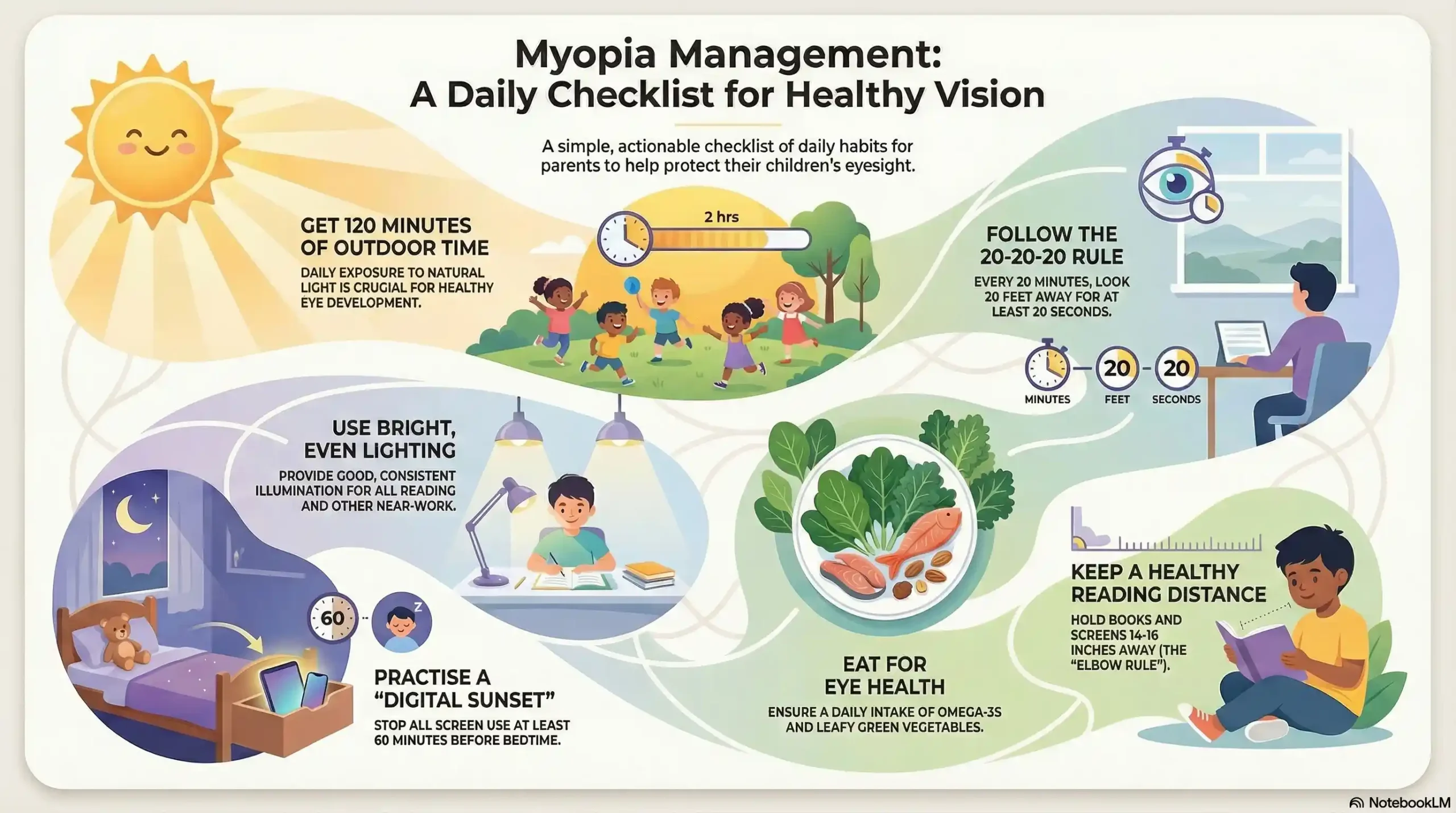
Prolonged exposure to screens, whether on a smartphone, computer, or tablet, can increase the risk of myopia or worsen its progression. Digital screens often cause eye strain due to blue light exposure and focusing at a close distance for long periods. To reduce strain, practice the 20-20-20 rule: every 20 minutes, take a 20-second break and look at something 20 feet away. This simple practice gives your eyes the necessary relief from near work.
Increase Time Spent Outdoors
Research has shown that children who spend more time outdoors are less likely to develop myopia or experience rapid progression. Natural light plays a key role in healthy eye development, and outdoor activities encourage distance vision, reducing the strain caused by close-up work. Aim for at least 1-2 hours of outdoor time daily, whether it’s through sports, walks, or simply enjoying nature.
Maintain a Healthy Diet
A well-balanced diet rich in nutrients can help support overall eye health. Include foods rich in omega-3 fatty acids, such as salmon and flaxseeds, which promote retinal health. Vitamins A, C, and E, found in leafy greens, carrots, and citrus fruits, along with zinc, can help reduce the risk of eye conditions. Antioxidant-rich foods can also combat oxidative stress in the eyes, which may contribute to myopia progression.
Ensure Proper Lighting
Reading or doing close-up work in poor lighting can contribute to eye strain and fatigue, which may exacerbate myopia. Whether you’re working on homework or reading a book, make sure the room is well-lit and avoid using digital devices in dim environments. Adjust the brightness of your screens to match the lighting conditions in the room to prevent additional strain.
Practice Good Visual Hygiene
Poor visual habits, such as reading too closely or spending excessive time on near work without breaks, can increase the risk of myopia. Encourage your children (and yourself) to hold books or digital devices at least 12-14 inches away from the face. Additionally, taking regular breaks, adjusting posture, and using ergonomic furniture can help reduce the risk of eye strain and myopia progression.
Supporting Eye Health Through Nutrition and Diet
Fueling your body with the right nutrients is a fundamental, yet often overlooked, component of a proactive vision strategy. At Frame & Focus Eye Care, we believe that “seeing the full picture” of your health includes what you put on your plate.
-
Omega-3s and Antioxidants: Incorporating salmon, leafy greens, and citrus fruits provides the biological foundation needed for healthy eye development. For targeted support, we often recommend high-quality supplements like EyePromise or MacuHealth to ensure your eyes have the specific nutrients they need.
-
The Hydration Connection: Proper hydration is essential to maintain a healthy tear film. This is especially critical for our patients in Richmond who spend long hours on digital devices and may be experiencing symptoms of Dry Eye.
-
The “Straight Talk” Takeaway: While diet alone isn’t a “magic cure” for nearsightedness, balanced nutrition optimises retinal health and supports the eye’s physical integrity during critical growth years.
Promoting Balanced Daily Routines for Children and Teens
Vision issues aren’t just an inconvenience; they can disrupt a child’s ability to learn and enjoy their world. Developing a daily routine that prioritises visual hygiene is a “game changer” for long-term health, starting with a comprehensive Kids Eye Exam.
-
The Harmonic Distance: Encourage your child to follow the “elbow rule”—keeping books and tablets at least a forearm’s length away. This reduces the heavy “near-work” demand that contributes to myopia.
-
Structured Breaks: We are vocal about the impact of screen time on eye health. Use the 20-20-20 rule to give eye muscles the necessary relief from constant focusing.
-
Outdoor Integration: Aim for at least 90 minutes of daily outdoor activity. Research suggests that exposure to natural light helps regulate eye growth, providing a natural defence against the progression of nearsightedness.
The Impact of Sleep and Overall Wellness on Eye Health
Quality sleep is the ultimate “reset button” for our visual system. For children and teens in the Richmond and Sugar Land areas, consistent rest is vital for ocular recovery and mental focus.
-
Ocular Recovery: During deep sleep, the eyes are continuously lubricated, and the muscles responsible for focusing can fully relax.
-
Managing Digital Fatigue: Exposure to blue light late at night can disrupt sleep cycles. If your child struggles with headaches, neck pain, or eye strain after a long day of school and screens, it may be time to discuss specialised solutions like Neurolens.
-
The Digital Sunset: We advocate for a “digital sunset” at least one hour before bed to protect both sleep quality and retinal health.
Combining Lifestyle Changes with Clinical Myopia Control Options
Lifestyle modifications are most effective when they work in harmony with professional clinical interventions. At Frame & Focus Eye Care, we don’t just provide a prescription; we build a customised “blueprint” for your child’s vision through our Myopia Management program.
-
State-of-the-Art Synergy: We use advanced technology to track the physical length of the eye, allowing Dr Zaver to monitor if lifestyle changes and treatments are working effectively to slow progression.
-
Advanced Treatment Options: From specialty contact lenses to Orthokeratology, we offer evidence-based solutions tailored to your child’s unique lifestyle and visual demands.
-
The Family Guardian Partnership: We see ourselves as your “dynamic duo” in eye care. By combining our clinical expertise with your daily at-home habits, we can significantly protect your child’s future sight. Learn more about the importance of myopia management here.
Supporting Research & Evidence
The lifestyle recommendations in this article are grounded in peer-reviewed research from leading scientific institutions. Below are key studies that support the evidence-based approaches discussed:
Research on Environmental Factors and Myopia Development
This comprehensive 2024 study evaluates the influence of various lifestyle factors, including screen time, physical activity, dietary habits, and psychological stress, on myopia development and progression. The research demonstrates strong associations between lifestyle behaviours and myopia, particularly highlighting how genetic predispositions can intensify the impact of unhealthy lifestyle choices.
Evidence-Based Review of Current Myopia Control Strategies
Current and Emerging Strategies for Myopia Control: A Narrative Review – Nature Eye Journal
Published in 2025, this comprehensive review synthesises current evidence on optical, pharmacological, and behavioural interventions for myopia control. The study confirms that behavioural interventions, particularly increased outdoor time, provide preventive benefits and are endorsed in school-based programs worldwide.
Schedule a Comprehensive Eye Exam with Frame & Focus Eye Care Today
While myopia management may begin with corrective lenses or treatments, adopting healthy lifestyle changes can play a pivotal role in slowing its progression. By reducing screen time, spending more time outdoors, maintaining a healthy diet, and practising good visual hygiene, you can help protect your vision for the long term.
Contact Frame & Focus Eye Care to schedule an eye exam and learn more about personalised myopia management plans. Visit our office in Richmond, Texas, or call (832) 664-7900 to book an appointment today. We are also happy to serve the surrounding areas, Greatwood, Rosenberg, Sugar Land, Pecan Grove, Four Corners, Mission Bend, New Territory, and Sugar Land.
FAQs
-
Increasing time spent outdoors is key. Studies consistently recommend children spend at least 90–120 minutes per day in natural outdoor light to help slow the eye’s elongation.