
PRK vs LASIK: Which is Best for You?
PRK (Photorefractive Keratectomy) is a “flap-free” laser vision correction surgery that serves as a safer alternative to LASIK for patients in Richmond, Texas, with thin corneas or high-impact lifestyles. Unlike LASIK, which creates a corneal flap, PRK treats the surface of the eye directly to correct nearsightedness, farsightedness, and astigmatism with the same long-term precision.
Schedule Your PRK Consultation in Richmond Today
Understanding PRK: Is It Right for You?
PRK or photoreactive kerecLASIKis a surgical procedure that was the precursor for the surgery known as LASIK. The biggest difference between the two procedures is how the first portion of the operation is conducted. Additional variability between the two procedures includes recovery, risk factors, and the patient’s overall needs. Understanding these differences can help you decide if PRK is an appropriate solution for your vision issues.
How it Works
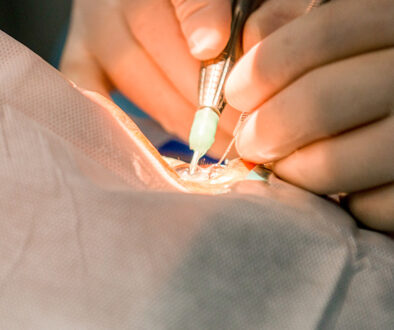
PRK utilises a laser to correct farsightedness (hyperopia), nearsightedness (myopia), and astigmatism. During a PRK operation, a laser is used to remove the epithelial cells from the cornea. This procedure uses an excimer laser to remove the cells, which are then discarded. A contact “bandage” is placed over the eye, and the cells can heal over the course of a few days. Your doctor will then remove the contact lens when the eye has healed enough to be exposed.
While the results are like those of LASIK, PRK does take some additional healing time. This is due to the time that must be al, allowed for the epithelial cells to heal and regrow on the eye. Additionally, Lasik patients generally e, experience less discomfort and faster results. PRK results can take a few weeks to fully materialise.
This isn’t to say that PRK doesn’t have its own benefits, too. This procedure is well-suited for patients who have had previous eye surgeries and may have thin corneas. Because PRK does not make an incision into the cornea and only removes the epithelial cells, it leaves more of the stromal tissues, which underlie the epithelial tissue. PRK does not run the risk of “flap” issues that can arise from LASIK, and the risk of removing too much of the cornea is reduced. However, if you are considering PRK, you should consult with your medical professional to identify the right procedure for your specific case.
Is PRK Safer Than LASIK for Thin Corneas?
At Frame & Focus Eye Care, we often meet patients who have been told they aren’t “good candidates” for traditional LASIK. Typically, this is due to corneal thickness. During your comprehensive eye exam, Dr. Sarah Zaver uses advanced pachymetry (a painless measurement of the cornea) to determine the safest path forward for your unique eyes.
Why PRK is often the superior choice for thin corneas:
-
Structural Integrity: LASIK requires creating a “flap,” which consumes a specific amount of corneal depth. PRK works directly on the surface, preserving more of the underlying stromal tissue.
-
High Prescriptions: Patients with high myopia (nearsightedness) require more reshaping. PRK allows us to correct vision while maintaining a safer “residual” corneal thickness.
-
No Flap Complications: Because there is no flap, there is zero risk of flap displacement—a critical factor for long-term ocular health.
Before the Surgery
When you meet with your eye specialist to discuss your options, there are several factors that they will consider. A follow-up surgeon should conduct a thorough eye exam during which they will measure your eye moistness, pupil size, corneal thickness, and corneal curvature. Your doctor should also review your medical and family history to identify any possible concerns about your suitability. Make sure that you bring a list of your medications and previous operations. Finally, you may be required to stop wearing contact lenses for a period before the operation. This can allow your cornea to return to its natural shape before the operation.
The Surgery
The actual PRK surgery is a short procedure that will only take about 15 minutes. The patient will not be sedated during the operation, but may be given an oral sedative that helps to relax the eye. Numbing drops are applied to your eyes, and a small speculum is also used to hold the eyelids open for the procedure. The excimer laser is programmed for your exact eye prescription. Patients are instructed to look at a certain object or target while the laser is operating. The surgeon will watch the procedure through a microscope and can stop the procedure at any time. Most patients do not report discomfort, although there may be some pressure.
PRK vs. LASIK for Athletes and High-Impact Careers
For our patients who are active in the Richmond community—whether you’re training at a local MMA gym, serving as a first responder, or playing high-impact sports—PRK offers a distinct safety advantage.
The “Flap-Free” Security: In LASIK, the corneal flap never truly “heals” to 100% of its original strength. A significant blow to the eye (like a stray ball or an accidental elbow) could potentially dislodge a LASIK flap years after surgery.
PRK eliminates this risk. This makes it the preferred choice for:
-
Combat Sports: Boxing, Jiu-Jitsu, and MMA.
-
Public Safety: Police officers and firefighters.
-
Active Parents: If you have toddlers who might accidentally poke your eye, PRK provides that extra layer of “worry-free” healing.
Recovery
You will be observed for a short time after your operation to make sure that you don’t have any severe immediate reactions. After this observation, you will be sent home. It is important to have someone else drive you after any procedure that may impact your vision or ability to drive safely. You should make sure to follow all of the doctor’s recommendations to facilitate a speedy recovery. You should also expect several follow-up appointments to make sure that the operation was successful and that there are no additional concerns.
Your full results may take several weeks, but almost all patients have vision that is 20/40 or better. Over time, as the eye ages, vision may naturally degrade. At this time, you should consult with your medical professional to see if an additional operation is a good option for you.
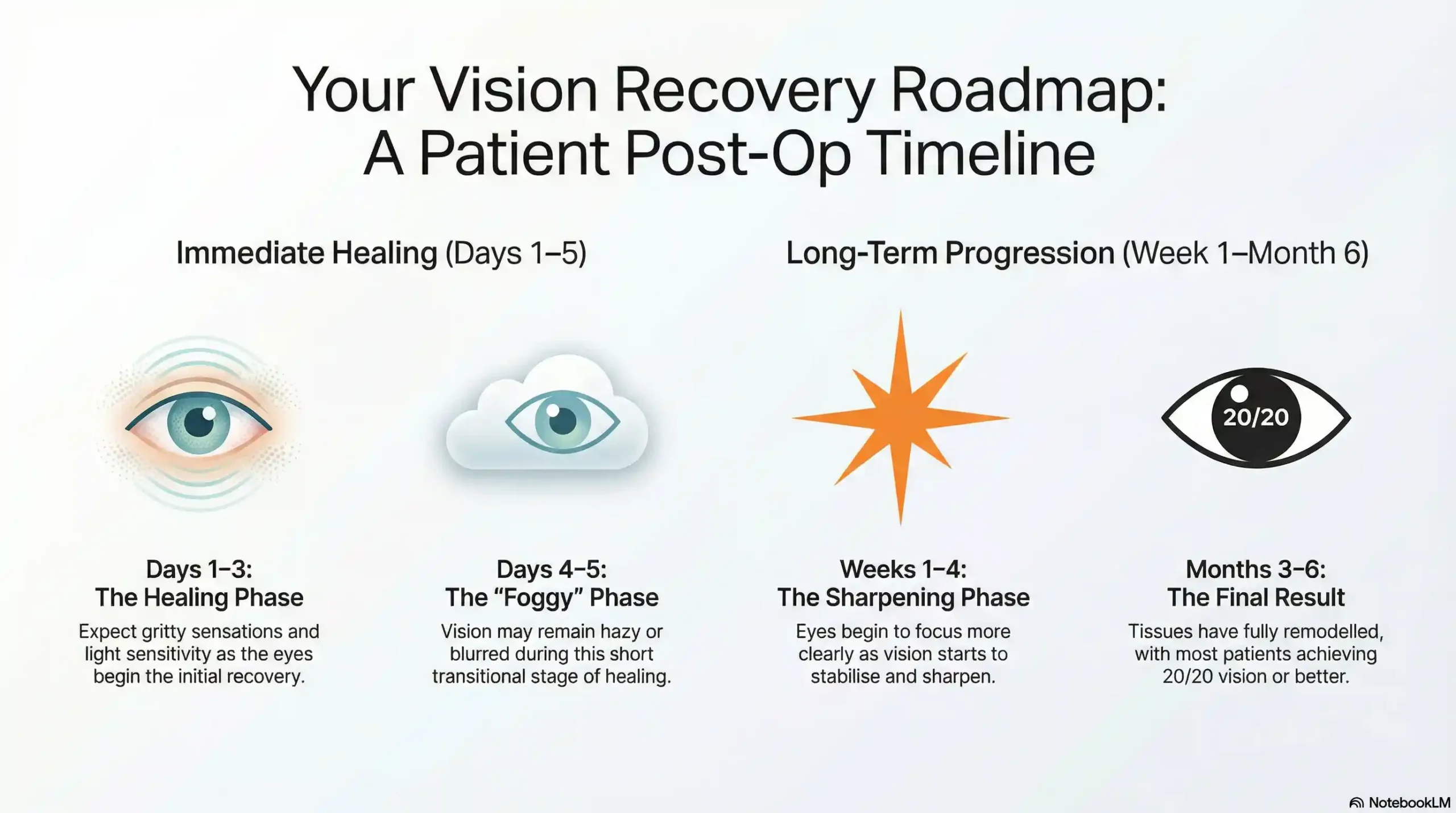
Your Day-by-Day Recovery Roadmap
Unlike LASIK, which offers “instant” results, PRK is a journey of cellular regeneration. Your body is literally regrowing the clear surface of your eye (the epithelium). Here is what the typical Richmond patient experiences:
-
Days 1–3 (The Healing Phase): Your eyes may feel gritty or sensitive to light. This is when the Bandage Contact Lens (BCL) does its best work, acting as a biological shield.
-
Days 4–5 (The “Foggy” Phase): Dr. Zaver typically removes your bandage lens during this window. Your vision may actually feel blurrier for 24 hours after removal as the new cells smooth out—this is a perfectly normal part of the process.
-
Weeks 1–4 (The Sharpening Phase): Vision begins to stabilize. You’ll notice “functional vision” returning, allowing you to get back to work and daily life.
-
Months 3–6 (The Final Result): Tissues have fully remodeled. Most patients achieve 20/20 vision or better during this stage.
Citations and Resources
Medical Research References:
- American Academy of Ophthalmology – What Is Photorefractive Keratectomy (PRK)? (2024)
The American Academy of Ophthalmology provides comprehensive information on PRK as a type of laser surgery that can improve vision by changing the cornea’s shape to correct blurry vision, noting that PRK may be a better option for those who cannot have LASIK. - StreamLight Single-Step Transepithelial Photorefractive Keratectomy for Myopia and Myopic Astigmatism – Journal of Ophthalmology (2024)
Recent research demonstrates that StreamLight single-step transepithelial PRK has shown excellent results for the correction of low to moderate myopia and myopic astigmatism, with studies showing that PRK remains a safer option for laser refractive surgery in patients with thin or irregular corneas due to the greater alteration of corneal biomechanical strength and higher risk of ectasia following LASIK.
Ready to See the World More Clearly?
Deciding between PRK and LASIK is a big step, but you don’t have to make it alone. At Frame & Focus Eye Care, we specialize in “straight talk”—giving you the clinical expertise you need without the confusing medical jargon.
Whether you’ve been told you have thin corneas or you’re an athlete looking for the safest vision correction, Dr. Sarah Zaver is here to help you find your perfect fit.
[Schedule Your PRK Consultation in Richmond Today] Or call us at (832) 930-7797 to speak with us about our same-day appointment availability.
FAQs
-
Photorefractive Keratectomy (PRK) is a laser procedure where the outer corneal layer is removed, and an excimer laser reshapes the underlying tissue to correct nearsightedness, farsightedness, and astigmatism.