Sports Vision
Sports vision training is a specialized performance program designed to enhance how an athlete’s brain processes visual data, improving reaction time, depth perception, and hand-eye coordination. At Frame & Focus Eye Care, we provide custom visual conditioning for athletes in Richmond and Pecan Grove to turn 20/20 eyesight into elite athletic performance.
Schedule Your Sports Vision Performance Audit
Key Takeaways for Optimal Performance
-
Vision is a Trainable Skill: Achieving elite athletic performance requires more than 20/20 clarity; it demands specialized training to enhance dynamic visual skills.
-
Identify Your Weaknesses: Comprehensive sports vision testing is the essential first step to pinpoint specific visual deficiencies (like poor processing speed or eye-tracking ability).
-
Optimize Sight in Motion: Skills like Dynamic Visual Acuity and Eye Tracking are crucial for real-time reactions and hand-eye coordination in fast-paced sports.
-
Gain a Competitive Edge: Sports Vision Training is a personalized brain-training program designed to maximize how fast your brain receives, processes, and responds to visual data.
-
Contrast Matters: Training Contrast Sensitivity allows athletes to maintain clear sight and judgment even in poor conditions, such as low light, fog, or heavy glare.
-
The Power of Peripheral Awareness: Developing stronger peripheral awareness ensures you maintain environmental context and spot opponents or opportunities while focusing on a fixed object.
Sports vision is a growing niche in the eyecare industry, helping athletes improve their performance skills through the enhancement of visual skills. While regular eye exams are important for checking the health of your eyes and your visual acuity (how clearly you can see a still object at different distances), sports vision testing is recommended for anyone who takes their athletic performance seriously.
Visual skills needed for sports performance
Several key visual skills are enhanced through sports vision programs for athletes that aim to achieve their optimal sports performance, these include:
Dynamic visual acuity
This refers to the patient’s ability to see objects clearly while in motion. This is exceptionally important as hand-eye coordination and reflex reactions are essential for success in most sporting activities.
Contrast sensitivity
Good contrast sensitivity is needed to determine the difference between an object and its surroundings. Contrast sensitivity is particularly important in situations where there may be low light, fog, or glare that could diminish the natural contrast between objects and backgrounds.
Eye tracking
This refers to the ability to follow a fast-moving object, such as a ball or puck.
Switching eye focus
Athletes need to be able to change their focus quickly and accurately from one distance to another.
Binocular vision skills
Also known as eye teaming skills, these skills determine how well your eyes work with one another to produce a single, clear image.
Processing speed
Visual processing speed is defined as the amount of time it takes to make a correct judgement about a visual stimulus – for example, how fast a ball is travelling towards them.
Peripheral awareness
Athletes also need to be able to be aware of what is happening at the edges of their vision while also concentrating on a fixed object in front of them.
Sports vision testing can enable your eye doctor to spot any weaknesses that you may have in any of these key visual skills. By identifying them, you can undergo treatment to overcome these issues and meet your specific goals that will ultimately enhance your overall athletic performance. This is known as sports vision training.
Vision Therapy for Concussion Recovery and Safety
Safety is the foundation of performance. A “hidden” symptom of many sports-related concussions is Binocular Vision Dysfunction (BVD)—where the eyes struggle to work as a team, leading to headaches, dizziness, and poor depth perception.
Drawing from her specialized residency in Brain Injury and Vision Rehabilitation, Dr. Zaver creates personalized recovery plans for student-athletes in Richmond, Pecan Grove, and beyond. We focus on:
-
Spatial Awareness: Judging exactly where opponents are to avoid collisions.
-
Peripheral Integration: Ensuring your “side vision” stays alert even when you are physically fatigued.
If you’ve experienced a recent hit or sudden change in vision, please visit our Emergency Eye Care page for same-day urgent care information.
Stroboscopic Training: “Weightlifting” for Your Brain
Imagine trying to catch a ball while the lights are flickering. This is the essence of Stroboscopic Training. By using specialized “strobe glasses” that flicker between clear and opaque, we force your brain to work harder to predict motion.
Why it works: When visual information is limited, your brain’s processing speed (its “software”) has to upgrade to keep up. When you take the glasses off, the game feels slower, and your reactions feel lightning-fast.
This high-tech approach is part of our commitment to Comprehensive Eye Exams that look beyond basic sight to evaluate how your brain and eyes communicate.
What’s involved in sports vision training?
Sports vision training refers to a personalized treatment plan that is designed to train the brain to achieve maximum efficiency in the way that it receives, processes, and responds to visual input. Exactly what is involved in your sports vision training will depend on your athletic activity and the visual skills that your eye doctor identifies for improvement after comprehensive sports vision testing. Your treatment program will use a variety of tools, techniques, and exercises. You may also be asked to complete some exercises at home to further enhance your progress. With sports vision training, the ultimate goal is for athletes to continue to see faster and clearer, giving them a distinct competitive edge.
The “Quiet Eye” Technique: Mastering Gaze Control
Ever wonder why elite athletes seem to move in slow motion? It’s often due to the “Quiet Eye”—the final fixation an athlete makes on a target immediately before a critical action (like shooting a free throw or swinging a bat). Research published in the Journal of Vision shows that longer “Quiet Eye” periods correlate directly with higher success rates.
Dr. Zaver uses state-of-the-art tracking technology to help you stabilize your gaze and reduce “visual noise.”
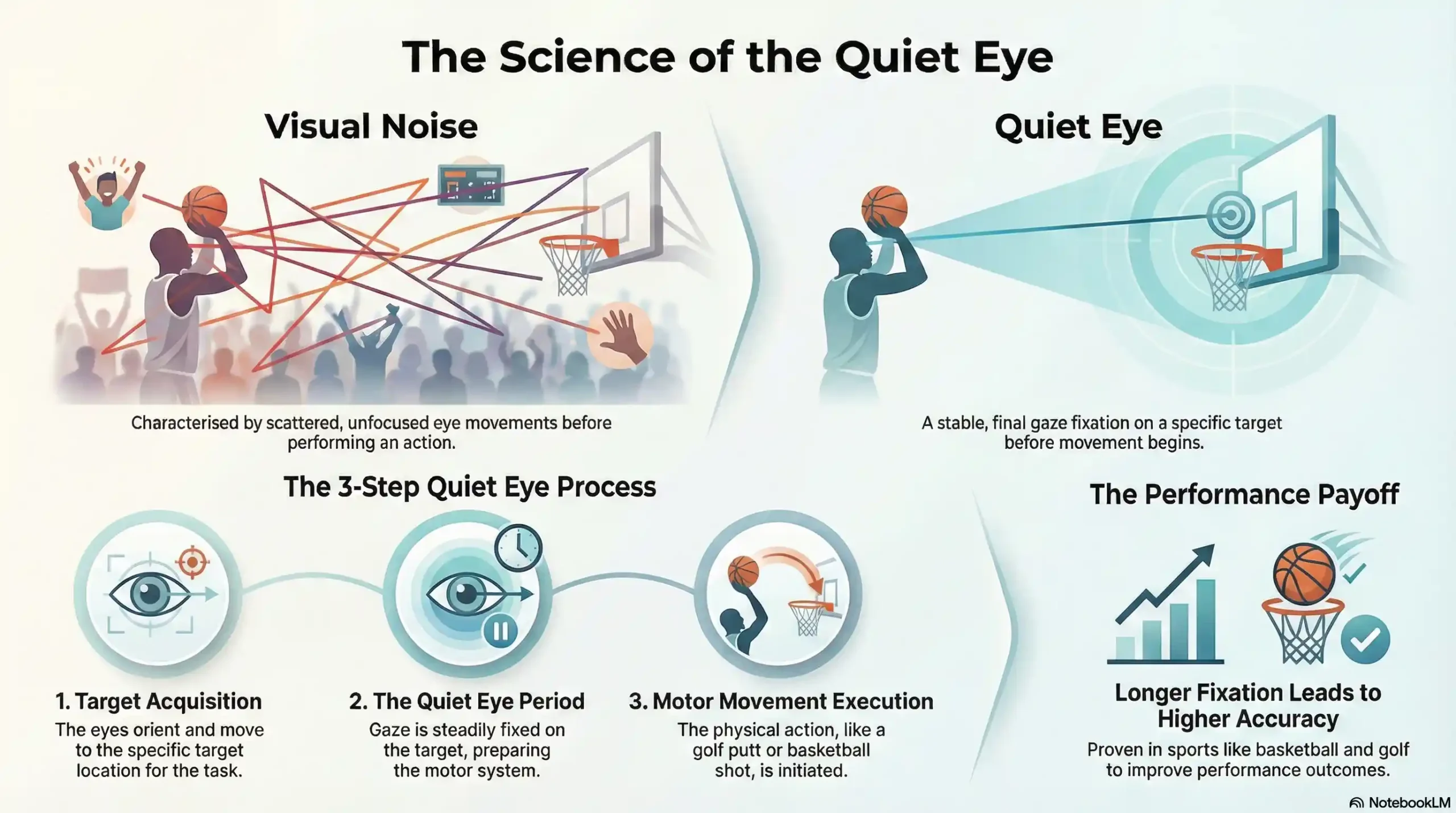
This allows your brain to execute motor movements with clinical precision.
-
Pro Tip: To practice at home, focus on a single dimple of a golf ball or a specific seam on a baseball for 3 seconds before you initiate your move.
-
Expert Insight: This is especially helpful for patients already using Neurolens to treat eye strain, as it further reduces the neurological “drag” on your performance.
Is Your Vision Sport-Ready? Custom Drills for Every Athlete
No two sports have the same visual demands. That’s why our sports vision testing is never “one size fits all.”
-
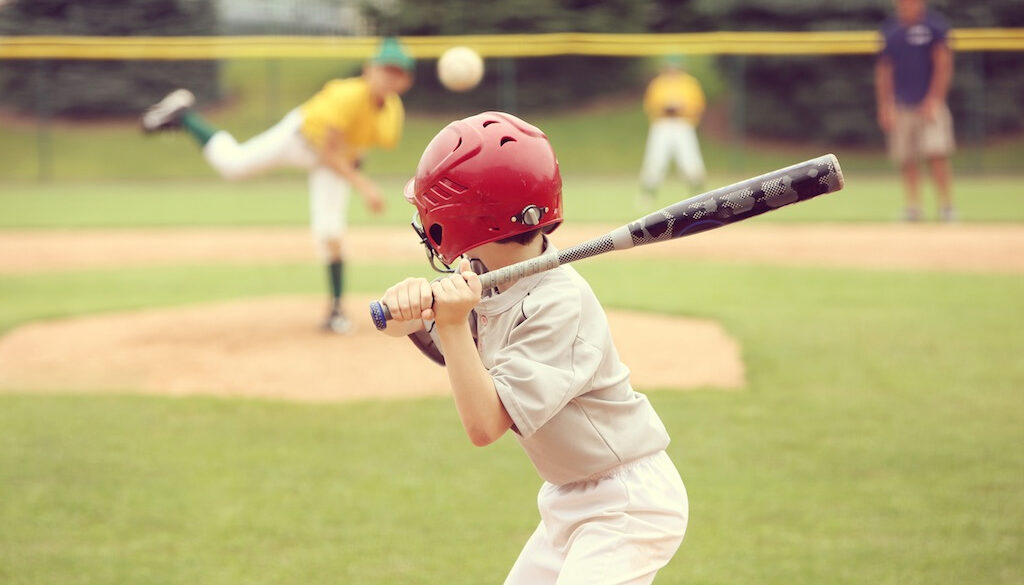
Baseball/Softball: We focus on Dynamic Visual Acuity, helping you track a 90mph pitch and identify the rotation of the seams instantly.
-
Basketball: We prioritize Peripheral Awareness, training you to “see the whole floor” so you can spot an open teammate without taking your eyes off the rim.
-
Youth Sports: For our younger athletes, sports vision is often the first step in Myopia Management. Controlling nearsightedness now ensures their visual potential isn’t limited as they grow.
Citations and Resources
-
American Optometric Association (AOA) – Sports Vision: Authoritative information on the role of optometry in athletic performance and training.
-
National Library of Medicine (NIH) – Review on Vision Training: Peer-reviewed clinical research and academic studies on the effectiveness of vision training for various sports.
Ready to Level Up Your Game?
Whether you are a professional athlete or a dedicated “weekend warrior,” the team at Frame & Focus Eye Care is here to help you see faster and react better.
Schedule Your Sports Vision Consultation Today or call us at (832) 930-7797. Let Liz and Jose welcome you to our family and help you find your competitive edge.
FAQs
-
The goal is to maximize an athlete’s visual efficiency by training the brain to receive, process, and respond to visual input faster and more accurately.