How Neurolenses Can Transform Vision for Those with Concussion-Related Symptoms
A concussion can disrupt the neural connection between the eyes and brain, often resulting in post-traumatic vision syndrome (PTVS). Neurolenses use contoured prism technology to correct the specific eye misalignment caused by brain trauma, providing relief for persistent visual symptoms.
As a leading provider of innovative eye care solutions in the Greater Houston area, Frame & Focus Eye Care combines cutting-edge diagnostic technology with compassionate, personalized care. Our commitment to staying at the forefront of vision science means we can offer you access to breakthrough treatments like Neurolenses—specialized prescription lenses that specifically target the eye misalignment issues commonly experienced after concussions.
Whether you’re dealing with persistent headaches, difficulty focusing, light sensitivity, or that frustrating feeling that your eyes just won’t work together properly, our team is equipped with the advanced tools and expertise needed to identify the source of your symptoms and develop a customized treatment plan that works for your unique situation.
Concussions can have far-reaching effects on the body, often impacting vision in ways that disrupt daily life. Whether it’s persistent headaches, dizziness, or an inability to focus, these symptoms can linger long after the initial injury. At Frame & Focus Eye Care, we understand how frustrating these issues can be—and we’re here to help. Neurolenses are a cutting-edge solution designed to provide relief and improve the quality of life for those dealing with concussion-related vision symptoms.
What Happens to Vision After a Concussion?
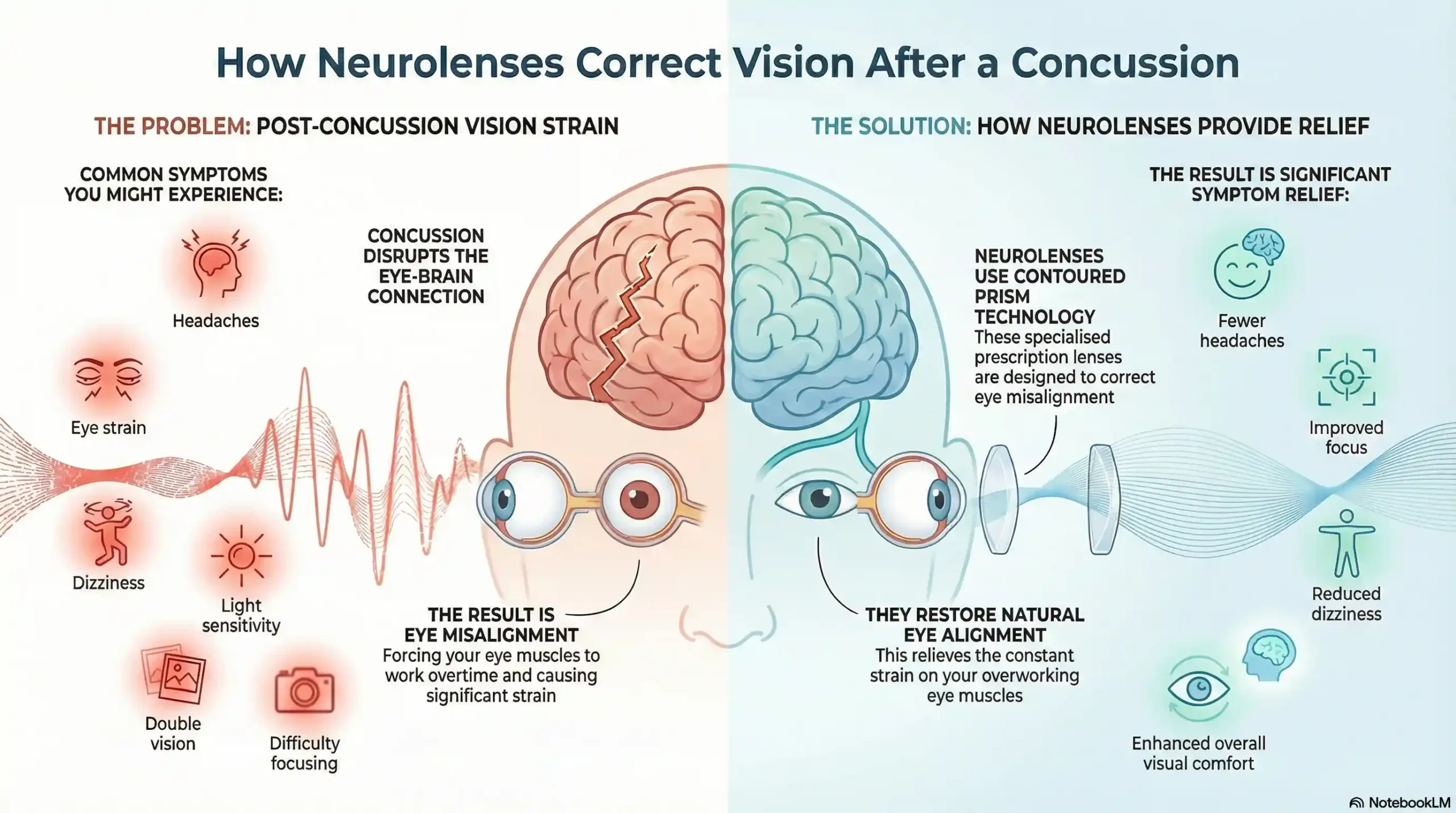
Vision problems after a concussion are common, as the eyes and brain are intricately connected. The impact of a concussion can disrupt the way the eyes work together and how they send information to the brain, leading to a condition known as post-traumatic vision syndrome (PTVS).
Symptoms often include:
- Eye strain
- Difficulty focusing
- Sensitivity to light
- Double vision
- Persistent headaches
- Dizziness or vertigo
These symptoms can make everyday activities like reading, using a computer, or driving feel overwhelming. Traditional treatments may address some aspects of recovery, but Neurolenses offer a unique approach to tackling these vision challenges directly.
What Are Neurolenses?
Neurolenses are prescription lenses specifically designed to reduce the symptoms caused by eye misalignment. Even a small misalignment can cause the eye muscles to work overtime, leading to discomfort. Neurolenses feature contoured prism technology, which aligns the eyes more naturally, helping to relieve the strain that contributes to many concussion-related symptoms.
How Neurolenses Help with Concussion-Related Symptoms
Neurolenses are particularly beneficial for individuals who experience vision problems after a concussion. Here’s how they can make a difference:
- Relieve Headaches: Many concussion patients suffer from chronic headaches, which are often triggered by visual strain. By correcting eye misalignment, Neurolenses reduce the stress on your eye muscles, helping to alleviate headaches.
- Improve Focus: Difficulty focusing on objects, especially up close, is another common complaint. Neurolenses enhance binocular vision, making it easier to concentrate on tasks like reading and working on a computer.
- Reduce Dizziness and Vertigo: Misalignment between the eyes can cause feelings of dizziness or vertigo. Neurolenses help restore balance and synchronization between the eyes, reducing these unsettling sensations.
- Minimize Light Sensitivity: Light sensitivity can be debilitating, but Neurolenses can include blue light filtering options, providing additional relief for patients who struggle with this symptom.
- Enhance Overall Comfort: Neurolenses create a more natural and comfortable visual experience, reducing the overall strain that often exacerbates concussion symptoms.
Schedule a Neurolens Evaluation
The Neurolens Experience at Frame & Focus Eye Care
At Frame & Focus Eye Care, we use advanced diagnostic tools to assess your symptoms and determine if Neurolenses are right for you. Our process includes:
- A detailed vision evaluation to identify misalignment and its impact on your symptoms.
- The use of the Neurolens Measurement Device which provides precise data on how your eyes work together.
- A personalized prescription for Neurolenses tailored to your unique needs.
We’ll work closely with you throughout the process to ensure you experience the maximum benefits from your Neurolenses.
RESOURCES AND CITATIONS
For additional information about the conditions and treatments discussed in this article, the following resources provide valuable clinical insights:
The American Academy of Ophthalmology offers comprehensive information about post-traumatic vision syndrome, including diagnostic criteria, symptoms, and evidence-based treatment protocols for patients experiencing vision problems following head injuries.
Neurolens Official Research provides peer-reviewed studies and clinical data demonstrating the effectiveness of contoured prism technology in treating eye misalignment and reducing symptoms such as headaches, eye strain, and visual discomfort in post-concussion patients.
Transform Your Vision, Transform Your Life
If you or a loved one is dealing with vision problems after a concussion, don’t let these symptoms hold you back. Neurolenses are a revolutionary solution that can help you regain comfort, clarity, and confidence in your vision.
Contact Frame & Focus Eye Care at our office in Richmond, Texas, to schedule a Neurolens evaluation and take the first step toward transforming your vision—and your life. We are also happy to serve the surrounding areas, Greatwood, Rosenberg, Sugar Land, Pecan Grove, Four Corners, Mission Bend, New Territory, and Sugar Land. Please call (832) 664-7900 to book an appointment today.
FAQs
-
Concussions often cause Post-Traumatic Vision Syndrome (PTVS), resulting in:
-
Chronic headaches and migraines.
-
Eye strain and fatigue, especially with screens.
-
Dizziness or feeling off-balance.
-
Sensitivity to light (photophobia).
-