Recognizing Eye Emergencies
If you are experiencing sudden vision loss, chemical exposure, or severe eye pain in Richmond, call (832) 930-7797 for same-day emergency eye care. Prompt medical evaluation is critical to prevent permanent vision loss from trauma or acute conditions like glaucoma.
📞 Need Emergency Care? Call (832) 930-7797 for a Same-Day Appointment.
Key Takeaways
-
Act Fast, Protect Sight: Any eye injury, infection, or sudden vision change (e.g., pain, double vision, pupils of unequal size) requires immediate medical evaluation to prevent permanent vision loss or blindness.
-
The Critical “Don’ts”: Never rub an injured eye, attempt to remove a foreign object that is stuck, or apply home remedies, ointments, or medications directly into the eye.
-
Chemical Exposure is an Exception: For chemical burns, immediately flush the eye with vast amounts of clean water or saline for an extended period, as this action is critical before seeking medical help.
-
Hands-Off for Trauma: If the eye is cut or bleeding severely, apply a clean, cold compress gently to reduce swelling, but do not apply pressure to the eyeball itself.
-
Cover Both Eyes: If blood is pooling in the eye (hyphema) or if there is severe trauma, cover both eyes with a clean cloth or sterile dressing to stabilise the injury and minimise involuntary eye movement.
-
Prevention is Key: Drastically reduce your risk by consistently wearing protective eyewear during high-risk activities like using power tools, handling chemicals, or engaging in certain sports.
Eye emergencies cover a range of incidents and conditions such as trauma, cuts, scratches, foreign objects in the eye, burns, chemical exposure, photic retinopathy, and blunt injuries to the eye or eyelid. Since the eye is easily damaged, serious complications can occur from an eye injury; thus, any of these conditions without proper treatment can lead to a partial loss of vision or even permanent blindness. Likewise, certain eye infections, other medical conditions, such as blood clots or glaucoma, and eye problems such as a painful red eye or vision loss that are not due to injury also need urgent medical attention.
Depending on the type of injury, any of the following symptoms may be present:
- Bleeding or other discharge from or around the eye
- Bruising
- Decreased vision
- Double vision
- Loss of vision, total or partial, in one eye or both
- Pupils of unequal size
- Eye pain
- New or severe headaches
- Itchy eyes
- Redness or bloodshot appearance
- A sensation of something in the eye
- Sensitivity to light
- Stinging or burning in the eye
- One eye is not moving like the other
- One eye is sticking out or bulging
- Nausea or headache occurring with eye pain (this may be a symptom of glaucoma or stroke).
A black eye is usually caused by direct trauma to the eye or face, causing a bruise resulting from bleeding under the skin. The skin around the eye turns black and blue, gradually becoming purple, green, and yellow over several days. Swelling of the eyelid and tissues around the eye may also occur. The abnormal colour usually disappears within 2 weeks.
A blow to the eye can potentially damage the inside of the eye. Trauma is also a common cause of hyphema, which is blood inside the front of the eye and is often due to a direct hit to the eye from a ball. Besides, certain types of skull fractures can cause bruising around the eyes, even without direct injury to the eye.
A chemical injury to the eye can be caused by a work-related accident, common household products such as cleaning solutions, garden chemicals, solvents, or other types of chemicals. Fumes and aerosols can also cause chemical burns. With acid burns, the haze on the cornea often clears, and there is a good chance of recovery. However, alkaline substances such as lime, lye, drain cleaners, and sodium hydroxide found in refrigeration equipment may cause permanent damage to the cornea. It is important to flush out the eye with large amounts of clean water or salt water (saline).
Photic retinopathy, also known as foveomacular retinitis or solar retinopathy, is damage to the eye’s retina, particularly the macula, from prolonged exposure to solar radiation or other bright light, e.g., lasers or arc welders. It usually occurs due to staring at the sun, watching a solar eclipse, or viewing an ultraviolet, Illuminant D65, or other bright light. Immediate evaluation by your doctor is advised.
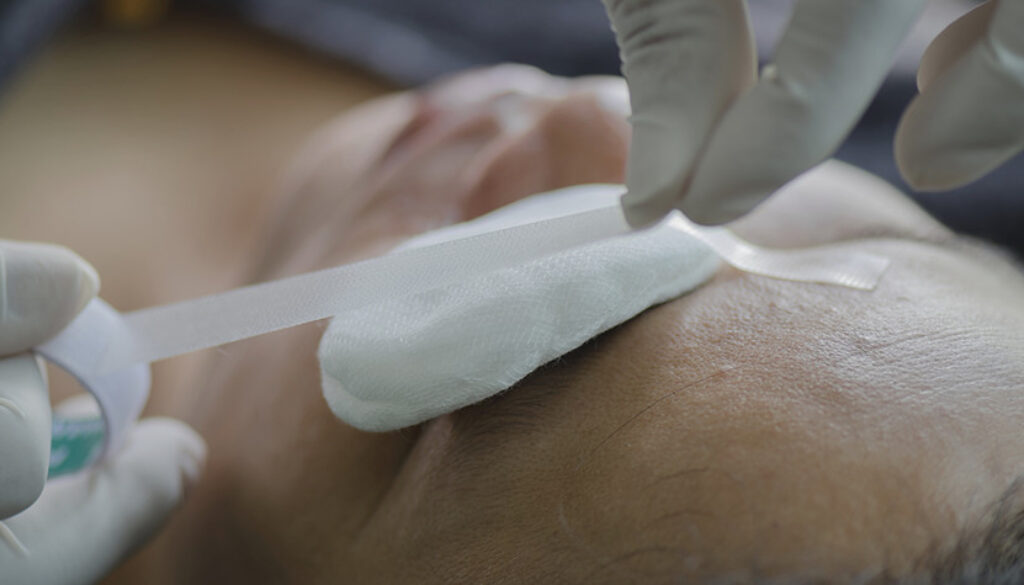
In case of an eye injury, cut or trauma, gently apply a clean cold compress to the eye to reduce swelling and help stop the bleeding. Do not, however, apply pressure to control bleeding. If blood is pooling in the eye, cover both eyes with a clean cloth or sterile dressing. And, call your doctor immediately.
In case of eye injury, be sure NOT to:
- Rub or apply pressure to your eye
- Try to remove foreign objects that are stuck in any part of your eye
- Use tweezers or any other tools in your eye (cotton swabs can be used, but only on the eyelid)
- Put medications or ointments in the eye
As for contact lens wearers, attempting to remove your contacts can make the injury worse. The only exceptions to this rule are in situations where there is a chemical injury, and the lenses didn’t flush out with water, or where immediate medical help cannot be received.
This version is polished for direct publication on the Frame & Focus Eye Care blog. It incorporates high-value internal links to your service pages, adheres to 2025 SEO standards for AI visibility, and maintains the warm, expert tone of Dr. Sarah Zaver’s practice.
The 10-Minute Triage: Is This a True Emergency?
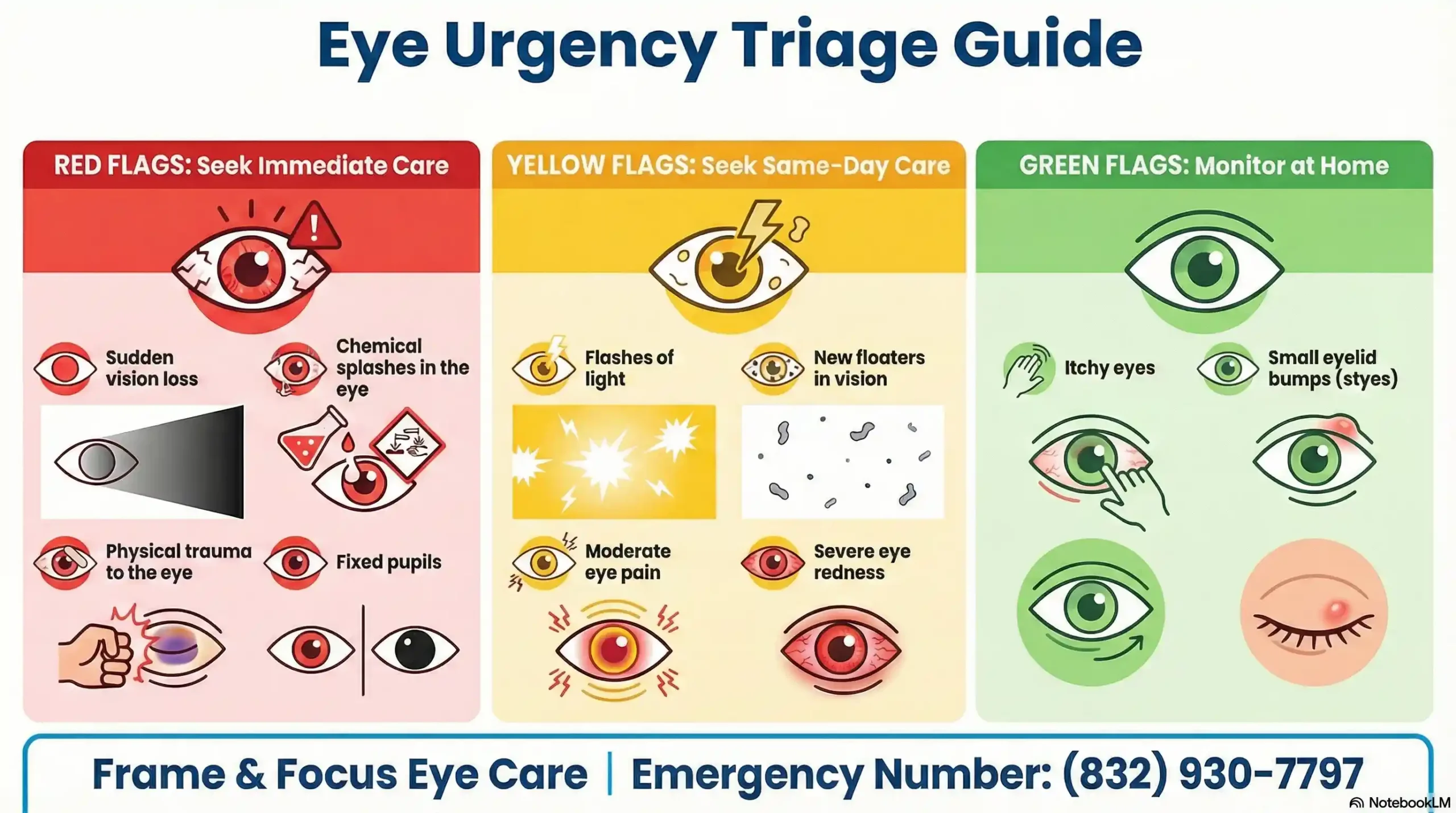
When an eye issue strikes, the first question is always: “Can this wait until tomorrow?” To help you decide, we recommend this quick triage. If you experience any of the Red Flags, you need immediate medical intervention—not a Google search.
-
🔴 RED FLAG: Call Us or Seek Urgent Care Immediately
-
Sudden, painless loss of vision (like a dark curtain falling over your sight).
-
Chemicals splashed in the eye (Start flushing with water or saline now!).
-
Physical trauma (a puncture, deep cut, or high-velocity impact).
-
A pupil that looks “fixed” or is noticeably different in size from the other.
-
-
🟡 YELLOW FLAG: Call for a Same-Day Appointment
-
New “flashes” of light or a sudden shower of “floaters.”
-
Moderate pain or a persistent feeling that something is stuck in your eye.
-
Severe redness accompanied by discharge or crusting.
-
-
🟢 GREEN FLAG: Monitor and Schedule a Routine Visit
-
Itchy, watery eyes (typically allergies).
-
A small, red bump on the eyelid (likely a stye).
-
Your Next Step: If you are in the “Red” or “Yellow” zone, visit our Emergency Eye Care page for immediate contact instructions and same-day availability.
The Contact Lens Crisis: When “Irritation” is an Infection
For our Richmond contact lens wearers, a “red eye” isn’t always just tiredness. Because a contact lens sits directly on your cornea, an infection can move with terrifying speed. We teach our patients the RSVP Rule. If you experience any of these, remove your lenses immediately:
-
R – Redness: More than just a slight pink hue; a deep, angry red.
-
S – Sensitivity: Does even low light hurt your eyes?
-
V – Vision Changes: Is your sight suddenly blurry or foggy?
-
P – Pain: Any level of discomfort that persists after the lens is removed.
Expert Insight: According to the American Academy of Ophthalmology, sleeping in contacts increases your risk of a corneal ulcer—a literal open sore on your eye—by ten times. If you are struggling with discomfort, you may need a Speciality Contact Lens Fitting to ensure your lenses aren’t damaging your ocular health.
More Than a Migraine: Recognizing Acute Glaucoma
Most glaucoma is a “silent thief” that takes vision slowly. However, Acute Angle-Closure Glaucoma is an aggressive emergency. It occurs when the fluid pressure in your eye spikes rapidly. Because it causes severe headaches and nausea, many people mistakenly go to a general practitioner, thinking they have a migraine or the flu.
Watch for these unique symptoms:
-
Rainbow Halos: Seeing colored rings around lights (especially at night).
-
Extreme Eye Pain: Often described as a “boring” or “throbbing” pain behind the eye.
-
Nausea/Vomiting: If you have eye pain so severe it makes you sick to your stomach, it is likely a pressure emergency.
-
Cloudy Vision: Your eye may look hazy or “steamy” in the mirror.
While acute cases are rare, we check for these risks during every Comprehensive Eye Exam using state-of-the-art diagnostic technology.
Silent Signs: Identifying Eye Emergencies in Children
Children—especially toddlers—often can’t tell you “my vision is blurry.” They adapt quickly to vision loss, making emergencies hard to spot. As a parent-centered practice, we look for these behavioral “shouts”:
-
The “Squint or Cover”: If your child suddenly starts closing one eye to look at the TV or a book.
-
Extreme Light Avoidance: Burying their face in pillows or refusing to go outside.
-
Leukocoria (The White Reflex): If you take a flash photo and one pupil looks white instead of the usual “red-eye” reflex, call us immediately.
-
Rhythmic Rubbing: Persistent, aggressive rubbing of only one eye.
Protecting your child’s sight starts with early detection. Learn more about how we care for the youngest patients on our Pediatric Eye Exam page.
How to prevent eye injuries
Eye injuries can happen anywhere. Accidents can happen during high-risk activities, but also in places where you least expect them. Some things can be done to decrease the risk of eye injuries, including wearing protective eyewear when using power tools or engaging in high-risk sporting events, following the directions carefully when working with chemicals or cleaning supplies, keeping scissors, knives, and other sharp instruments away from young children, and keeping a distance from amateur fireworks.
External Resources
For more detailed information on preventing and treating eye injuries, please consult these resources:
-
American Academy of Ophthalmology (AAO): Provides comprehensive guidelines and patient education on various eye conditions and emergency care protocols.
-
Source: The AAO is the world’s largest association of eye physicians and surgeons.
-
-
National Eye Institute (NEI): Offers in-depth, research-backed information from the U.S. government on eye health, injury prevention, and symptoms requiring urgent medical attention.
-
Source: The NEI is part of the National Institutes of Health (NIH).
-
To decrease the chances of developing permanent eye damage, immediate medical evaluation is necessary in the event of an eye injury.
Why Choose Frame & Focus for Your Urgent Care?
At Frame & Focus Eye Care, we don’t just treat symptoms; we treat people. Our team—including familiar faces like Liz and Jose—is here to provide a calm, supportive environment during stressful situations.
Don’t wait when it comes to your vision. If you are experiencing an eye emergency in Richmond, Pecan Grove, or the surrounding areas: 📞 Call us immediately at (832) 930-7797. We offer same-day urgent care to ensure your vision is protected.
FAQs
-
Any sudden vision loss, severe pain, double vision, unequal pupil size, or persistent discharge/bleeding requires immediate medical attention.