
Limbal Relaxing Incisions
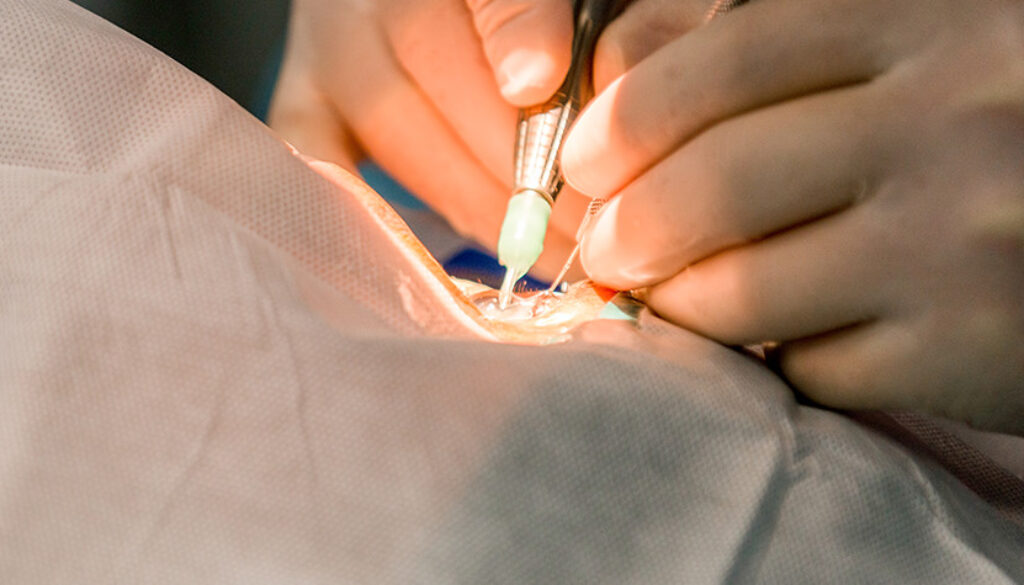
Limbal Relaxing Incisions (LRI) are a precise surgical procedure designed to correct astigmatism by making microscopic cuts at the edge of the cornea to reshape its curve. At Frame & Focus Eye Care in Richmond, Dr. Sarah Zaver utilizes this outpatient technique to flatten the irregular “football” shape of the eye, providing patients with clearer, sharper vision often without the need for tissue removal.
Schedule Your Richmond Consultation Today
Key Takeaways
-
LRI is an Astigmatism-Specific Solution: Limbal Relaxing Incisions offer a focused surgical alternative to standard corrective lenses or laser surgery for moderate astigmatism.
-
Consultation is Mandatory: Candidacy is determined by your eye doctor and depends on being over 18, having good general health, and the absence of other major eye diseases.
-
Logistics are Crucial: You must pre-arrange reliable transportation for both the surgery day and your first post-operative check-up; independent driving is prohibited.
-
Post-Op Care is Defined by Drops: Recovery relies heavily on strict adherence to the prescribed regimen of antibiotic and anti-inflammatory eye drops.
-
Plan for a New Prescription: After healing, expect your astigmatism correction to be significantly improved, meaning you will likely need a professional eye exam for updated corrective lens prescriptions.
Astigmatism is a relatively common eye disorder that causes vision to be blurred or distorted. It occurs when the lens part of the eye, known as the cornea, isn’t perfectly curved and instead resembles a football rather than a soccer ball. This means that the light entering the eye comes through at a distorted angle, making the object appear blurry and out of focus. There are several ways in which it is possible to treat astigmatism, including laser eye surgery and corrective lenses. However, another possibility is a solution referred to as limbal relaxing incisions.
What are limbal relaxing incisions?
Limbal relaxing incisions are microscopic cuts to an area in the eye known as the limbus. This helps to relax the curve in the cornea and improve its ability to focus light correctly. It can significantly improve your astigmatism and the overall quality of your vision.
Am I a good candidate for limbal relaxing incisions?
If you have astigmatism, are over 18, in good general health, and have no major eye conditions, then chances are you are a good candidate for limbal relaxing incisions. Make an appointment with your eye doctor to discuss your candidacy further.
LRI vs. Toric IOLs: Which Astigmatism Solution is Right for You?
When correcting astigmatism during cataract surgery, you generally have two paths: reshaping the cornea with Limbal Relaxing Incisions (LRI) or replacing your natural lens with a Toric Intraocular Lens (IOL).
-
Range of Correction: LRI is ideal for low-to-moderate astigmatism. For higher prescriptions, a Toric lens is often the more stable choice.
-
Cost Factor: LRIs are typically a more budget-friendly “add-on,” whereas Toric lenses are premium medical devices with a higher out-of-pocket cost.
What do I need to know about the surgery?
The surgery itself is relatively straightforward, but you will not be able to drive yourself home afterward. Therefore, it is necessary to arrange for reliable transportation after your procedure and, ideally, someone to stay with you for at least six hours afterward. You will also need transport to bring you to your post-operative visit, where your doctor will tell you when you will be able to resume driving.
You may be asked to refrain from eating or drinking anything after midnight the day before your surgery. This is to prevent any sickness that may be caused by the anesthesia during your operation. You will also be asked to refrain from wearing make-up, perfume, aftershave, or any hair products that may contain alcohol.
The procedure is usually quite quick, and you will be able to go home shortly after it has finished. Occasionally, a patch may be placed over the eye, and you should leave this in place until you have had your follow-up appointment the day after your surgery. You should also wear the provided shield over your eyes whenever you sleep for a minimum of one week after surgery.
The Modern Edge: Manual vs. Femtosecond Laser-Assisted LRI
Historically, surgeons performed LRIs manually using a specialized diamond blade. While this remains a “tried-and-true” method, our commitment to state-of-the-art technology means we often discuss the benefits of the Femtosecond Laser.
Why consider the Laser approach?
-
Micron-Level Precision: The laser creates incisions at an exact depth and length that manual tools cannot match.
-
Enhanced Safety: Laser incisions can be “intrastromal,” leaving the top layer of the cornea intact, which reduces infection risks.
-
Better Mapping: The laser is integrated with 3D imaging, adjusting for your eye’s exact position in real-time.
What do I need to know about post-operative care?
After your limbal relaxing incision surgery, you will be given a set of eye drops to take, which will include antibiotics, NSAIDS, and steroid anti-inflammatories. It is perfectly normal to experience a pink/red tint to your vision immediately after your procedure, and it may feel like you have grit or sand in your eyes. This feeling should abate after a day or two. If you have any severe pain that is not helped by your medication, you should contact your eye doctor for further advice.
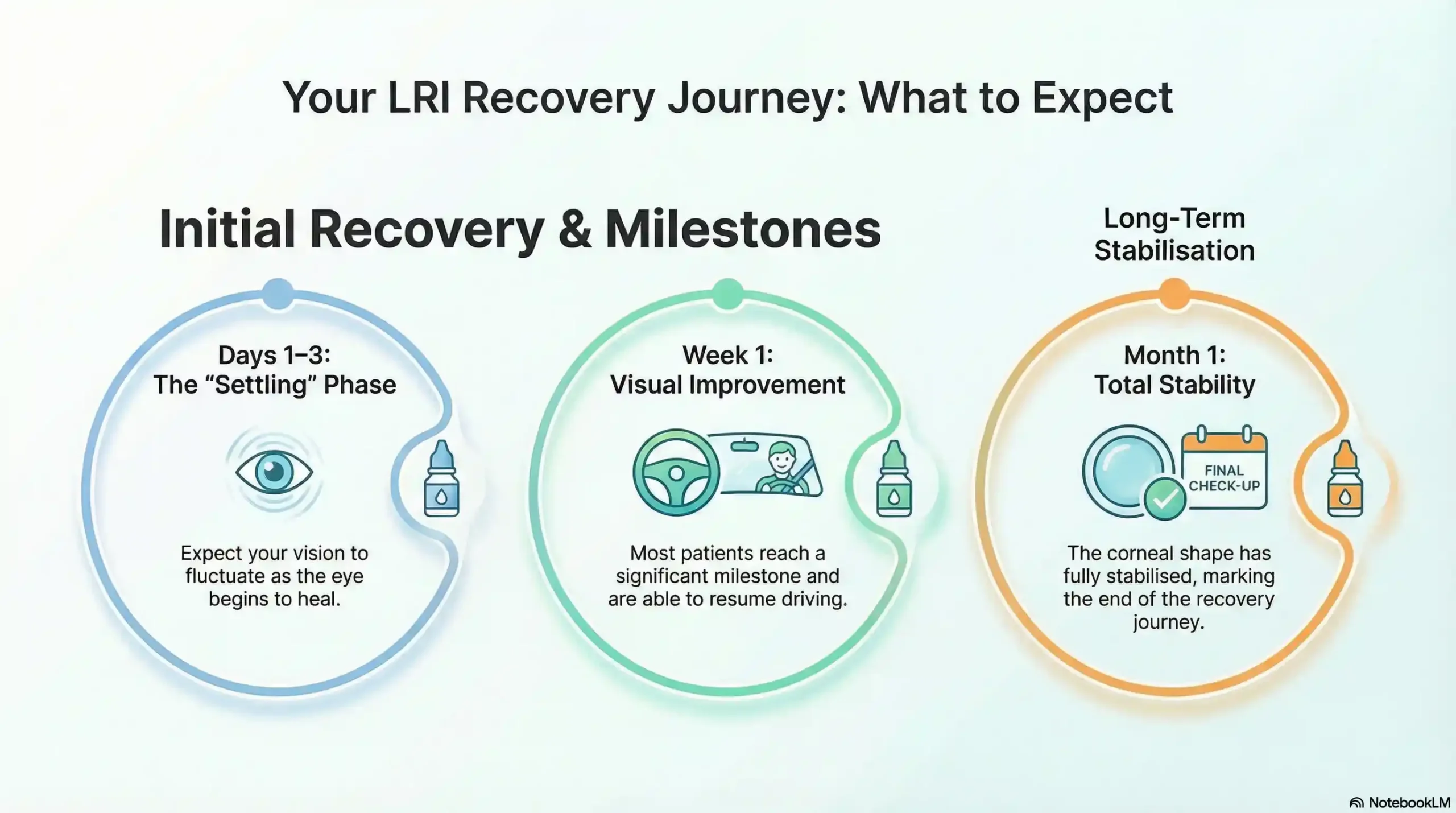
Your LRI Recovery Timeline: What to Expect Day-by-Day
Recovery from LRI is typically swift, but knowing the milestones helps ensure a stress-free healing process.
-
Days 1–3 (The “Settling” Phase): Your vision may fluctuate. It is common to feel a “gritty” sensation (similar to dry eye symptoms). Use your prescribed anti-inflammatory drops religiously.
-
Week 1 (Visual Improvement): Most patients resume driving and light work. That initial “scratchiness” usually disappears completely.
-
Month 1 (Stability): Your corneal shape has stabilized. This is when we perform a final check to see if your prescription for quality eyewear or reading glasses needs a final update.
Is LRI Permanent? Stability and “Touch-Ups”
A common question we hear at our Richmond office is: “Will my astigmatism come back?” The results of an LRI are generally considered permanent because the physical shape of the cornea has been altered. However, the eye is living tissue and can undergo minor “regression” during the first year of healing.
-
Stability: Clinical studies (NIH/PMC) show that LRI results remain stable for the vast majority of patients.
-
The “Enhancement” Option: In rare cases where the initial incision doesn’t fully neutralize the astigmatism, we can discuss a minor “touch-up” once the eye has fully settled.
-
Long-term Health: While the LRI is stable, remember that regular comprehensive eye exams are still essential to monitor your overall ocular health as you age.
Citations and Resources
-
American Academy of Ophthalmology: Limbal Relaxing Incision Basics (Source for professional terminology, procedure description, and general safety guidelines.)
-
National Institutes of Health (NIH) – PMC: Long-term outcomes of limbal relaxing incisions during cataract surgery (Source for clinical research regarding efficacy, stability, and patient satisfaction over time.)
You will have several post-operative appointments to assess the success of your procedure, check on the progress of your healing, and test your eyes again, as you will likely find that you need a change in your prescription as a result of your surgery.
Ready to see the world in high definition? Don’t let astigmatism blur your life’s best moments. Whether you’re interested in LRI or exploring Toric IOLs, Dr. Sarah Zaver and the Frame & Focus team are here to guide you toward the perfect solution.
Schedule Your Consultation in Richmond Today Same-day appointments often available!
FAQs
-
LRI is a surgical technique that uses tiny incisions on the cornea’s edge (limbus) to correct mild to moderate astigmatism by making the cornea rounder.