
How Exercise Benefits the Eye
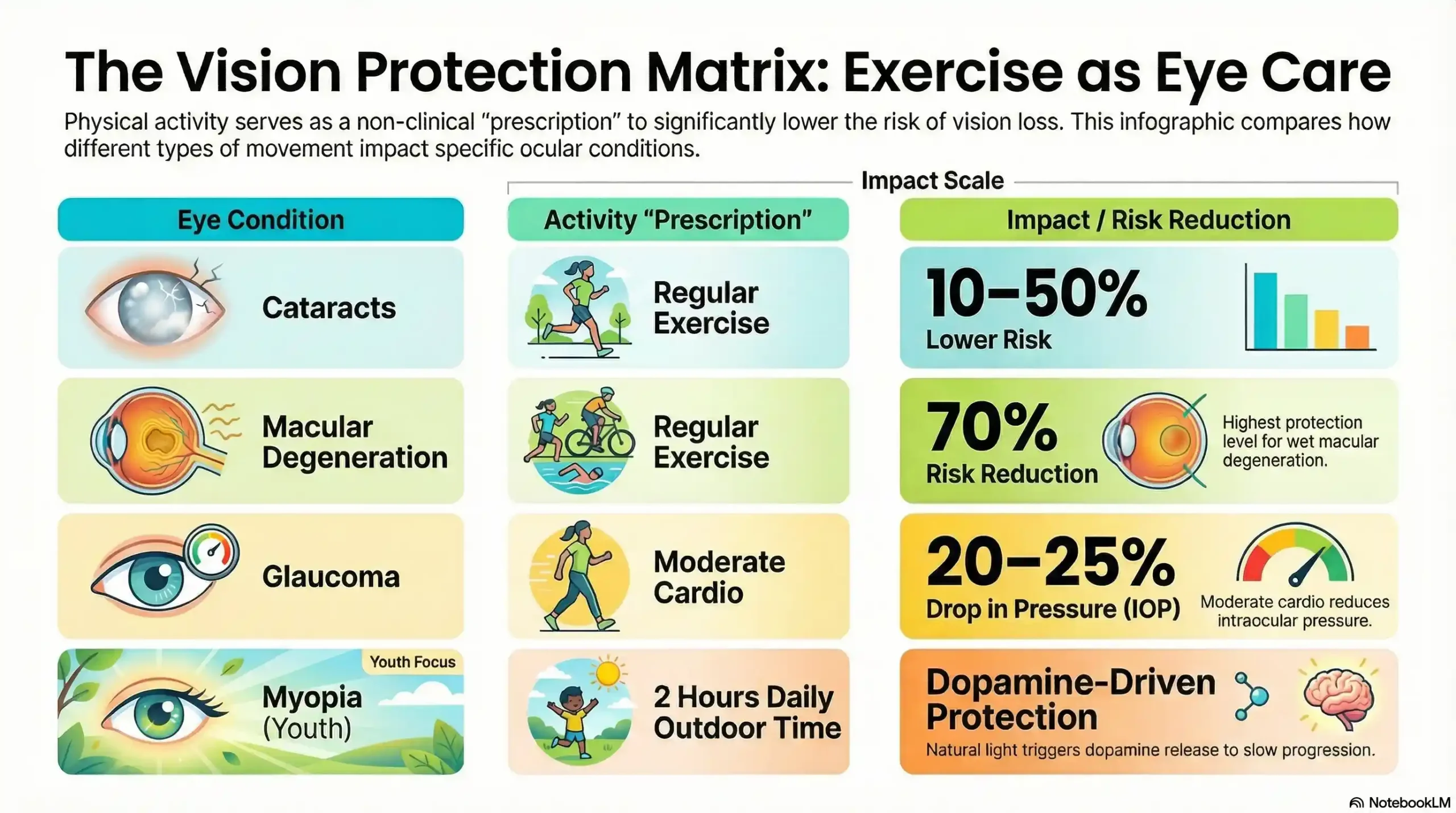
Regular physical activity can lower your risk of cataracts by up to 50% and reduce intraocular pressure by 25%, providing a critical defense against glaucoma and macular degeneration. Beyond systemic health, specific aerobic routines and the 20-20-20+1 reset act as a biological “shield” for your retina and optic nerve.
Key Takeaways: Move for Better Vision
Protecting your eyesight goes beyond glasses and checkups. Here are the most critical, actionable insights from our guide to exercise and eye health:
-
Whole-Body Defense is Eye Defense: Regular physical activity (like a brisk walk) is your best shield against systemic health issues (e.g., high blood pressure, diabetes) that directly cause serious eye conditions.
-
Prevent Major Diseases: Consistent exercise significantly lowers your risk of developing common age-related conditions like Cataracts and Exudative Macular Degeneration.
-
Pressure Management: Even light cardio, done three or more times a week, helps reduce intraocular pressure, which is a major factor in the development and progression of Glaucoma.
-
Simple Eye Stretches Work: Incorporating eye exercises—like rolling your eyes or focusing on specific points—is a proven, zero-cost method to relieve daily eye strain, reduce tension, and prevent dry eyes.
-
Improve Focus & Clarity: Simple eye movements can enhance the flexibility of eye muscles and improve concentration, helping to counteract the blurry vision caused by long hours of screen time.
-
Consistency is Key: The profound vision benefits require regular, consistent effort. Move a non-negotiable part of your weekly health routine to see lasting results.
It is common knowledge that exercise plays a critical role in healthy living. Exercise can help improve energy levels, lower blood pressure, aid in weight loss, help build muscle, and so much more. But one benefit of exercise that is not as well known is the profound impact on your eyesight.
Based on recent research, eye conditions are usually a direct result of a health issue such as high blood pressure, diabetes, high cholesterol levels, etc. While some of these diseases are unavoidable, exercising regularly can definitely help in the prevention of these diseases and, in doing so, help keep the eyes healthy. In addition to physical exercise, there are even some eye exercises that can be done to keep your vision healthy. Some examples are focusing on certain points, rolling your eyes in different directions, writing with the eyes, etc.
The 20-20-20+1 Rule: Combatting Digital Eye Strain
We are all familiar with the standard 20-20-20 rule for screen time, but in the age of constant digital connectivity, we recommend the 20-20-20+1 Protocol. The “+1” is a sixty-second physical “reset” to address the root causes of computer vision syndrome.
The +1 Minute Routine:
-
Conscious Blinking: We blink 60% less when looking at screens, leading to dry eye symptoms. Spend 20 seconds of your minute doing “deep blinks.”
-
Posture Reset: Roll your shoulders and neck. Tension in the upper body restricts blood flow to the visual cortex.
-
Focus Shift: Focus on your thumb, then a distant object, repeating five times. This “flexes” your ciliary muscles, preventing them from locking in a near-focus position.
The Molecular Shield: How Cardio Creates “Fertilizer” for Your Retina
Many people assume exercise only helps the eyes by improving blood flow. While circulation is vital, the biological benefit goes much deeper. When you engage in aerobic activity, your body releases a specialized protein called BDNF (Brain-Derived Neurotrophic Factor).
I often describe BDNF to my patients as “miracle-gro” for the nervous system. Recent research suggests this protein is essential for protecting the delicate neurons in your retina from oxidative stress and age-related decline. By staying active, you are effectively “preconditioning” your eyes to resist damage.
Protect Your Vision: Book Your Richmond Eye Exam
-
Retinal Resilience: BDNF helps your retinal cells survive environmental stressors.
-
Optic Nerve Support: This protein is crucial for those managing glaucoma, as it supports the structural integrity of the optic nerve.
Cataracts and Exercise
According to a study in 2003 and another in 2006, a relationship was discovered between an increase in exercise and a decrease in cataract. It emphasized that there is a greater chance of cataract if physical activity is absent. This implies that taking a light walk or jog around your house or on a field track consistently can contribute to the fight against cataracts.
Macular Degeneration and Exercise
According to one study, exercising three times or more on a weekly basis reduces one’s chances of developing exudative macular degeneration. Exudative macular degeneration occurs when blood vessels grow beneath the retina that are not needed and then leak fluid and blood into the eyes.
Glaucoma and Exercise
One major cause of the development of glaucoma is an increase in ocular perfusion pressure. Very light exercises like jogging or walking at least three times weekly help to reduce the intraocular pressure and improve the flow of blood to the optic nerve and retina.
The Glaucoma Safety Guide: When Exercise Becomes Risky
While movement is medicine, not all workouts are safe for every eye. If you have been diagnosed with high intraocular pressure, Dr. Zaver warns against the Valsalva Maneuver. This occurs when you hold your breath while straining—such as during heavy weightlifting or intense core work—causing a dangerous spike in eye pressure.
Safe Movement Guidelines:
-
Breathe Through the Rep: Never hold your breath during resistance training; exhale on the exertion.
-
Inversion Caution: In yoga, prolonged “head-down” poses can double your eye pressure within minutes. If you have glaucoma, stick to upright or seated poses.
-
The Gold Standard: Brisk walking and cycling remain the safest ways to naturally lower eye pressure.
If you haven’t had your pressure checked recently, schedule a comprehensive eye exam to ensure your workout routine is safe for your eyes.
The “Outdoor Shield”: Preventing Myopia in Children
In our Richmond clinic, we have seen a significant rise in childhood nearsightedness. While genetics play a role, our modern “indoor lifestyle” is a major contributor. One of the most effective ways to protect your child’s vision is simply to get them moving outside.
Research confirms that two hours of outdoor activity per day can significantly reduce the risk of myopia development. This isn’t just about looking at distant objects; it’s about Dopamine. Natural sunlight triggers the release of dopamine in the retina, which signals the eye to stop growing longer (the primary cause of nearsightedness).
-
The Dopamine Connection: Sunlight is the catalyst for healthy eye development.
-
Take Action: If you’re concerned about your child’s vision, explore our specialized myopia management programs to slow the progression of nearsightedness.
The benefit of eye exercises
- Protects against dry eyes. Eye exercises help maintain and improve the fluid level in the eyes, thus eliminating the probability of dry eyes because, as the eyes are being exercised, say by rotation, there is a tendency that fluid is produced.
- Reduces eye strain and tension. Exercising the eyes daily helps in reducing the strain and tension that has been placed on the muscles. Exercises like rolling the eyes and writing with the eyes help in the contraction and relaxation of the eye muscles. Long hours of study or use of a computer can cause blurry vision, but through exercise, clarity can be achieved by eliminating tension and unnecessary pressure.
- Make the eye muscles flexible. Exercises like shifting and swinging the muscles of the eyes help promote flexibility in the muscles of the eyes. Just like exercise helps the body’s muscles, the same thing applies to eye exercises.
- Correction of lazy eye. A lazy eye is a condition in which one of the eyes is not as sharp as the other. Meaning that one eye works better than the other, causing an imbalance in vision. This usually happens among younger people. Through eye exercises, a lazy eye can be developed and made to function the same way the other eye does.
- Enhances concentration. Some individuals find it difficult to focus on an object because it takes them longer than others. Exercises like focusing and writing on the wall can help enhance the concentration level of the eyes.
- Improves eyesight. Generally, the goal of eye exercises is to have healthy eyesight. All the various exercises of the eye are directed towards different parts of the eyes, enhancing overall vision and clarity.
Resources & Scientific Citations
The claims in this article are based on research establishing a relationship between physical activity and ocular disease prevention:
-
Exercise and Macular Degeneration: Research highlighting how frequent, moderate exercise can significantly reduce the risk of exudative macular degeneration.
-
Intraocular Pressure Reduction (Glaucoma): Evidence showing that aerobic exercises, such as jogging or walking, can help lower intraocular pressure, improving blood flow to the optic nerve.
Protect Your Vision for the Long Run. Understanding the link between your lifestyle and your eyesight is the first step toward lifelong clarity. Whether you’re starting a new fitness routine or managing a digital-heavy schedule, Dr. Sarah Zaver and our team are here to ensure your ocular health keeps pace with your active life.
[Schedule Your Comprehensive Eye Exam in Richmond] Or call us today at (832) 930-7797 to experience the Frame & Focus difference.
FAQs
-
Yes, especially in younger individuals. Specific eye exercises can be used to develop the function of the weaker eye, helping to correct the vision imbalance.