Comprehensive Eye Exam vs Vision Screening
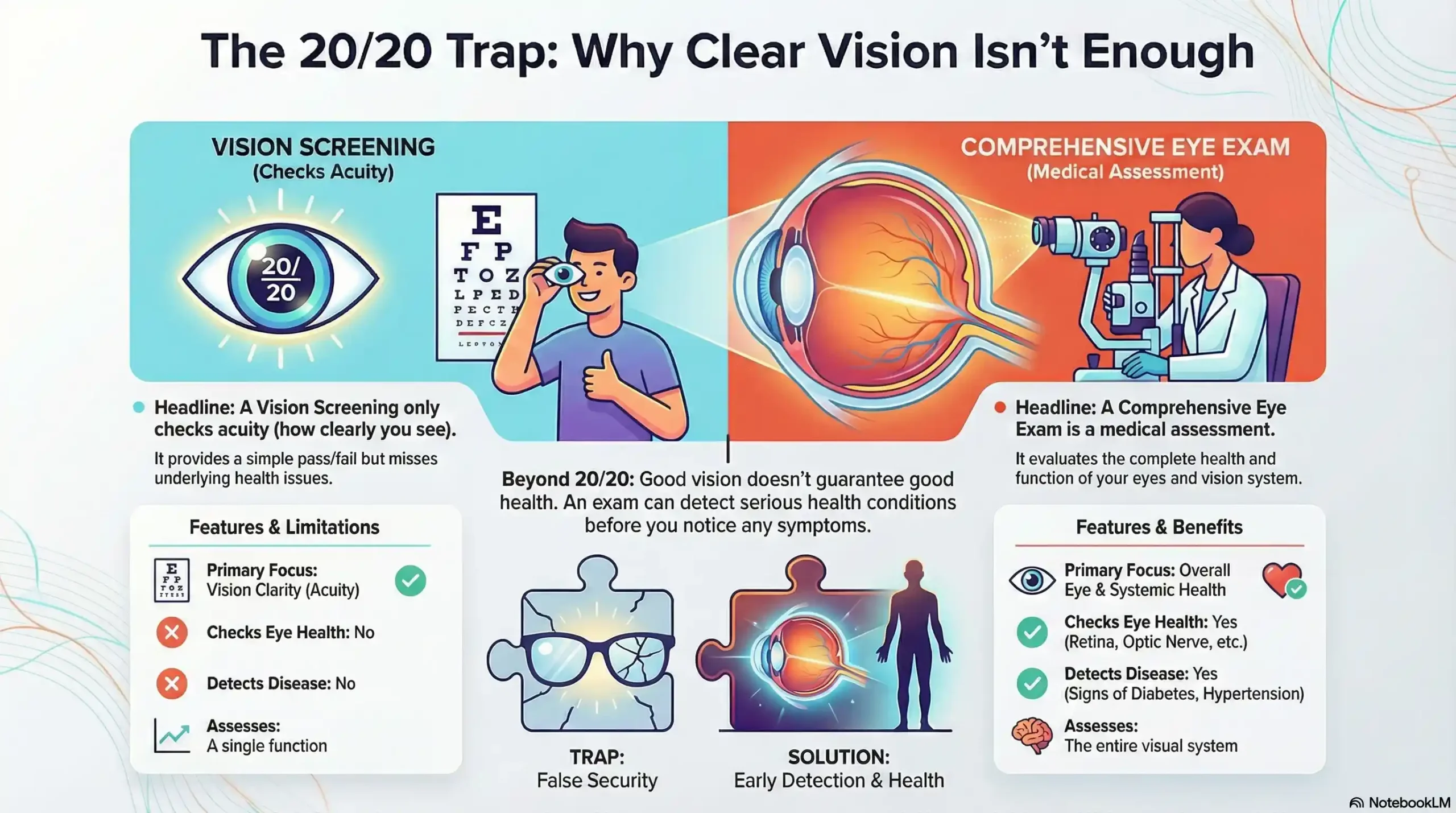
A comprehensive eye exam is a medical assessment of the internal and external health of your eyes, while a vision screening is a basic pass/fail test for visual clarity. While a screening can identify if you need glasses to see 20/20, only a comprehensive exam can detect “silent” sight-threatening diseases like glaucoma and macular degeneration.
Key Takeaways
-
Your Vision is Not Your Health: Passing a quick vision screening only confirms distant visual clarity (acuity); it provides zero information about the health of your eye’s internal structures (retina, optic nerve).
-
Disease Detection is the Priority: Only a comprehensive eye exam with pupil dilation allows a doctor to spot silent, serious diseases like glaucoma or macular degeneration in their earliest, most treatable stages.
[Schedule Your Medical Eye Exam in Richmond]
-
Holistic Health Check: A comprehensive exam is a health screening for your whole body, as it accounts for conditions like diabetes and high blood pressure, which often show early signs in the eyes.
-
Avoid Untrained Assessors: Vision screenings are often conducted by staff or generalists who lack the specialized training and equipment (like phoropters, slit lamps, or tonometers) required for a complete, accurate assessment.
-
Check Function, Not Just Focus: Beyond sight, a full exam assesses critical visual functions like depth perception, color vision, and eye-teaming abilities, ensuring your eyes work together efficiently for tasks like driving or computer work.
-
Frequency Matters: If you are between 18 and 60 and have no known issues, aim for a comprehensive eye exam every two years. If you are 61 or older, schedule an exam annually.
If you’ve had a vision screening recently, you might say, “My vision is fine! I don’t need a comprehensive eye exam.”
But a vision screening provides a limited perspective on the overall health of your eyes. It’s a bit like getting your blood pressure checked and not getting the rest of your annual physical. You’ll have useful information, but it’s not the whole picture.
The “20/20” Trap: Why Clarity Isn’t Always Health
A vision screening is a pass/fail test for sight—essentially checking if your “windshield” is clear. But you can have 20/20 vision and still have underlying issues that affect your daily life.
At our Richmond office, we treat your vision as a complex system. Dr. Zaver evaluates:
-
Eye Teaming & Tracking: Ensuring your eyes work together to prevent double vision.
-
Focusing Stamina: Vital for those suffering from Computer Vision Syndrome due to long office hours.
-
Peripheral Awareness: Critical for safe driving and athletic performance.
The Bottom Line: 20/20 only measures distance. A comprehensive eye exam measures your quality of life.
Pediatric Performance: Why School Screenings Fail 1 in 4 Students
For parents in Pecan Grove and Richmond, a school screening feels like a helpful safety net. However, the American Optometric Association (AOA) warns that these screenings miss up to 60% of children with vision problems.
Children often don’t complain because they don’t know that words aren’t supposed to “wiggle” on a page. If a child’s eyes aren’t tracking correctly, they may be misdiagnosed with ADHD or learning disabilities.
-
Color Vision: Essential for early learning and safety.
-
Binocularity: Ensuring both eyes point at the same target simultaneously.
-
Myopia Control: Identifying if a child’s nearsightedness is worsening and requires specialized Myopia Management.
What are the Limitations of a Vision Screening?
Vision screenings only test your ability to see clearly in the distance. This is called visual acuity and is just one factor in your overall vision. Others include color vision, peripheral vision, and depth perception. The screening also doesn’t evaluate how well the eyes focus up close or work together. Most importantly, it doesn’t give any information about the health of the eyes.
Vision screenings are conducted by individuals untrained in eye health.
Vision screenings are offered in many places – schools, health fairs, as part of a work physical, or for a driver’s license. Even if your physician conducts the screening, he/she is a generalist and only have access to a certain amount of eye health training. Most individuals don’t have the tools or knowledge to give you a complete assessment of your vision or eye health.
Vision screenings use inadequate testing equipment.
In some cases, a vision screening is limited to an eye chart across the room. Even when conducted in a physician’s office, they won’t have the extensive testing equipment of an eye doctor. They also won’t be aware of nuances such as room lighting and testing distances, all of which are factors that can affect test results.
What are the Benefits of a Comprehensive Eye Exam?
Comprehensive eye exams evaluate all aspects of your vision and eye health.
The comprehensive eye exam looks at your eye externally and internally for any signs of eye disease, then tests your vision in a variety of ways.
- External Exam – This is an evaluation of the whites of your eyes, the iris, pupil, eyelids, and eyelashes.
- Internal Exam – This is an evaluation of the retina and optic nerve while your eyes are dilated.
- Visual Function and Eye Health – This includes testing depth perception, color vision, peripheral vision, and the response of the pupils to light, as well as an evaluation of eye focusing, eye teaming, and eye movement abilities.
- Glaucoma Testing – This is a test of fluid pressure within your eyes to check for the possibility of glaucoma.
- Visual Acuity – Your doctor will test your vision with different lenses to determine if glasses or contact lenses can improve your vision.
Comprehensive eye exams look at your total health history.
Even though you visit a separate office for your eye health, that doesn’t mean your eyes shouldn’t be treated holistically. Your eye doctor will discuss your overall health and that of your immediate family, any medications you’re taking, and whether you have high blood pressure or diabetes. They’ll also want to know if you smoke and how much sun exposure you get. All these factors help the eye doctor properly assess your eye health.
The American Optometric Association recommends an eye exam every two years if you aren’t having any problems and you’re aged 18-60. After the age of 61, you should schedule a comprehensive exam annually or as recommended by your eye doctor.
The Technology Gap: Medical Tools vs. Wall Charts
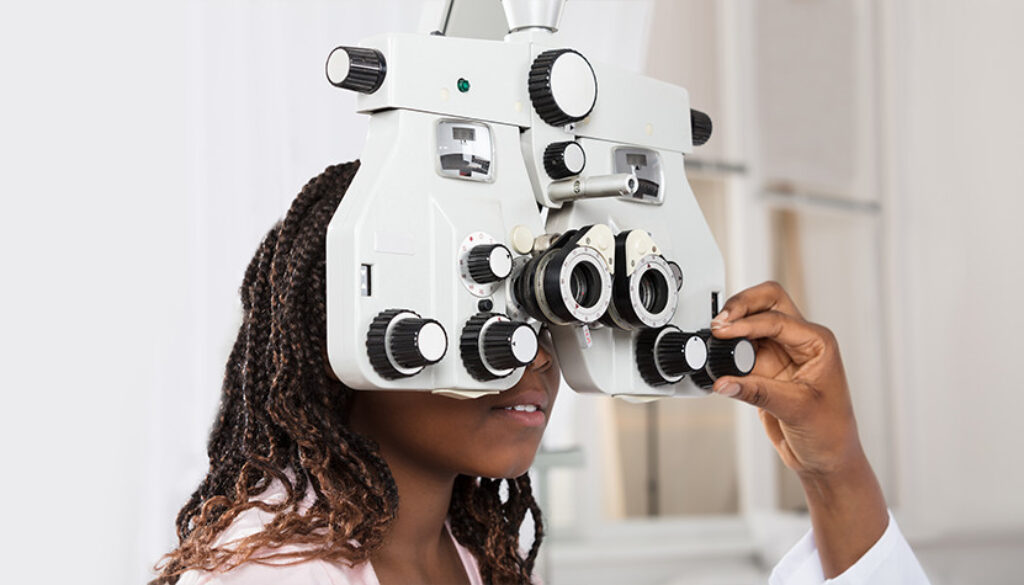
The primary difference between a quick screening and a visit to Dr. Zaver is the diagnostic technology. A screening usually involves a paper chart; we use a suite of medical instruments designed for early disease detection.
-
Digital Retinal Mapping: We use high-resolution imaging to see the back of your eye, allowing us to track minute changes in your retina over time.
-
Slit-Lamp Biomicroscopy: This acting microscope allows for a 3D examination of your cornea and iris health.
-
Advanced Tonometry: We provide accurate fluid pressure readings to assess your risk for “silent” killers of vision like Glaucoma.
By investing in state-of-the-art technology, we move from “guessing” to “knowing.”
The Systemic Connection: Your Eyes as a Health Compass
Your eyes are the only place in the body where a doctor can see your blood vessels and nerves in their natural state without surgery. This makes your eye exam a powerful tool for your total body health.
During your exam, Dr. Zaver looks for early warning signs of:
-
Diabetes: Tiny leaks in retinal blood vessels (Diabetic Retinopathy).
-
Hypertension: Distinctive “kinking” of the blood vessels.
-
High Cholesterol: Yellowish deposits visible in the cornea or retina.
-
Autoimmune Disorders: Chronic inflammation that often manifests first in the eyes.
According to the National Eye Institute (NEI), many chronic diseases are first detected during a routine, dilated eye exam. We don’t just care for your eyes; we care for the person behind them.
Resources & Citations
-
American Optometric Association (AOA): Provides detailed clinical guidelines and recommendations for adult eye exam frequency, supporting the biennial (every two years) recommendation cited in this article. Visit the AOA Website
-
National Eye Institute (NEI): Offers in-depth, non-commercial information on specific eye diseases (like glaucoma and cataracts) and the importance of early detection through comprehensive, dilated exams. Explore NEI Resources
Ready to see the full picture?
Don’t settle for a partial screening. Ensure your vision—and your health—is protected by a professional.
Schedule Your Comprehensive Exam at Frame & Focus Eye Care Today Located at 18310 W Airport Blvd #900, Richmond, TX.
FAQs
-
A vision screening only checks your distance visual acuity. A comprehensive eye exam evaluates your total ocular health, visual function (depth, color), and checks for eye diseases internally and externally.