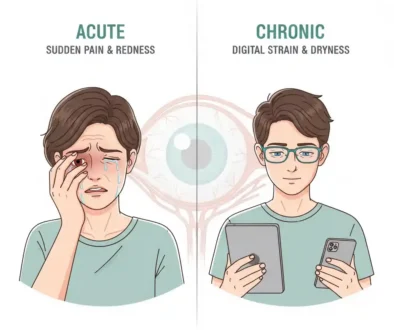

The Connection Between Myopia and Eye Health: Risks of High Myopia
Introduction
High myopia (severe nearsightedness) is more than a need for stronger glasses; it is a progressive condition that physically elongates the eye, significantly increasing the risk of sight-threatening complications like retinal detachment and glaucoma. Understanding these risks early is the first step in protecting long-term vision through proactive myopia management.
Schedule a Comprehensive Myopia Risk Assessment in Richmond
Understanding the Causes of Myopia
Several factors contribute to the development of myopia, including genetics, environmental factors, and lifestyle choices. Here are some of the primary causes:
- Genetics: Myopia tends to run in families, suggesting a strong genetic component. If one or both parents are myopic, the chances of their children developing the condition increase significantly.
- Prolonged Near Work: Spending excessive time engaged in near work, such as reading, using digital devices, or performing close-up tasks, can strain the eyes and contribute to myopia development, especially in children and adolescents.
- Environmental Factors: Reduced time spent outdoors and exposure to natural light have been linked to an increased risk of myopia. Outdoor activities and exposure to sunlight may help regulate eye growth and prevent excessive elongation of the eyeball.
Symptoms of Myopia to Watch For
If you experience any of the following symptoms, it may be an indication of myopia, and it is advisable to seek professional eye care:
- Blurred distance vision
- Squinting or frowning to improve focus
- Frequent eye strain or headaches
- Difficulty seeing blackboards or distant objects clearly
- Sitting closer to screens or holding reading materials closer to the face
Early detection and treatment of myopia are crucial to prevent further progression and potential complications.
The Risks of Untreated Myopia
While myopia itself is not a severe condition, it can lead to various eye health issues if left untreated or unmanaged. Some of the risks associated with untreated or high myopia include:
- Increased Risk of Retinal Detachment: Individuals with high myopia have a higher risk of developing retinal detachment, a serious condition where the retina separates from the underlying tissue, potentially leading to vision loss if not treated promptly.
- Myopic Macular Degeneration: Myopia can increase the risk of developing myopic macular degeneration, a condition that affects the macula (the central part of the retina responsible for detailed vision), leading to vision impairment or blindness.
- Cataracts: Individuals with high myopia are more susceptible to developing cataracts at an earlier age, which can cause clouding of the eye’s natural lens and impair vision.
- Glaucoma: Myopia, particularly high myopia, has been associated with an increased risk of developing glaucoma, a group of eye diseases that can damage the optic nerve and lead to vision loss if not treated promptly.
- Myopic Choroidal Neovascularization: In severe cases of high myopia, abnormal blood vessel growth can occur beneath the retina, leading to vision distortion and potential vision loss.
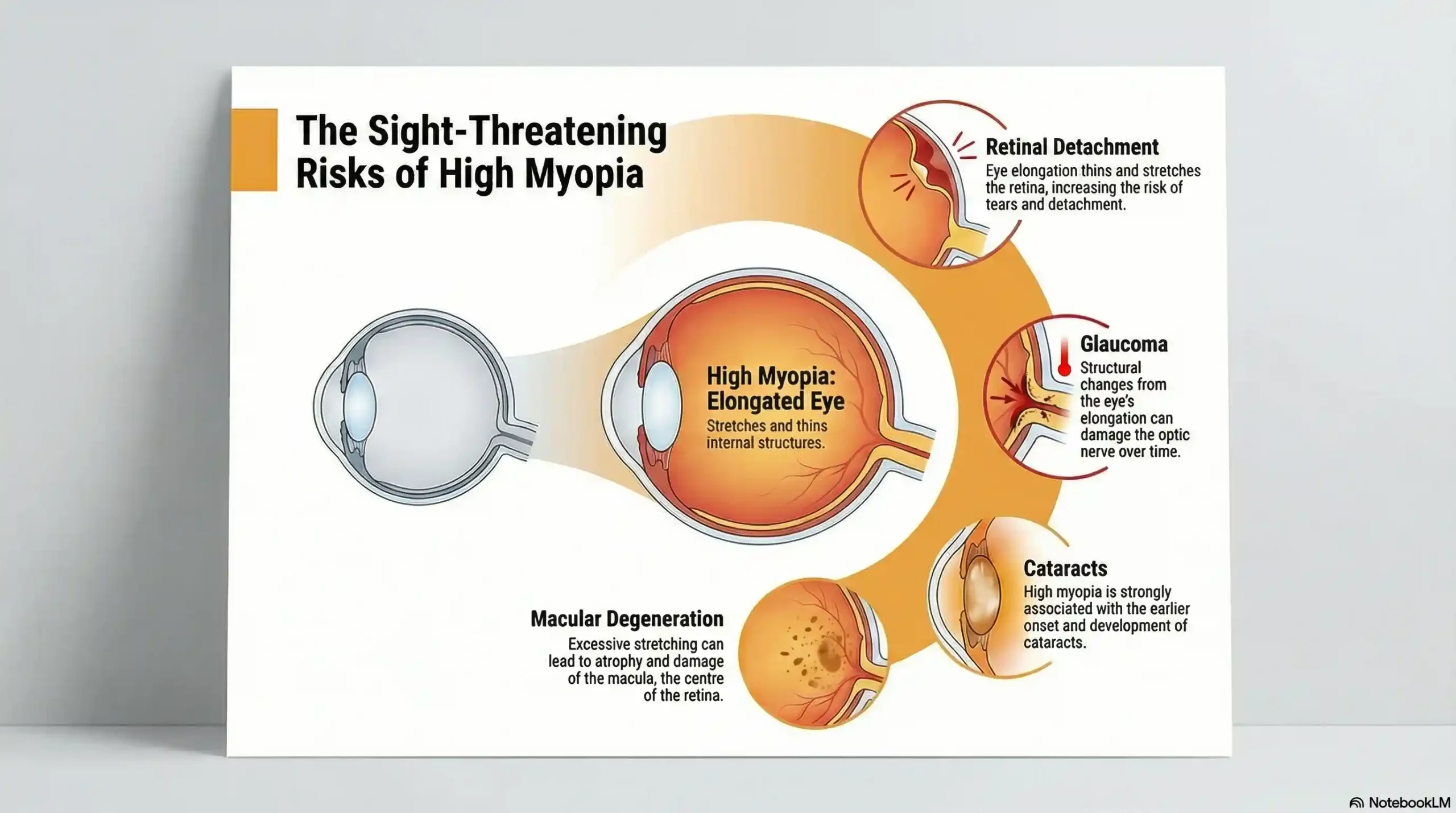
Addressing myopia early and managing it effectively can help mitigate these risks and protect your eye health in the long run.
Myopia Management Methods
Fortunately, there are various methods available to manage and potentially slow the progression of myopia. Some common approaches include:
Prescription Eyeglasses or Contact Lenses: Corrective lenses are the most common and effective way to compensate for myopia and improve distance vision. However, they do not address the underlying cause or prevent further progression.
Orthokeratology (Ortho-K): This method involves wearing specialized rigid gas-permeable contact lenses overnight to temporarily reshape the cornea, reducing the need for corrective lenses during the day. Ortho-K has been shown to slow myopia progression in some cases.
Atropine Eye Drops: Low-dose atropine eye drops have been found to be effective in slowing myopia progression, particularly in children. They work by temporarily relaxing the eye’s focusing muscles and reducing the stimulus for eye elongation.
Multifocal or Progressive Lenses: These specialized lenses provide clear distance vision while incorporating additional focusing zones to reduce the strain on the eyes during near work, potentially slowing myopia progression.
Lifestyle Modifications: Encouraging outdoor activities, taking frequent breaks from near work, and maintaining good posture and lighting conditions can help reduce the strain on the eyes and potentially slow myopia progression.
It is essential to consult with an eye care professional to determine the most suitable myopia management approach based on your individual needs and the severity of your condition.
resources and citations
Understanding Myopia: Educational Resources and Research
To help you better understand myopia and stay informed about the latest developments in myopia management, we’ve compiled these authoritative resources from leading eye care organizations:
Comprehensive Myopia Information: For detailed information about myopia progression, risk factors, and the latest research on childhood myopia, visit the American Optometric Association’s Myopia Resource Center. The AOA provides evidence-based insights into myopia control strategies and helps parents understand why early intervention is crucial for children’s long-term eye health.
Global Myopia Research and Prevention: Learn about worldwide myopia trends and prevention strategies from the Brien Holden Vision Institute, a leading research organization dedicated to eliminating preventable blindness. Their comprehensive studies on myopia progression provide valuable context for understanding why proactive myopia management has become essential in modern eye care.
Navigating Myopia with the Help of Frame & Focus Eye Care
Regular eye check-ups, early intervention, and proper myopia management strategies are crucial in slowing the progression of myopia and reducing the risk of associated complications. At Frame & Focus Eye Care, we are committed to providing comprehensive eye care services and tailored myopia management solutions to help you maintain optimal eye health and preserve your vision for years to come.
If you or your child is experiencing symptoms of myopia or has concerns about your eye health, schedule an appointment with Frame & Focus Eye Care. Our dedicated team will provide you with a comprehensive eye examination, discuss the most suitable myopia management options, and develop a personalized treatment plan to protect your vision and maintain optimal eye health. Contact our eye care team at our office in Richmond, Texas. We are also happy to serve the surrounding areas, Greatwood, Rosenberg, Sugar Land, Pecan Grove, Four Corners, Mission Bend, New Territory, and Sugar Land. Please call (832) 664-7900 to book an appointment today.
FAQs
-
High myopia (typically $-6.00$ diopters or worse) means the eyeball is significantly elongated. This stretching thins the retina and other delicate internal structures, increasing disease risk.