Scleral Lenses
Tired of uncomfortable contacts? Scleral lenses are specialty contacts that vault the cornea, offering sharp, stable vision and continuous moisture—even for severe dry eyes.
Key Takeaways
-
Solve Complex Eye Issues: Scleral lenses are a specialised solution for patients who cannot wear regular contacts due to conditions like severe Dry Eye Syndrome or irregularly shaped corneas.
-
Superior Comfort & Stability: Their large size makes them easy to handle, keeps them highly stable on the eye, and prevents discomfort by resting on the sclera (the white part of the eye), not the sensitive cornea.
-
Built-in Moisture Reservoir: The unique design traps tear film between the lens and the eye, actively keeping the ocular surface moist and healthy.
-
Sharper, Reliable Vision: By vaulting the cornea, scleral lenses correct vision irregularities that cannot be fixed by glasses or standard contacts, resulting in clearer, more reliable vision.
-
Sizing is Key: These lenses come in different sizes (Full, Mini, Semi) based on where they meet the eye; your eye care provider will recommend the precise size for your individual requirements.
Contact lenses come in a variety of shapes and styles to suit the range of needs for individual patients. What this means is that there is almost certainly a type of contact lens that will both feel comfortable for you and improve your vision.
Some types of contact lenses are known as specialty lenses. This is because they are designed specifically to overcome some eye issues that may prevent a patient from wearing the most common and generic styles of contact lenses. In fact, specialty contact lenses have transformed the vision options of many patients who would otherwise have only had the choice between wearing glasses or undergoing laser vision correction. There are numerous types of specialty contact lenses, including scleral lenses.
What are scleral lenses?
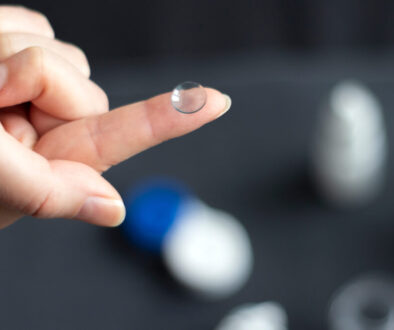
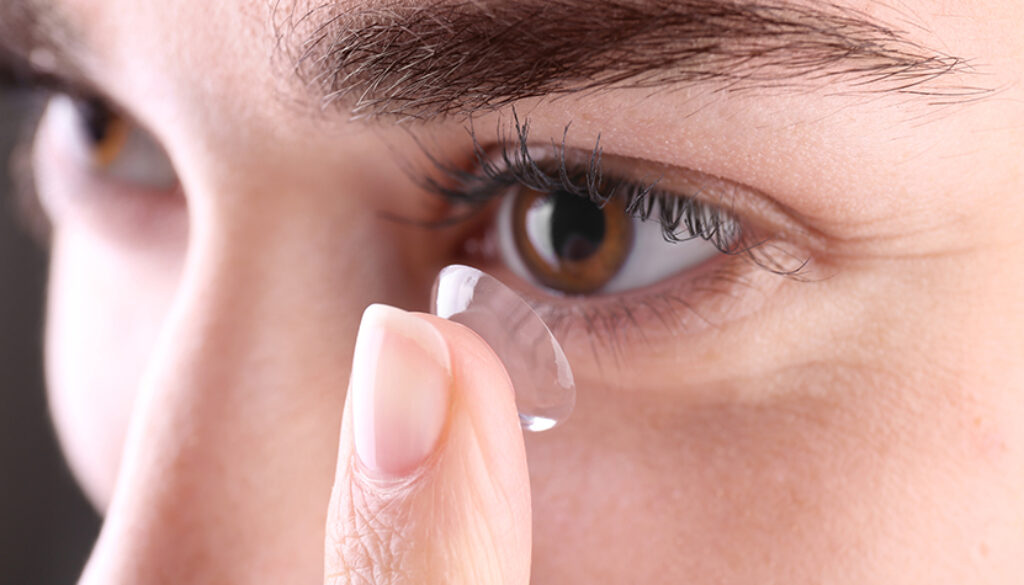
Scleral contact lenses get their name from the fact that, unlike regular contacts, they vault over the entire corneal surface and rest on the white part of the eye, which is called the sclera. This makes them larger than standard contacts, which in turn provides a variety of benefits. Their size makes them easier to handle and more stable when on the eye, which in turn provides the patient with sharper and more reliable vision. They are also less likely to become dislodged and come out.
Scleral contact lenses are also gas permeable, which means that oxygen can pass right through them and reach the surface of the eyes. This is important for comfort, particularly for patients who experience dry eyes. The gap that is created between the back of the contact lens and the front surface of the eye can also trap tear film, acting as a fluid reservoir which will keep the eyes moist and healthy.
Types of scleral lenses
Within scleral lenses, there are several different sizes to choose from. These are based on where the lenses meet the surface of the eye and are as follows:
Full scleral lenses
The largest type provides the greatest amount of clearance between the cornea and lens and rests on the outer sclera.
Mini scleral lenses
The mid-size variety makes contact with the eye on the anterior sclera.
Semi-scleral lenses
Although larger than conventional lenses, they are not huge, and the edge of the contact lens rests on the junction between the cornea and the sclera.
Your scleral lens provider will be able to make a recommendation as to the correct size for you, which will be based on your individual requirements.
Who are scleral lenses recommended for?
Although technically anyone can wear and benefit from scleral lenses, they are a particularly good option for patients who have eye conditions or irregularities for which regular contacts are not suitable. This includes patients with:
Dye eye syndrome. Contact lenses float on a fine layer of tear film, which keeps them comfortable and in position. Patients with dry eye syndrome either do not have enough natural tear film, or what they do have drains away too quickly. This can make wearing regular contact lenses difficult and uncomfortable. However, the design of scleral lenses keeps moisture on the surface of the eyes, eliminating some of the effects of dry eyes. This makes scleral lenses a great choice for patients with dry eyes.
Irregular corneas. The cornea is the clear dome that covers the front part of the eye, and many people have a cornea that is slightly or significantly irregular in shape. This causes light to be refracted incorrectly when it enters our eyes, triggering vision problems. Issues arising from irregularly shaped corneas cannot be completely corrected using glasses or conventional contact lenses. Therefore, scleral lenses, which provide sharper and more accurate vision, are recommended.
Resources & Citations
-
Scleral Lens Academy. The Clinical Application of Scleral Lenses in Irregular Corneas and Ocular Surface Disease.
-
American Academy of Optometry (AAO). Review of Gas Permeable Contact Lenses and Ocular Health.
For more information about scleral lenses, please do not hesitate to call our expert eye care team.
FAQs
-
They are ideal for patients with chronic dry eye syndrome or irregularly shaped corneas (like keratoconus) who find traditional contacts uncomfortable or ineffective.